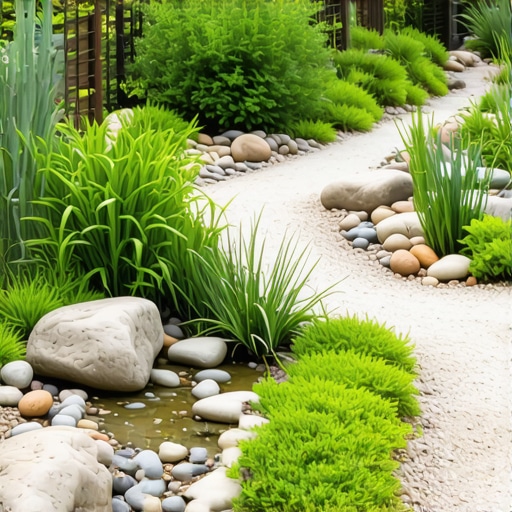
How to Create a Low-Water Garden That Still Looks Lush
The Engineering of Low-Water Landscapes: Why Your Prep Work Dictates Your Success
A low-water garden succeeds through hydro-zoning, soil amendments, and site grading that captures every drop of rainfall. By grouping plants with identical water needs and optimizing soil moisture retention through organic matter, you minimize supplemental irrigation while maintaining plant health and dense foliage. Most homeowners fail because they think xeriscaping means throwing some rocks over a weed barrier. That is a recipe for a heat-island effect and dead root systems. I recently got called out to tear up a $30,000 patio that was sinking because the previous contractor ignored the hydrostatic pressure and failed to install a proper drainage layer. The water had nowhere to go, so it sat under the pavers, turned the subgrade into a soup, and eventually pushed the retaining wall three inches out of plumb. This same lack of foresight kills low-water gardens. If you don’t manage the hydrology of the site, your plants will starve for oxygen when it rains and dessicate when it doesn’t. You need to understand the bulk density of your soil before you even look at a plant catalog. Don’t skip this.
Soil Architecture: The Microscopic Foundation of Drought Resistance
Improving soil structure is the primary defense against drought stress in any landscape design. Incorporating composted organic matter increases the soil’s water-holding capacity, while mechanical aeration breaks up compaction, allowing roots to penetrate deeper into the subsoil where moisture remains trapped longer. I see guys trying to plant into heavy red clay without any remediation. It is like planting into a brick. You need to achieve a soil pH between 6.0 and 7.0 for most temperate species to ensure nutrient availability. High alkalinity locks up iron and manganese, leading to chlorosis, which people often mistake for underwatering. They add more water, the roots rot, and the plant dies. Stop guessing. Get a soil test from your local extension office. You are looking for a Cation Exchange Capacity (CEC) that can actually hold onto the minerals you are feeding the soil. If your CEC is below 10, your fertilizer is just washing into the groundwater. It is a waste of money.
“A landscape’s water requirement is determined by the evapotranspiration rate, soil type, and the genetic makeup of the plant material.” – University of California Division of Agriculture and Natural Resources
How much modified gravel do I need for a patio base?
For a standard pedestrian patio in a low-water design, you need a minimum of 6 inches of compacted 21A or 411 modified gravel. This base provides the structural integrity to prevent settling and allows for a stable screed layer. If you are in a high-freeze-thaw zone, bump that to 8 or 10 inches. You want a 98% Proctor density. If the plate compactor is not bouncing off the surface, it is not ready. Use a string line to maintain a 2% slope away from any structures. One inch of drop for every four feet of run. Simple physics.
| Material Type | Water Retention Capacity | Drainage Rate (Inches/Hour) | Best Use Case |
|---|---|---|---|
| Sandy Loam | Moderate | 1.0 – 2.0 | Primary planting beds |
| Heavy Clay | High (Bound) | < 0.05 | Requires heavy aeration |
| #57 Stone | Low | > 20.0 | Behind retaining walls |
| Compost Mix | Very High | 0.5 – 1.5 | Top-dressing for turf |
Hydro-Zoning: Organizing the Biome for Peak Efficiency
Hydro-zoning is the practice of clustering plants based on water requirements to eliminate over-irrigation of drought-tolerant species. This technical approach ensures that high-water-use plants are located in low-lying areas or near the house, while drought-hardy natives occupy the periphery and high-exposure zones. You cannot put a thirsty Hydrangea next to a Lavender plant. One will drown or the other will shrivel. I tell my crew: match the root depth, not just the flower color. Deep-taproot species like Baptisia can reach three feet down to find water. They should be your anchors. Surround them with fibrous-rooted groundcovers that act as a living mulch. This creates a multi-layered canopy that shades the soil, dropping the surface temperature by as much as 15 degrees Fahrenheit. That is how you keep a garden looking dense without a massive water bill. It will thrive.
How do I make my garden look full without much water?
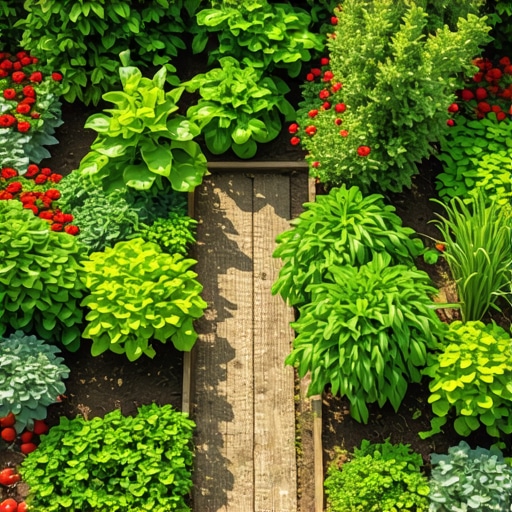
To achieve density in a low-water garden, utilize layered planting techniques including groundcovers, mid-story shrubs, and structural perennials. High-density planting reduces the amount of bare soil exposed to the sun, which significantly lowers evaporation rates and prevents weed seeds from germinating in the heat. Use the 3-2-1 rule: three groundcovers for every two perennials and one shrub. This mimics natural field succession. It looks intentional and functions like a self-cooling machine.
“Proper compaction of the subgrade and base layers is the single most critical factor in the longevity of any hardscape installation.” – ICPI Tech Spec 2
- Step 1: Grade the site to ensure a 2% slope away from the foundation.
- Step 2: Install a 4-inch perforated PVC French drain in areas of standing water.
- Step 3: Amend the top 8 inches of soil with 3 inches of composted leaf mold.
- Step 4: Install 1/2-inch drip irrigation tubing with 0.5 GPH pressure-compensating emitters.
- Step 5: Plant native species, ensuring the root flare is exactly at or 1/2 inch above grade.
- Step 6: Apply 3 inches of double-shredded hardwood mulch, avoiding the trunk.
Irrigation Mechanics: Drip Systems and Pressure Regulation
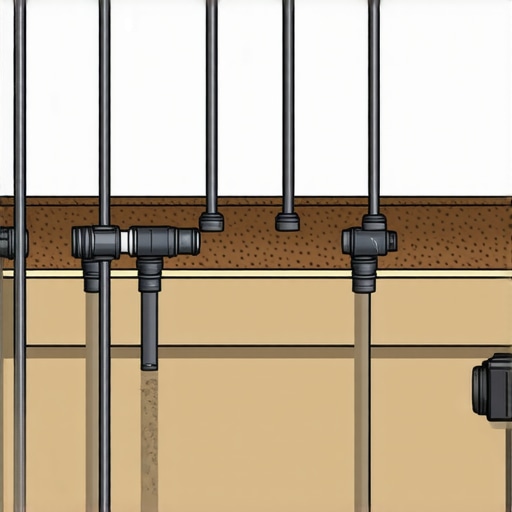
Precision irrigation relies on low-volume drip emitters and pressure regulation to deliver water directly to the root zone with zero wind drift or evaporative loss. Standard spray heads lose 30% to 50% of their water to evaporation before it even hits the ground; drip systems operate at over 90% efficiency. You need a 25 PSI pressure regulator. If you blow 60 PSI through a drip line, the emitters will pop out and you will have a geyser in your mulch bed. Check your backflow preventer every spring. It is required by code for a reason. You don’t want fertilizer-heavy water siphoning back into your kitchen sink. While the internet tells you to water every day, turf grass actually needs deep, infrequent watering—exactly 1 inch per week—to force roots to chase the water down. If you water for 5 minutes every morning, the roots stay in the top 2 inches of soil. When the first 90-degree day hits, those roots cook and the plant is gone. Force them to work for it.
The Long Game: Maintenance and Year-One Expectations
The first year of a low-water garden is the most critical period, requiring regular monitoring of moisture levels at the four-inch depth to ensure root establishment. Even drought-tolerant plants need supplemental water until their root systems bridge the gap between the nursery root ball and the native soil. I see people plant a $200 tree and then forget it. Check the soil with a moisture meter or your finger. If it’s dry four inches down, water it. If it’s wet, walk away. Over-watering causes more plant death in professional landscapes than drought ever will. By year three, you should be able to turn the irrigation off for everything but the most extreme heat waves. That is the goal. A self-sustaining, high-density environment that respects the local climate. No hacks, no shortcuts. Just engineering and biology working together.