Stop 2026 Deer Damage with This 3-Ingredient Spray
The Forensic Autopsy: Anatomy of a Destroyed Landscape
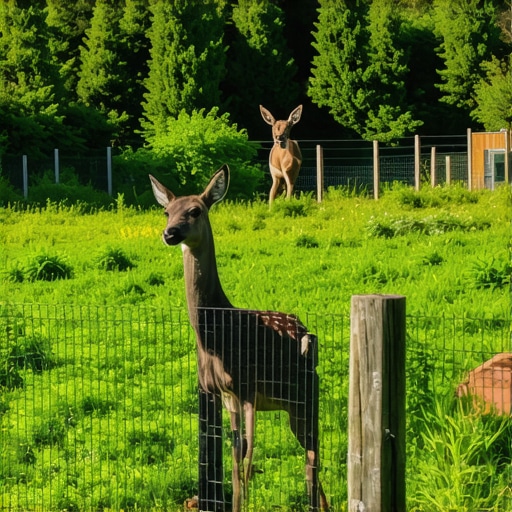
The first sign of deer damage isn’t a missing flower; it’s the jagged, torn edges of a terminal bud. Unlike the clean 45-degree clip of a rabbit, deer lack upper incisors and must literally rip the plant tissue. This mechanical stress triggers a hormonal response in the plant that can stunt growth for years. I recently walked onto a $50,000 installation in the suburbs where the homeowner had tried to save money with a big-box store vinegar spray. The result was a chemical nightmare. They didn’t just fail to stop the Odocoileus virginianus; they caused massive phytotoxicity across their entire hydrangea collection. The acetic acid levels in their DIY mix were so high they effectively chemically defoliated their primary privacy screen. This is what happens when you prioritize Pinterest hacks over horticultural science. You don’t just lose the foliage; you compromise the plant’s ability to photosynthesize, leading to root starvation and death by winter. It will rot. Don’t skip the chemistry.
“Deer browse pressure is a function of population density and the availability of high-quality forage in the surrounding matrix; once a browse line is established at 5 to 6 feet, the ecological damage is often irreversible for understory species.” – Penn State Agricultural Extension
Why Your Current Repellent Strategy Is Failing
Most commercial repellents fail because they ignore hydrostatic adhesion and the deer’s olfactory adaptation. If you spray a water-based scent and it rains half an inch, your protection is gone. If you use the same scent for three months, the deer habituate. To stop deer in 2026, you need a multi-modal approach that targets olfactory, gustatory, and visual triggers simultaneously. You need a surfactant that binds to the waxy cuticle of the leaf, resisting irrigation and light precipitation. We are talking about molecular bonding, not just wetting the surface. Turf grass and woody ornamentals require different application pressures to ensure the repellent reaches the interior of the canopy where deer like to hide their browsing.
What is the best homemade deer repellent?
The most effective homemade deer repellent for 2026 is a mixture of putrescent egg solids, milk (casein), and garlic oil applied via a high-pressure sprayer. This combination creates a protein-based film that triggers a predator-avoidance response in the deer’s amygdala while providing long-term adhesion to plant tissues through the casein’s natural sticking properties.
The 3-Ingredient Engineering Blueprint
This isn’t a kitchen recipe; it’s a biological barrier. Each component serves a specific engineering purpose in the garden. Component 1: Eggs. When eggs decompose, they release sulfuric compounds. To a deer, this smells like the scent glands of a predator or rotting meat. It’s a fear-based deterrent. Component 2: Milk. The proteins in milk, specifically casein, act as a natural sticker. When the sun hits the spray, the milk proteins cross-link, creating a water-resistant film. Component 3: Garlic Oil. This provides the second-stage deterrent. Even if a deer braves the smell of the eggs, the sulfurous taste of concentrated garlic oil makes the foliage unpalatable. Mix 2 eggs, 1 cup of milk, and 2 tablespoons of garlic oil into 1 gallon of water. Strain it through a fine mesh. If you don’t strain it, you will clog your nozzle. I’ve seen crews waste four hours cleaning backpack sprayers because they skipped the strainer. It’s a mess.
| Material | Function | Durability (Weeks) | Application Rate |
|---|---|---|---|
| Egg Solids | Olfactory (Fear) | 2-3 | 1 gal per 500 sq ft |
| Casein (Milk) | Adhesion (Sticker) | 4-6 | Added to liquid base |
| Garlic Oil | Gustatory (Taste) | 2-4 | Concentrated drops |
Application Engineering: Timing and Pressure
Spray at 40 PSI. You want a fine mist that provides total coverage but doesn’t lead to runoff. If the liquid is dripping off the leaf, you’re wasting money. You must spray during a dry window—at least 4 hours of daylight with no rain to allow the casein to polymerize. Start in early March before the spring flush. If you wait until the deer have tasted your hostas, you’ve already lost. They are creatures of habit. Once they map your yard as a food source, it takes three times the effort to break that habit. Focus on the terminal leaders of your trees. If the deer eats the leader, the tree’s vertical growth is finished, and you’ll end up with a multi-stemmed mess that requires expensive arboricultural pruning to fix.
“A retaining wall doesn’t fail because of the stone; it fails because of the water trapped behind it. Similarly, a repellent fails not because of the scent, but because of the failure to bond to the substrate.” – Hardscape Engineering Axiom
How often should I spray for deer?
You must apply deer repellent every 21 to 30 days during the active growing season, or more frequently during periods of heavy shoot elongation. New growth does not have the repellent film on it, leaving the most tender and nutrient-dense parts of the plant vulnerable to immediate browsing.
Beyond the Spray: Engineering a Deer-Resistant Perimeter
Repellents are a tactical solution, but garden design is the strategic solution. If your yard is an all-you-can-eat buffet of daylilies and yews, no spray will save you during a hard winter. You need to incorporate unpalatable biomass. Plants like Buxus (Boxwood) or Nepeta (Catmint) contain alkaloids and essential oils that deer naturally avoid. Use these as a perimeter fence. Combine this with hardscape elements. A 6-foot fence is a hurdle; an 8-foot fence is a barrier. But even a 4-foot fence can work if it’s angled or doubled. Deer have poor depth perception. They won’t jump into a space if they can’t see a clear landing zone. Use this to your advantage.
- Inspect all perimeter plants for browse lines weekly.
- Rotate repellent active ingredients every 90 days to prevent habituation.
- Calibrate your sprayer nozzles to ensure droplet size is between 200-400 microns.
- Ensure soil pH is optimized; healthy plants recover faster from minor browsing.
This is about resource management. You are managing the deer’s caloric ROI. If you make it too difficult or too disgusting for them to eat your landscape, they will move to your neighbor’s yard. It sounds harsh, but that’s the reality of residential land management. Keep your spray schedule documented. If you miss a window in 2026, the local herd will find it within 48 hours. They are watching. Keep your guard up.

![Stop 2026 Tree Bark Damage from Weed Whackers [Fix]](https://lawnmajesty.com/wp-content/uploads/2026/05/Stop-2026-Tree-Bark-Damage-from-Weed-Whackers-Fix.jpeg)