Stop 2026 Soil Compaction in Raised Garden Beds
How to Prevent and Reverse Soil Compaction in Raised Garden Beds for the 2026 Season
I always drill into my new crew members: if you don’t fix the soil grading and structural integrity first, every plant you put in the ground is just expensive compost. I remember a job back in ’08 where a client spent four figures on specimen Japanese Maples only to plant them in raised beds filled with ‘topsoil’ that was actually heavy construction clay. Within two seasons, the soil had settled into a brick-like mass. The roots couldn’t breathe, water sat on the surface like a pond, and the trees literally drowned in a standing grave. That failure wasn’t the plant’s fault; it was a failure of engineering. Understanding soil physics is the difference between a master gardener and a weekend warrior who wastes money.
The Physics of Raised Bed Compaction and Root Asphyxiation
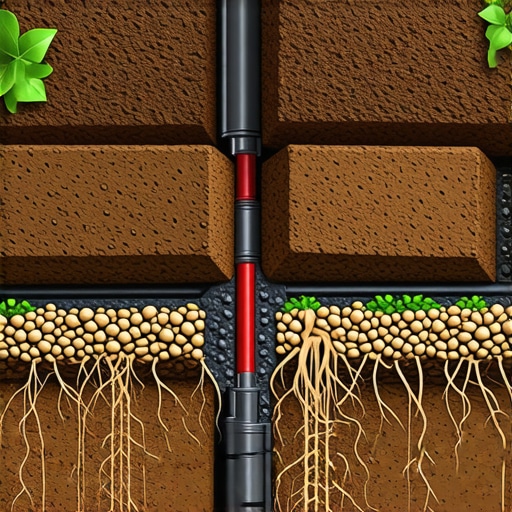
Soil compaction in raised beds occurs when the vertical pressure of gravity and water infiltration collapses the macropores and micropores necessary for gas exchange. To stop 2026 compaction, you must maintain a bulk density below 1.3 g/cm3 by balancing mineral aggregates with stable organic matter to prevent structural collapse.
When we talk about landscaping and garden design, most people focus on the aesthetic. But as a foreman, I look at the pore space. In a healthy raised bed, 50 percent of the volume should be solid material (minerals and organic matter) and the other 50 percent should be void space. Half of that void space should hold water, and the other half should hold air. Compaction happens when those air-filled voids are squeezed shut. Once your bulk density climbs toward 1.6 g/cm3, root tips can no longer penetrate the soil. They hit a wall. This is why your peppers look stunted even when you’re fertilizing them. The nutrients are there, but the delivery system is broken. Unlike lawn care where you can run a core aerator over the turf, a raised bed requires a more surgical approach to structural maintenance.
“Soil structure is the arrangement of the solid parts of the soil and of the pore spaces located between them. It is determined by how individual soil particles are bound together.” – Penn State Extension
How do I fix compacted soil in a raised bed?
To fix compacted soil without destroying the existing soil microbiology, you must avoid the temptation to use a power tiller. Tilling a raised bed is a death sentence for soil structure. It pulverizes soil aggregates into dust, which then settles even tighter than before once the first heavy rain hits. Instead, use a broadfork or a digging fork to gently lift the soil. You are looking to create cracks, not a smoothie. This is called ‘cracking the profile.’ Once you’ve created these fractures, you can top-dress with high-quality compost or leaf mold. The landscaping reality is that earthworms and gravity will pull that organic matter down into the cracks, naturally rebuilding the structure from the inside out.
The Ground-Up Build: Engineering for 2026 Success
Planning for the 2026 season starts with the base. Most hacks just slap some 4x4s together and dump in ‘garden soil’ from a big-box store. That is a recipe for disaster. Professional hardscaping principles apply here. If your raised bed is taller than 18 inches, the weight of the soil itself creates significant hydrostatic pressure against the walls and downward pressure on the lower layers. You need a drainage strategy.
| Material | Function in Raised Beds | Resistance to Compaction |
|---|---|---|
| Perlite | Aeration and Drainage | High (Inorganic) |
| Coarse Sand | Structural Integrity | Very High (Does not decompose) |
| Rice Hulls | Short-term Aeration | Moderate (Decomposes) |
| Pumice | Moisture Retention/Air | Highest (Structural) |
| Compost | Nutrient Delivery | Low (Shrinks over time) |
The table above highlights the critical trade-off. While compost is the lifeblood of garden design, it is structurally unstable. It decomposes. As it breaks down, the volume of your soil shrinks, and the particles get smaller, filling in the gaps. This is why your beds ‘sink’ three inches every year. To stop the 2026 compaction cycle, you must include at least 20 to 30 percent inorganic material like perlite or coarse (builder’s) sand. These materials act as the ‘studs’ in the wall of your soil, holding the pores open even as the organic matter vanishes.
What is the best soil mix for a raised garden bed?
The best soil mix for long-term structural stability is a modified ‘Mel’s Mix’ or a professional nursery blend consisting of 1/3 coarse vermiculite or perlite, 1/3 screened peat moss or coconut coir, and 1/3 high-quality blended compost. This ratio ensures that even under heavy rain, the capillary action of the soil moves water downward rather than letting it pool on the surface. Avoid ‘topsoil’ which often contains silt and clay particles that act like glue when compressed. If you are integrating hardscaping elements like stone walls, ensures the interior is lined with a geotextile fabric to prevent fine particles from clogging your drainage weep holes.
“A retaining wall doesn’t fail because of the stone; it fails because of the water trapped behind it.” – Hardscape Engineering Axiom
Biological Remediation and the No-Till Mandate
You cannot mechanical-engineer your way out of every problem. Eventually, the biology has to take over. This is where lawn care experts often fail when they move to raised beds. They want to spray and pray. In a raised bed, your best employees are the fungal mycelium and the glomalin they produce. Glomalin is a ‘soil glue’ that binds tiny particles into larger aggregates. These aggregates are what create the crumbly ‘chocolate cake’ texture of high-end landscaping soil. If you use synthetic fertilizers with high salt indexes, you kill these fungi. The glue dissolves. The aggregates collapse. The soil compacts. It’s a vicious cycle.
- Never walk on your raised bed soil. Use ‘stepping boards’ if the bed is wider than 4 feet.
- Maintain a permanent mulch layer (straw, wood chips, or shredded leaves) to protect the surface from the ‘hammering’ effect of raindrops.
- Incorporate cover crops like tillage radishes in the late fall. Their taproots act as ‘biological drills’ that break up deep compaction.
- Apply a layer of high-quality vermicompost every spring to reintroduce beneficial microbes.
How do I know if my soil is compacted?
Take a standard 1/4 inch diameter metal rod and push it into the bed when the soil is moist. If you hit significant resistance within the first 6 inches, you have a compaction problem that will stunt your 2026 harvest. In professional landscaping, we call this the ‘penetrometer test.’ A healthy bed should allow that rod to slide in 12 to 18 inches with minimal effort. If you have to lean your body weight into it, your plants are struggling. Fix it now. Don’t wait for the heat of July when the soil turns to concrete. The 2026 season is won or lost in the structural prep you do today.
Year One Expectations and the Settling Period
Every new raised bed will settle. It is a physical certainty. In the first year, expect a 10 to 15 percent reduction in volume as the air pockets you created during mixing find their equilibrium. This is not compaction; it is settling. The danger is when that settling continues into year two and three because you didn’t include enough structural aggregate. Monitor your drainage. If water sits on the surface for more than 5 minutes after a heavy rain, your pore space is compromised. Adjust your organic-to-inorganic ratio immediately. It will save your plants. Don’t skip this. Proper soil engineering is the only way to ensure your garden design remains viable for the long haul.