How to Aerate Your Lawn Using Only a Pitchfork
The Forensic Autopsy of a Choking Lawn
Manual aeration involves using a pitchfork or broadfork to penetrate the soil profile, breaking up surface crusting and subsurface compaction. This process restores pore space, allowing oxygen, water, and nutrients to reach the rhizosphere for improved root development and microbial activity.
I always drill into my new crew members: if you don’t fix the soil grading and structure first, every plant you put in the ground is just expensive compost. Last season, I walked onto a property where the homeowner was frustrated that their high-end fescue was thinning out despite a rigorous watering schedule. I didn’t even need a soil probe. I could see the puddling on a 2% grade. I stepped onto the turf, and it felt like walking on a parking lot. No give. No bounce. When I finally forced a screwdriver into the ground, it came up bone dry just two inches down. The water wasn’t infiltrating; it was just sitting on a compacted cap of clay and thatch, drowning the crown while the roots died of thirst. This is the structural reality that most ‘mow-and-blow’ outfits ignore because they want to sell you more fertilizer you don’t need.
“Soil compaction increases soil strength and decreases soil macro-porosity, which limits root growth and reduces the rate of oxygen diffusion.” – Penn State Center for Turfgrass Science
The Science of Soil Pore Space and Bulk Density
Understanding soil bulk density is the difference between a functional garden design and a stagnant mud pit. Bulk density is the weight of dry soil per unit of volume, and as it increases, the macropores—the large spaces between soil particles—vanish. These pores are the lungs of your yard. Without them, carbon dioxide produced by root respiration cannot escape, and atmospheric oxygen cannot enter. When you use a pitchfork, you are performing solid-tine aeration. While it doesn’t remove a core like a mechanical aerator, the lever action of the fork creates fractures in the soil matrix, effectively lowering the penetration resistance of the earth. This is vital for lawn care in regions with heavy clay where the soil naturally resists water movement. If you ignore this, your grass will experience desiccation even in a rainstorm because the roots simply cannot reach the moisture trapped in the subsoil.
How deep should I push the pitchfork for effective aeration?
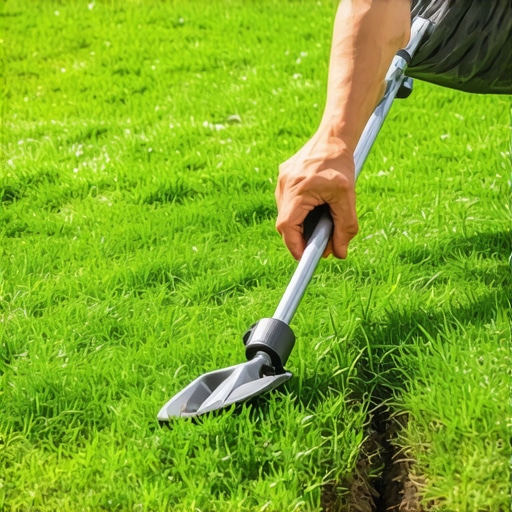
To bypass the thatch layer and reach the primary root zone, you must drive the pitchfork tines at least 4 to 6 inches into the ground. This depth ensures that the fracturing occurs within the A-horizon of the soil where the majority of nutrient uptake and biological activity occurs. [IMAGE_PLACEHOLDER_1]
Professional Methodology: The Lever-Action Technique
Don’t just stab the ground. That’s what hacks do. To properly aerate with a pitchfork, you need to utilize the fulcrum of the tool. Insert the tines vertically, 90 degrees to the surface. Once the tines are fully submerged, pull the handle back toward you about 15 to 20 degrees. You should see the soil surface slightly heave or lift. This heaving is the physical breaking of the capillary bonds between compacted soil particles. It creates a network of micro-fissures that act as highways for nutrient infiltration. Space your penetrations approximately 4 inches apart in a grid pattern. It is grueling work. It will take time. But for small, high-traffic areas or delicate hardscaping borders where a heavy machine would crush a retaining wall base, it is the only surgical option. Avoid doing this in bone-dry soil; the fork won’t penetrate. Avoid doing it in saturated soil; you will only cause more compaction through smearing the sidewalls of the holes.
| Metric | Manual Pitchfork | Mechanical Core Aerator |
|---|---|---|
| Depth of Penetration | 4 to 8 inches | 2 to 4 inches |
| Soil Removal | None (Displacement) | High (Cores Removed) |
| Cost of Operation | Low ($30 Tool) | High ($100+ Rental) |
| Risk to Utilities | Minimal | Moderate to High |
| Labor Intensity | Extreme | Moderate |
Is a pitchfork as good as a plug aerator?
A pitchfork is an excellent tool for localized compaction and integrated garden design where soil health is prioritized over speed. While it lacks the plug removal capability of a core aerator, its ability to reach deeper into the soil profile without disturbing the turf surface makes it superior for spot treatments and sensitive landscaping zones. It is a precision instrument, not a broad-brush solution.
The Pre-Aeration Checklist
- Utility Marking: Always call 811 before you start. Even a pitchfork can puncture a shallow irrigation line or a low-voltage lighting cable.
- Moisture Check: The soil should be moist but not muddy. If you can’t push a finger into the dirt, it’s too dry.
- Thatch Management: If your thatch is deeper than half an inch, power rake first. The pitchfork needs to hit soil, not a sponge of dead organic matter.
- Tool Selection: Use a forged steel digging fork, not a light-duty hay fork. The tines must be stiff and non-flexing.
- Safety Gear: Wear steel-toed boots. If the fork slips on a rock, you don’t want those tines in your metatarsals.
“A retaining wall doesn’t fail because of the stone; it fails because of the water trapped behind it, much like a lawn fails because of the water trapped above the compaction layer.” – Hardscape Engineering Axiom
Post-Aeration: Maximizing the Window of Opportunity
Once you have opened the soil, the clock is ticking. This is the moment to introduce soil amendments. I recommend a top-dressing of organic compost or calcined clay. These materials will fall into the fissures you’ve created, keeping the pore space open long after the holes have filled. If you are dealing with a nutrient deficiency, apply your NPK fertilizer now. The nitrogen will move directly to the roots rather than washing off into the storm drain. This is also the ideal time for overseeding. The holes provide the perfect seed-to-soil contact required for high germination rates. Don’t skip this step. If you leave the holes empty, they will simply collapse back into their original compacted state within a few months. You have to fill the voids with something better than what you started with. It’s about engineering a better soil structure from the bottom up.
![Why Your 2026 Grass Seed is Failure [Clay Fixes]](https://lawnmajesty.com/wp-content/uploads/2026/06/Why-Your-2026-Grass-Seed-is-Failure-Clay-Fixes.jpeg)