Stop 2026 Lawn Runoff with This Grass Species
I always drill into my new crew members: if you don’t fix the soil grading first, every plant you put in the ground is just expensive compost. Last spring, I watched a neighbor hire a ‘mow-and-blow’ crew to install 5,000 square feet of Kentucky Bluegrass on a 12-degree slope without any soil prep. Three weeks later, after a standard two-inch rain event, that entire investment was sitting in a muddy heap at the bottom of the cul-de-sac. It was a total failure of engineering. If you want to stop 2026 lawn runoff, you have to stop thinking about aesthetics and start thinking about hydraulic conductivity. Most residential yards are compacted to the point of being as impermeable as concrete. When the rain hits, the water has nowhere to go but sideways, carrying your expensive nitrogen and topsoil with it. We fix this by selecting species that function as biological pumps, forcing water into the subsoil through deep-root penetration.
The Engineering Reality of Residential Runoff
To effectively stop lawn runoff by 2026, homeowners must address hydrostatic pressure and soil compaction by utilizing deep-rooted grass species. These plants increase hydraulic conductivity, allowing the rhizosphere to absorb excess stormwater and stabilize the topsoil structure against sheet erosion and nutrient leaching during heavy weather.
When we talk about runoff, we are talking about a failure of the soil’s infiltration rate. In a healthy ecosystem, the soil acts as a sponge. In a typical suburban development, the heavy machinery used during construction crushes the soil pore space. This results in a bulk density often exceeding 1.6 g/cm³, which is dense enough to stop most roots in their tracks. To combat this, we don’t just need a ‘green carpet’; we need a vertical drainage system. This is where the choice of species becomes a matter of civil engineering. We need plants that can punch through that compaction and create macropores. Every inch of root depth provides a channel for water to follow. Without those channels, you are just managing a flood.
“A retaining wall doesn’t fail because of the stone; it fails because of the water trapped behind it.” – Hardscape Engineering Axiom
The Best Grass Species for Erosion Control and Stormwater Mitigation
Selecting the right turfgrass species for 2026 requires an analysis of root architecture and tensile strength to ensure slope stabilization. Species like Tall Fescue and Buffalo Grass are superior for stormwater management because they develop extensive root systems that anchor the soil and promote deep-water infiltration.
| Grass Species | Root Depth (Inches) | Drought Tolerance | Runoff Reduction Potential |
|---|---|---|---|
| Tall Fescue (Turf-Type) | 36 – 60 | High | Excellent |
| Buffalo Grass (Native) | 72 – 96 | Very High | Superior |
| Kentucky Bluegrass | 6 – 12 | Moderate | Poor |
| Perennial Ryegrass | 12 – 18 | Low | Moderate |
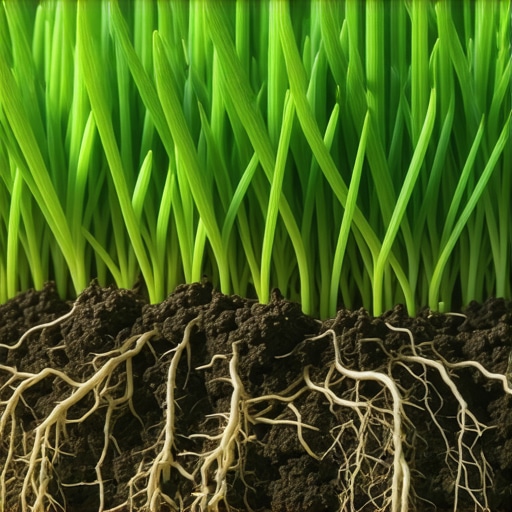
The clear winner for most temperate zones is the Turf-Type Tall Fescue (TTTF). Unlike its cousin Kentucky Bluegrass, which has a shallow, mat-like root system that sits in the top 6 inches of soil, TTTF can drive roots down five feet. This isn’t just about surviving a drought; it’s about surface area. A lawn with five-foot roots has ten times the surface area for water absorption than a standard lawn. For those in more arid or transition zones, Buffalo Grass (Bouteloua dactyloides) is the gold standard. It is a native North American species that evolved to hold the prairie together. Its roots are like steel cables, reaching depths of eight feet. It doesn’t just stop runoff; it eliminates it. You could dump a five-gallon bucket of water on a healthy Buffalo grass stand, and you wouldn’t see a drop of surface movement. It’s that efficient.
Which grass stops erosion fastest?
For immediate erosion control, Perennial Ryegrass is the fastest-germinating option, often showing blade growth within 5 to 7 days. However, for long-term slope stability, it should be over-seeded with Deep-Rooted Tall Fescue to ensure the root mat can withstand hydrostatic forces over several seasons.
Speed is often the enemy of quality in landscaping. While Ryegrass gives you that quick green fix, it lacks the structural integrity to handle 2026’s projected weather volatility. I tell my clients to use a ‘nurse crop’ strategy. We mix 20% Ryegrass for immediate soil binding with 80% high-quality, endophyte-enhanced Tall Fescue. The Ryegrass holds the dirt today, and the Fescue secures the property for the next decade. Don’t buy the cheap bags at the big-box store. Those are usually filled with ‘Variety Not Stated’ (VNS) seeds and high weed content. You want certified seed with a germination rate of at least 90% and zero noxious weeds. Your soil is a bank account; don’t deposit trash into it.
How much slope can grass handle?
Standard turfgrass species can typically stabilize slopes up to 25 percent (a 4:1 rise-to-run ratio). Beyond this gradient, hardscaping, retaining walls, or rip-rap are required to prevent mass wasting and geotechnical failure of the hillside during saturation events.
If you’re looking at a hill and wondering if grass will save it, get a transit or a line level. Anything steeper than a 3:1 slope is a disaster waiting to happen for turf. On those inclines, the shear stress of the water moving over the surface exceeds the tensile strength of the grass blades. In those cases, we move into hardscape engineering. We use 4-inch modified gravel bases and 12-inch perforated French drains to move water behind the scenes. But for your standard yard, the right grass species is your first line of defense. It’s the cheapest insurance policy you can buy against a flooded basement or a washed-out driveway.
“Soil erosion by water is a process of detachment and transport of soil particles by raindrop impact and surface runoff.” – USDA Natural Resources Conservation Service
The Ground-Up Build: Preparing Soil for 2026
Preparation is 80% of the job. If you just throw seed on top of hard dirt, you are feeding the birds, not building a lawn. You need to break the surface tension of the soil. I recommend a core aerator—not the spike ones that just compact the soil further, but a true hollow-tine aerator that pulls 3-inch plugs out of the ground. This creates immediate voids for water to enter. Following aeration, you should top-dress with a quarter-inch of high-quality organic compost. This introduces the microbiology needed to break down thatch and improve soil structure. It’s about creating a living filter. A lawn is not a sterile surface; it is a biological engine.
- Test Soil pH: Aim for 6.2 to 7.0 for optimal nutrient uptake.
- Check Compaction: If a screwdriver won’t sink 6 inches into damp soil, you must aerate.
- Calculate Slope: Use a string level to determine if you need additional drainage hardware.
- Select Cultivars: Look for ‘A-List’ approved Tall Fescue varieties for 2026.
- Calibrate Spreaders: Ensure you are dropping exactly 8 lbs of seed per 1,000 square feet.
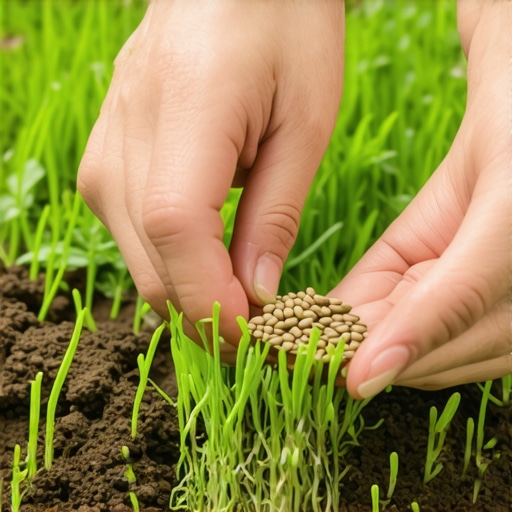
Once the seed is down, it’s about moisture management. You don’t want to drown it, but you can’t let it dry out. The first 14 days are critical. Use a light straw mulch or a biodegradable erosion blanket on any sloped areas. This protects the seed from being washed away by the very runoff you are trying to prevent. By year two, the roots will have established enough biomass to handle significant rainfall. By 2026, you will have a deep-rooted system that keeps your soil on your property and out of the storm drains. It’s not magic; it’s just good physics. Stop treating your lawn like a decoration and start treating it like the engineering asset it is. Your foundation, your basement, and your property value will thank you.