Stop 2026 Soil Cracking in Hot Summer Heat
Stop 2026 Soil Cracking in Hot Summer Heat: A Master Foremans Guide to Soil Engineering
I always drill into my new crew members: if you dont fix the soil grading and chemistry first, every plant you put in the ground is just expensive compost. I remember a job back in the record heat of 2012 where a client spent fifty thousand on nursery stock only to have the ground open up like a canyon three months later. The cracks were four inches wide and two feet deep. They had literally sheared the root balls of their new maples in half. It wasnt the heat that killed those trees; it was the owners failure to understand the shrinkage limit of their heavy clay soil. We are looking at similar climatic projections for 2026. If you arent preparing your soil profile now, your hardscaping will heave and your turf will desiccate beyond repair. This is not about aesthetics. This is about structural integrity and the biological reality of your land.
The Forensic Autopsy of Desiccated Soil
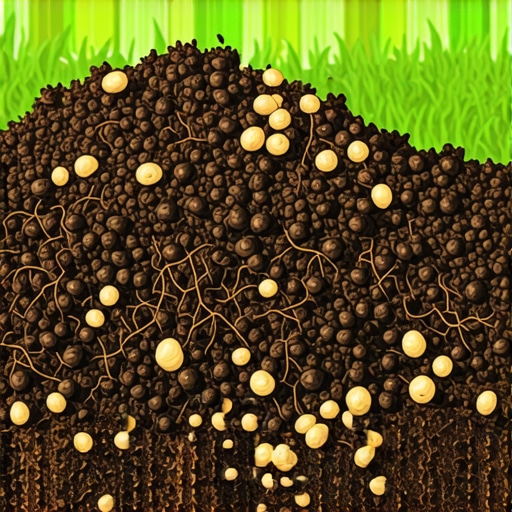
Soil cracking occurs when desiccation-induced shrinkage exceeds the soils tensile strength, primarily in high-clay content environments like those with smectite or illite minerals. To stop this in 2026, you must manage bulk density and increase organic matter levels to maintain a consistent moisture profile throughout the root zone. When water leaves the pore spaces between clay platelets, the electrostatic attraction pulls them closer together. This leads to massive volume loss. You see it as a crack. I see it as a failure of soil structure. It will ruin your yard. You cannot just spray water on a crack and expect it to heal. By the time you see the crack, the damage to the fungal hyphae and micro-arthropod tunnels is already done.
“Soil moisture tension is the force required by a plant to pull water from the soil pores; as the soil dries, this tension increases exponentially until the permanent wilting point is reached.” – USDA NRCS Technical Manual
How do I stop my yard from cracking in heat?
To stop your yard from cracking during extreme heat, you must aggressively incorporate humic acid and decomposed organic matter to break up the clay lattice. Implementing a deep, infrequent irrigation schedule forces root systems to grow deeper into the subsoil, which stabilizes the moisture content of the earth. Surface-level watering is a waste of time. It evaporates before it hits the root zone. You need to get water down twelve inches deep. If you are just wetting the top inch, you are training your lawn to die. I tell my guys to check the soil with a penetrometer. If it doesnt slide in like butter, you have a compaction problem that will lead to cracking.
Hardscaping Vulnerability and the Moisture Cycle
Hardscape failures during heat waves are almost always a result of the coefficient of linear thermal expansion combined with soil subsidence. When the soil beneath a patio or walkway loses too much moisture, it shrinks and leaves a void. Without support, the pavers or stones crack under their own weight or shift out of level. This is why we use a modified gravel base compacted to 95 percent Proctor density. If your contractor just threw sand over dirt, you are in trouble. Water management behind retaining walls is equally critical. Hydrostatic pressure isnt just about wet soil; it is about the transition between bone-dry and saturated states.
| Soil Type | Clay Content % | Shrinkage Risk | Water Retention |
|---|---|---|---|
| Heavy Clay | >40% | Extreme | Very High (but inaccessible) |
| Sandy Loam | 10-20% | Low | Moderate |
| Silt Loam | 0-20% | Moderate | High |
| Sandy Soil | <10% | Negligible | Low |
We use a specific mix of 3/4 inch clean stone for drainage layers. This prevents the soil from pulling away from the back of the wall. If you see a gap between your grass and your patio, that is a warning sign. The soil is retracting. You need to top-dress that area with a mix of 70 percent sand and 30 percent compost to fill the void and introduce moisture-holding microbes. Dont use cheap bag dirt. It has too much wood filler. It will rot and leave more voids. You need real biological material.
Tactical Lawn Care for the 2026 Heat Cycle
Lawn care in a heat wave is about managing the metabolic rate of the grass. Most homeowners scalp their lawns, thinking it looks cleaner. That is a death sentence. Keep your blades at four inches. This shades the soil surface and reduces the temperature of the crown by up to fifteen degrees. Higher grass means deeper roots. Deeper roots mean the soil stays held together. You also need to look at your NPK ratios. Stop dumping high-nitrogen fertilizer in June. It forces top growth that the roots cannot support. Switch to a high-potassium feed to strengthen cell walls and improve drought resistance. Potassium is like anti-freeze for heat. It keeps the plants internal pressure stable.
- Aeration: Core aerate in the spring to a depth of 4 inches.
- Top-dressing: Apply 1/4 inch of leaf mold compost after aeration.
- Wetting Agents: Use a professional-grade surfactant to break the surface tension of dry-patch soil.
- Mulching: Maintain a 3-inch layer of hardwood mulch in garden beds, keeping it away from tree flares.
- Monitoring: Use a soil moisture sensor set to the 6-inch mark.
Does mulching prevent soil cracks?
Yes, mulching prevents soil cracks by providing a thermal barrier that reduces the rate of evapotranspiration from the soil surface. A three-inch layer of organic mulch can keep the soil temperature twenty degrees cooler than exposed earth, preserving the structural moisture required to prevent clay shrinkage. Do not make mulch volcanoes. They trap heat against the bark and kill the tree. Keep the mulch flat. You want a blanket, not a mountain. If you use dyed mulch, you are just putting chemicals in your ground. Use natural cedar or hardwood. It breaks down and feeds the soil. That breakdown process creates the very carbon chains that hold water molecules in place.
“Expansion and contraction cycles in reactive soils can generate enough lateral pressure to displace retaining walls without proper drainage or moisture stabilization.” – ICPI Technical Bulletin
The Science of Soil Flocculation
If you want to truly solve cracking, you have to talk about flocculation. This is the process where individual clay particles coagulate into larger clumps or flocs. Gypsum (calcium sulfate) is a tool we use for this, especially in sodic soils. The calcium ions displace the sodium, allowing the soil to open up. This improves macropore space. More air and water can move through the soil. When the heat hits in 2026, a flocculated soil will hold its structure much better than a compacted, plate-like soil. It is basic chemistry. If your soil is rock hard when dry, you lack the calcium-to-magnesium ratio needed for good structure. Get a lab test. Dont guess. Soil tests from a local university extension are cheap. Replacing a dead yard is expensive.