Stop 2026 Tree Cankers with Proper Pruning Hacks
Why Tree Cankers are the Silent Killers of 2026 Landscaping
Tree cankers are localized areas of dead bark and cambium caused by fungi or bacteria, often entering through improper pruning cuts or mechanical damage. Left untreated, they girdle branches and disrupt the tree’s vascular system, leading to structural failure and death. I always drill into my new crew members: if you don’t fix the soil grading and root environment first, every plant you put in the ground is just expensive compost. I have seen entire rows of Leyland Cypress and Maple trees worth $50,000 wiped out because a ‘mow and blow’ crew hacked the lower branches with dull shears. They didn’t understand the biology; they just wanted to get done and get paid. If you want your investment to survive until 2026 and beyond, you have to treat every cut like a surgical procedure. A tree does not ‘heal’ a wound; it seals it through a process called compartmentalization. If you mess up the cut, you stop that process dead in its tracks.
How do you identify a tree canker?
Identifying a canker involves looking for sunken, discolored, or oozing areas on the bark of branches and trunks. These lesions often appear as if the bark is ‘bleeding’ sap or resins, especially in stone fruits and hardwoods. Look for concentric rings of callus tissue, which signify the tree’s attempt to wall off the infection. In many cases, the foliage above the canker will yellow and die back first. Don’t ignore a small lesion on a primary scaffold branch. It will rot. Within two seasons, that branch will become a liability during a storm, potentially dropping 400 pounds of wood on your roof.
“Proper pruning is the most effective way to manage tree health and prevent the spread of cankers, but it must be done with an understanding of the branch bark ridge and branch collar.” – International Society of Arboriculture (ISA) Best Management Practices
The Engineering of a Clean Cut: Precision Pruning Materials
Professional pruning requires high-carbon steel bypass pruners, razor-toothed pull saws, and 70% isopropyl alcohol for sterilization to prevent cross-contamination of pathogens. Using dull tools crushes plant tissue instead of slicing it, creating an entry point for Cytospora or Nectria cankers. Most homeowners buy cheap anvil-style pruners from big-box stores. These are garbage. They squeeze the branch, shattering the xylem and phloem cells. You need bypass blades that act like scissors. Also, stop using ‘wound dressing’ or tar. It’s a scam. It traps moisture against the wound and accelerates fungal growth. The tree needs oxygen to form its own barrier. Use the right tools or don’t touch the tree at all.
| Tool Type | Ideal Branch Diameter | Primary Use Case |
|---|---|---|
| Bypass Pruners | Up to 0.75 inches | Small twigs, perennial stems |
| Loppers | 0.75 to 2.0 inches | Deep reaching branch thinning |
| Pull Saw (Folding) | 2.0 to 4.0 inches | Clean cuts on structural limbs |
| Chainsaw | 4.0+ inches | Major removals (Hire a Pro) |
When is the best time to prune to avoid cankers?
The optimal time to prune most deciduous trees is during dormancy in late winter, specifically before the sap starts flowing in early spring. Pruning during this window minimizes the risk of attracting insects that carry fungal spores and allows the tree to begin its compartmentalization process immediately when spring growth begins. Avoid pruning in the fall. Fungal spores are most active then, and the tree’s metabolism is slowing down, making it impossible for the wound to seal before the freeze-thaw cycles of winter set in. In my 20 years, I’ve seen more damage from ‘October cleanup’ than from almost any other landscaping mistake.
“Cankers develop when a pathogen colonizes the bark or cambium of a stressed tree, often entering through wounds caused by mechanical damage or improper pruning.” – Penn State Agricultural Extension
The Step-by-Step Pruning Protocol to Prevent Disease
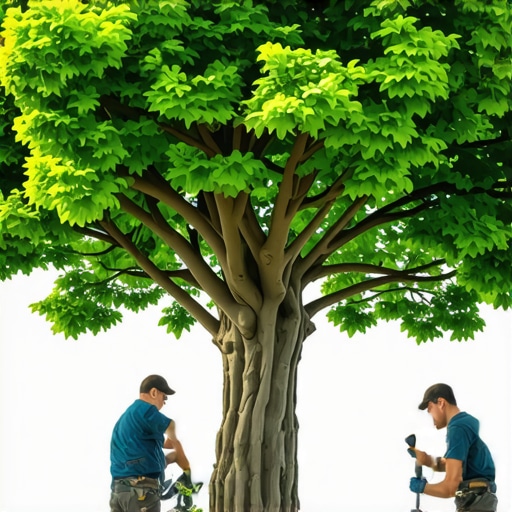
To prevent tree cankers, you must follow the Three-Cut Method on any branch larger than one inch in diameter to prevent bark stripping. Bark stripping creates a massive, jagged wound that a tree can never properly seal, inviting immediate fungal colonization. Start with an undercut about 6 to 12 inches out from the trunk. This prevents the weight of the falling branch from tearing the bark down the side of the tree. The second cut is the ‘top cut,’ slightly further out than the first, which drops the limb safely. The final cut is the ‘finish cut’ just outside the branch collar. This is where the engineering matters. You must find the swollen area at the base of the branch. That’s where the tree’s defensive chemicals are concentrated. Cut there, and the tree seals the wound in months. Cut flush against the trunk, and you’ve just given the tree a terminal illness.
- Sterilize all blades with 70% alcohol between every single tree.
- Identify the branch bark ridge (the raised line of bark in the branch crotch).
- Locate the branch collar (the swelling at the bottom of the branch).
- Make the finish cut at a 45-degree angle away from the trunk.
- Inspect the cut for any signs of dark, internal staining, which indicates existing rot.
- Do not leave a ‘stub.’ Stubs are magnets for rot.
Horticultural Zooming: The Microscopic Reality of Cambium Health
At the cellular level, tree cankers are a battle for territory between the tree’s lignification process and the invasive hyphae of the fungus. When you prune correctly, you trigger the production of ‘callus’ and then ‘wound wood’ which rolls over the opening. If the tree is stressed by poor soil pH or lack of nitrogen, this process stalls. In the heavy clay soils of the Mid-Atlantic, I often see trees struggling because they are planted too deep. The root flare should always be visible. If you’ve buried the root flare and then you prune the branches, you are hitting the tree with two metabolic stressors at once. It can’t fight both. It will lose. We use 1 inch of water per week to keep the turgor pressure high, ensuring the tree has the hydraulic power to move nutrients to the wound site. Don’t starve your trees and expect them to heal.