Stop 2026 Tree Bark Damage with Proper Care
Why Tree Bark Protection is the Foundation of Landscaping Longevity
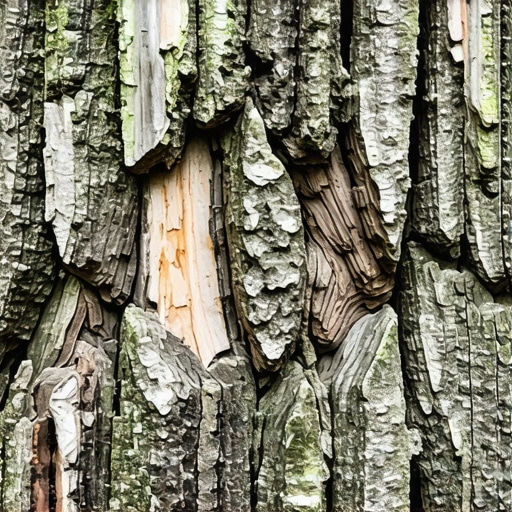
Tree bark damage in 2026 can be prevented by maintaining a 3-foot mulch-free radius around the root flare, applying white guards for winter sunscald prevention, and utilizing structural soil to mitigate compaction that weakens the tree’s external defense layers. Bark is not just a skin: it is a complex transport system. When you damage it, you are cutting the fuel lines of a multi-ton organism. I have spent two decades watching $5,000 specimen oaks die because a guy with a weed-whacker got too close. It is a slow, agonizing decline that starts with a small scrape and ends with a stump grinder.
The Apprentice Lesson: Soil Grading and Root Reality
I always drill into my new crew members: if you don’t fix the soil grading first, every plant you put in the ground is just expensive compost. Last spring, I had a green kid who thought he was doing me a favor by burying the root flares of twelve newly delivered Maples under a mountain of dyed black mulch. I made him dig every single one out with his bare hands. I told him, ‘You see that flare? That is where the tree breathes.’ If you bury that tissue in soil or mulch, you trap moisture against bark that is designed for air. You trigger anaerobic conditions. The bark softens. The fungi move in. By the time the homeowner notices the leaves turning yellow, the vascular cambium is already mush. Proper hardscaping and garden design must respect the biology of the tree, or the hardscape will outlive the landscape by fifty years.
“A retaining wall doesn’t fail because of the stone; it fails because of the water trapped behind it. Similarly, a tree doesn’t fail because of the wind; it fails because the bark and root system were compromised by improper environmental management.” – Hardscape Engineering Axiom
The Mechanical Menace: Mowers, Trimmers, and Physical Trauma
Mechanical injuries from lawn care equipment are the leading cause of premature tree death in residential zones. A string trimmer spinning at 3,000 RPM carries enough kinetic energy to strip the phloem and xylem layers in seconds. This is called ‘girdling.’ If you strip the bark around the entire circumference of the tree, the roots will starve because the sugars produced in the leaves have no way to travel down. It is a biological dead end. Stop the ‘mow-and-blow’ hacks from getting within three feet of your trunks. I recommend a physical barrier: a wide mulch bed or a protective plastic guard for younger trees. But be careful: cheap guards can trap moisture and harbor earwigs.
How do you protect tree bark from lawn mowers?
The most effective way to protect tree bark from mowers is to eliminate turf grass within a three-foot radius of the trunk using a properly installed mulch ring. This creates a ‘no-fly zone’ for heavy equipment and ensures that the root flare remains visible and dry while preventing lawn care chemicals from contacting the trunk. Use a 2-inch layer of double-shredded hardwood mulch, but never let it touch the bark itself. This physical separation is the only 100% effective method to prevent mechanical impact damage.
| Damage Agent | Mechanism of Injury | Long-term Impact |
|---|---|---|
| String Trimmer | High-speed mechanical abrasion | Vascular girdling and nutrient starvation |
| Sunscald | Rapid thermal expansion/contraction | Vertical bark splitting and fungal entry |
| Mulch Volcano | Excessive moisture retention | Bacterial rot and adventitious root growth |
| Rodents | Winter gnawing of the inner bark | Interruption of sugar transport (Phloem) |
Environmental Warfare: Sunscald and Frost Cracks
In regions with harsh winters, bark damage often occurs without a human ever touching the tree. This is the ‘freeze-thaw’ cycle. On a bright winter day, the sun warms the dark bark of a tree, waking up the cells underneath. When the sun drops behind the horizon and the temperature plummets, those active cells freeze and burst. This results in sunscald: long, vertical cracks on the south-southwest side of the trunk. I have seen 20-year-old fruit trees split wide open in a single February night. You must use tree wraps or white latex paint (diluted 50/50 with water) on young, thin-barked species like maples, cherries, and plums to reflect that solar energy. It is not about aesthetics: it is about thermodynamics.
“The vascular cambium is a single layer of cells; its destruction over a significant portion of the circumference leads to irreversible canopy dieback and structural instability.” – Penn State Agricultural Extension
The Mulch Volcano: A Slow Death Sentence
The ‘mulch volcano’ is the hallmark of an amateur. When you pile mulch against the trunk, you are inviting pathogens to a feast. Bark is meant to be dry. Soil and mulch are meant to be wet. When the two meet, the bark goes through a process of maceration. It softens, loses its protective wax, and becomes a gateway for Phytophthora and other root rot pathogens. Once these soil-borne fungi enter the trunk, there is no cure. You are looking at a removal bill of $2,000. Do it right the first time. Keep the mulch back. I want to see the ‘flare’ where the trunk meets the roots. If it looks like a telephone pole sticking out of the ground, it is planted too deep.
- Inspection: Monthly checks for oozing sap or sawdust (signs of borers).
- Mulching: Maintain a 2-3 inch depth, but 0 inches at the trunk.
- Irrigation: Use drip lines, not high-pressure sprinklers that hit the bark.
- Protection: Install hardware cloth guards if rabbits or voles are present.
- Pruning: Only prune during dormancy to prevent ‘bleeding’ and pest attraction.
Can a tree survive if the bark is stripped all the way around?
A tree cannot survive if it is completely girdled (bark stripped 360 degrees) because the phloem layer is severed, preventing the transport of photosynthetic sugars to the roots. While the tree may leaf out for one final season using stored energy, the roots will eventually die of starvation, leading to total tree failure. In some rare cases, a bridge graft can be performed by a certified arborist to reconnect the vascular tissue, but this is a complex and expensive procedure with no guarantee of success. Prevention is the only reliable strategy.
The Science of Healing: CODIT
Trees do not ‘heal’ like humans do. They compartmentalize. This is the CODIT model (Compartmentalization of Decay in Trees). When a tree is wounded, it builds four walls to seal off the damage. Wall 1 plugs the vascular tubes. Wall 2 uses the growth rings to stop inward spread. Wall 3 uses the ‘rays’ to stop lateral spread. Wall 4 is the most important: it is the new wood grown after the injury. If you keep hitting the tree with a mower, you are breaking Wall 4 every single year. The tree never gets to seal the wound. It eventually runs out of energy and the decay wins. Respect the walls. Leave the bark alone. Your 2026 landscape depends on the structural integrity you preserve today. Don’t be the reason your shade disappears.


![Stop Leaf Spot from Killing Your 2026 Roses [Fast Fix]](https://lawnmajesty.com/wp-content/uploads/2026/05/Stop-Leaf-Spot-from-Killing-Your-2026-Roses-Fast-Fix.jpeg)