Stop Mosquitoes in 2026 with These 3 Standing Water Fixes
The Forensic Autopsy of a Mosquito-Infested Yard
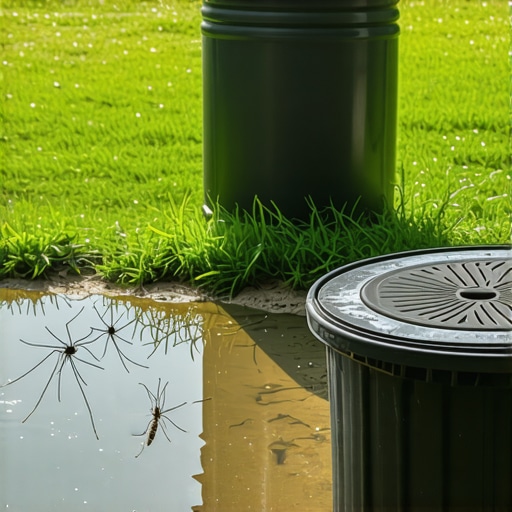
Walk out to your yard after a spring rain and listen. If you hear a low hum and feel a sting on your neck within thirty seconds, your property is failing a basic engineering test. Most homeowners see a puddle and think it is a nuisance; I see a structural failure that invited a biological invasion. Mosquitoes do not just appear; they are recruited by poor site grading and the inevitable decay of organic matter in stagnant pools. Last year, I was called to a property where the owner had spent $35,000 on a high-end paver patio. Within six months, the center had settled by two inches, creating a permanent birdbath that birthed thousands of mosquitoes every week. The previous contractor had skipped the compaction of the sub-grade and used a cheap, non-breathable weed barrier that trapped water instead of letting it migrate. We had to rip the entire thing out. The culprit was not the stone; it was the lack of a 2% pitch and the absence of a dedicated drainage line. If you do not fix the hydrology of your soil, you are just building an expensive swamp.
Why Traditional Grading Fails During Heavy Storms
To stop mosquitoes in 2026, homeowners must address standing water via French drains, catch basins, and permeable hardscaping that prevents stagnant pools. Eliminating these breeding grounds requires a minimum 2% grade away from the foundation and proper hydrostatic pressure management through engineered drainage systems to ensure water exits the property in under 24 hours. Anything longer is a breeding cycle.
“A retaining wall doesn’t fail because of the stone; it fails because of the water trapped behind it.” – Hardscape Engineering Axiom
How deep should a French drain be?
A functional French drain needs to be excavated to a depth of at least 18 to 24 inches to bypass the frost line and reach the sub-soil layers where water naturally collects. I see hacks digging 6-inch trenches that clog with silt in a single season. You need a 4-inch perforated SDR-35 pipe—not that flimsy black corrugated junk—surrounded by 1-inch washed clean stone. Wrap the entire stone envelope in a non-woven geotextile fabric. This acts as a filter. It keeps the fines (tiny soil particles) from migrating into the stone and choking the system. If your contractor suggests using a “sock” over the pipe without a gravel envelope, fire them on the spot. It will fail. It will rot.
The Three Critical Fixes for 2026
1. The Precision French Drain and Catch Basin Integration
Surface water is only half the battle. In heavy clay soils, water moves laterally through the upper six inches of the soil profile. This is where most mosquito breeding occurs in the “squish” of your lawn care routine. We install catch basins at the lowest points of the hardscape to grab surface runoff immediately. These basins connect to a solid (non-perforated) NDS pipe that carries the water to a legal discharge point or a dry well. This prevents the soil from becoming saturated to the point of hypoxia. When soil is saturated, the microbial life dies, the grass thins out, and you get a mud pit. Mud is a mosquito’s best friend. Don’t provide it.
| Material | Purpose | Expected Lifespan |
|---|---|---|
| SDR-35 PVC Pipe | Main drainage artery; crush resistant. | 50+ Years |
| Non-Woven Geotextile | Separation of soil and drainage aggregate. | 30+ Years |
| Washed #57 Stone | Void space for water migration. | Indefinite |
| Polymeric Sand | Joint stabilization in hardscaping. | 10-15 Years |
2. Hardscape Conversion to Permeable Systems
If you are planning a new patio in 2026, stop looking at standard concrete slabs. They are impervious. They create runoff. Instead, look at permeable interlocking concrete pavements (PICP). These systems use specialized aggregates in the joints instead of sand. Water drops straight through the patio into a subterranean reservoir of stone. It then infiltrates the ground slowly. This eliminates surface ponding entirely. You can literally pour a five-gallon bucket of water on a permeable patio and watch it disappear in seconds. No water, no mosquitoes. It is civil engineering disguised as garden design.
3. Soil Amending and Sub-Surface Decompaction
Your lawn care provider probably just throws nitrogen at your grass and leaves. That is useless if your soil is compacted to the density of a parking lot. Compacted soil holds water on the surface because the infiltration rate is near zero. We use 3-inch hollow-tine aeration followed by a top-dressing of 70% sand and 30% organic compost. This changes the soil structure. It increases the macropore space, allowing water to dive deep into the profile. We aim for a soil pH of 6.5 to ensure turf health, as thick turf is a natural pump that moves water out of the ground through transpiration.
“Effective drainage systems must be designed to manage the ‘first flush’ of runoff, which often carries the highest concentration of pollutants and provides the primary breeding environment for vector-borne insects.” – University Extension Water Management Guide
What is the best gravel for drainage?
Never use “crusher run” or gravel with “fines” for drainage. You need washed #57 or #3 stone. These have a high void ratio—roughly 40%—meaning there is plenty of room for water to move between the rocks. If you use gravel that has dust or small particles in it, those particles will settle at the bottom and create a concrete-like sludge that stops water flow. Use the right stone. Don’t skip this.
2026 Mosquito Prevention Checklist
- Inspect all downspout terminations; ensure they extend 10 feet from the foundation.
- Clear organic debris from window wells and area drains.
- Check the 2% pitch on all hardscape surfaces using a laser level.
- Verify that no irrigation heads are over-spraying onto mulch beds.
- Monitor low-lying turf areas for “squish” lasting more than 12 hours after rain.
Landscape management is not about aesthetics; it is about managing the transition between the sky and the water table. If you ignore the physics of water, nature will remind you with a swarm of insects. Build it right the first time. Use heavy-duty materials. Dig deeper than you think you need to. That is how you win in 2026.