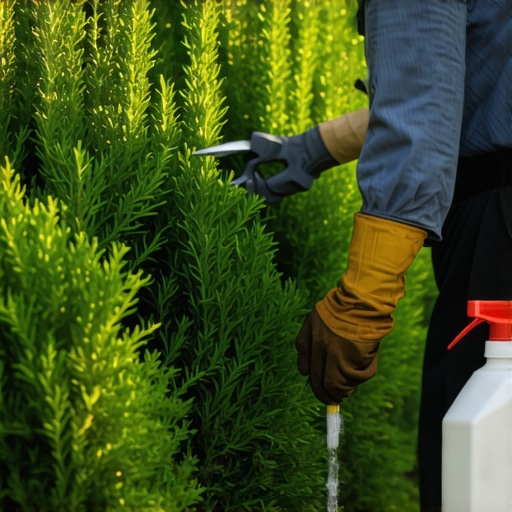
Stop 2026 Vine Growth from Choking Your Trees
The Visual Autopsy: Why Your Trees Are Dying From Within
I always drill into my new crew members: if you don’t fix the soil grading first, every plant you put in the ground is just expensive compost. I recently inspected a property where a client lost three fifty year old white oaks because they ignored what looked like a few thin green strings at the base. Those strings were Oriental Bittersweet, and by the time they called me, the vines had reached the canopy, shaded out the leaves, and the weight of the ice-laden foliage in winter snapped the primary leaders. The tree didn’t just die; it was strangled and crushed over a five year period because of horticultural negligence. To stop 2026 vine growth from choking your trees, you must implement a mechanical severance strategy coupled with systemic herbicide application to the vascular system of the invasive species while preserving the cambium layer of the host tree. This process requires surgical precision to ensure the host survives while the parasite rots in place.
The Cellular Mechanics of Vine Destruction
Vines like English Ivy and Kudzu do not just climb; they exploit the biology of the tree. They utilize adventitious rootlets or twining tendrils to scale the bark. Once they reach the upper third of the canopy, they engage in photosynthetic theft. They deploy broad leaves that block sunlight from reaching the tree’s own foliage. Without sunlight, the tree cannot perform photosynthesis, leading to a depletion of stored starches in the root system. Furthermore, the sheer mass of mature vines adds thousands of pounds of static load to the branch structure. In a high wind event or heavy snow, this added weight acts like a sail, catching the force and transferring that energy into the trunk, often resulting in catastrophic structural failure of the hardwood.
“Vines compete with trees not just for light, but for essential soil nutrients and moisture within the top twelve inches of the soil profile, often out-competing native hardwoods in disturbed soils.” – Penn State Agricultural Extension
Identifying the 2026 Invasive Threats
To identify invasive vines, look for alternate leaf patterns, woody stems that exceed two inches in diameter, and aerial rootlets that adhere to the rhytidome or outer bark of your trees. Identifying the specific species dictates whether you use a foliar spray or a stump treatment. Not all vines are equal. Some, like the native Virginia Creeper, are manageable. Others, like the invasive Wisteria, can exert enough torque to literally crush a young tree trunk as the vine thickens. Use the following table to categorize the threats on your property.
| Vine Species | Climbing Method | Damage Type | 2026 Threat Level |
|---|---|---|---|
| Oriental Bittersweet | Twining Stems | Girdling / Constriction | Critical |
| English Ivy | Rootlet Adhesion | Bacterial Rot / Weight | High |
| Wild Grape | Tendrils | Canopy Shading | Moderate |
| Kudzu | Rapid Twining | Complete Smothering | Extreme |
How much modified gravel do I need for a patio base?
While we are discussing site prep, remember that drainage impacts vine growth. For a standard hardscape project, you need a minimum of six inches of compacted 2A modified gravel for a pedestrian patio and up to twelve inches for a driveway. Proper hydrostatic pressure management through gravel prevents the stagnant, wet soil conditions that invasive vines like Japanese Honeysuckle crave. If your soil is saturated, you are essentially farming weeds.
The Window Cut: The Only Way to Save the Canopy
The window cut technique is the industry standard for killing mature vines by removing a 6 to 12 inch section of the vine trunk at chest height, effectively severing the xylem and phloem connection between the ground and the canopy. Never pull the vines down. If you pull a dead vine out of a tree, you risk breaking brittle branches or disturbing nesting wildlife. Let the upper portion die and rot naturally. It will take one to two seasons, but it is the safest path for the tree’s structural integrity.
- Identify the main trunk of the vine at the base of the tree.
- Use a handsaw or bypass loppers to cut the vine at two points, 12 inches apart.
- Carefully pry the severed section away from the bark using a flathead screwdriver to avoid nicking the tree’s cambium.
- Immediately paint the lower cut surface with a 25 percent concentration of Triclopyr.
- Monitor the site every thirty days for new shoots emerging from the root crown.
How do I stop vines from coming back next year?
To prevent vine regrowth, you must maintain a mulch ring of three inches of aged hardwood bark around the base of the tree and apply a pre-emergent herbicide in early spring to stop new seeds from germinating. Do not create a mulch volcano. Keep the mulch at least four inches away from the root flare to prevent fungal infections and bark rot. If you see a sprout, pull it immediately. Digging out the root ball is the only 100 percent effective mechanical method.
“A retaining wall doesn’t fail because of the stone; it fails because of the water trapped behind it.” – Hardscape Engineering Axiom
Soil Compaction and the Invasive Advantage
Invasive species are survivors. They thrive in the high pH, compacted clay soils often found in suburban developments. When I see a yard overrun with vines, I usually find a soil compaction rating above 300 PSI. Trees struggle to push roots through that density, but vines find a way. If you want to give your trees a fighting chance, you need to address the soil microbiology. Perform a core aeration and top-dress with composted organic matter. This improves the cation exchange capacity of the soil, making nutrients more available to the tree and less available to the opportunists. Do not skip this. A healthy tree can often out-compete a weak vine. A stressed tree is a target. The goal is to shift the biological advantage back to the hardwood. Stop treating the symptoms and start treating the site conditions. If you don’t, the vines will be back by the 2027 season. Keep your tools sharp and your soil loose.