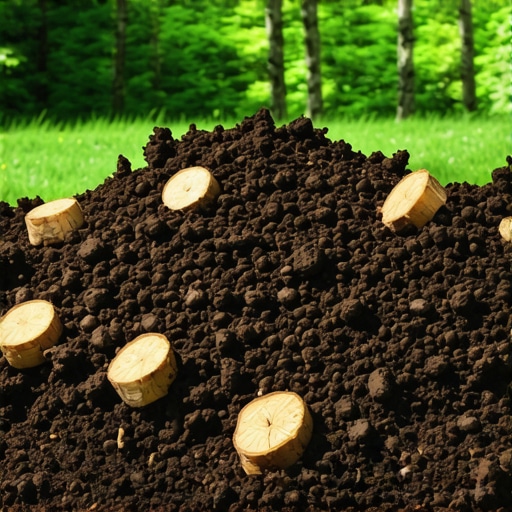
Why Your 2026 Compost Pile Smells (3 Quick Fixes)
The Forensic Autopsy of a Putrid Pile
A foul-smelling compost pile is more than a neighborhood nuisance; it is a biological failure that indicates your soil-building process has transitioned from aerobic decomposition to anaerobic fermentation. I recently dealt with a chemical nightmare where a homeowner had dumped three bags of high-nitrogen lawn fertilizer directly into their bin, thinking it would speed things up. Instead, they torched the microbial population, created a sludge of ammonia, and killed every earthworm within a ten-foot radius. The smell was enough to peel paint. When a pile reeks, you are losing nutrients to the atmosphere instead of sequestering them for your garden design. This is not just ‘dirt cooking’; it is chemical engineering that has gone off the rails.
“Anaerobic conditions in composting occur when oxygen levels drop below 5%, leading to the production of organic acids and hydrogen sulfide gas.” – Cornell Waste Management Institute
Why Does My Compost Smell Like Rotten Eggs?
Your compost smells like rotten eggs because anaerobic bacteria are thriving in an environment devoid of oxygen, producing hydrogen sulfide gas and volatile organic compounds. To fix this, you must immediately increase the porosity of the pile by adding coarse ‘brown’ materials and physically turning the mass to reintroduce air. It will fail if you don’t act fast.
Identifying the Odor: The Diagnostic Checklist
- Ammonia Smell: Excess nitrogen (too many green materials like grass clippings).
- Rotten Egg/Sulfur Smell: Lack of oxygen (anaerobic conditions) and excessive moisture.
- Putrid/Vinegar Smell: Overly acidic environment or presence of fats/dairy.
- Slimy Texture: High moisture content exceeding 65% saturation.
Fix #1: Re-Engineering the Carbon-to-Nitrogen (C:N) Ratio
The fundamental cause of a stinking pile is a C:N ratio that has dipped below 25:1. In professional landscaping, we aim for a 30:1 ratio to ensure the microbes have enough energy (carbon) to process the protein (nitrogen). When you dump fresh grass clippings—a primary component of lawn care—into a pile without balancing them with ‘browns’, the nitrogen cannot be synthesized quickly enough. It off-gasses as ammonia. You need to add high-carbon materials like shredded cardboard, wood chips, or straw immediately. Don’t just toss them on top. You have to integrate them into the core of the pile where the thermophilic activity occurs. If you see white, thread-like structures, those are actinomycetes. That is what you want. If you see black slime, you have failed the ratio.
| Material Type | C:N Ratio (Approx) | Effect on Pile Smell |
|---|---|---|
| Fresh Grass Clippings | 15:1 | High Risk (Ammonia) |
| Kitchen Scraps | 20:1 | Moderate Risk (Acidity) |
| Dry Leaves | 60:1 | Stabilizing Agent |
| Wood Chips | 400:1 | High Stability/Slow Decay |
| Straw | 80:1 | Ideal Structural Brown |
How much carbon do I need to stop compost smell?
To neutralize the smell of an active pile, you should aim for a volume of three parts ‘brown’ carbon-rich materials to one part ‘green’ nitrogen-rich materials. This ensures the structural integrity of the pile allows for air pockets, preventing the compaction that leads to anaerobic rot. Use a 5-gallon bucket for measurement; do not eyeball it. Precision prevents the rot.
Fix #2: Managing Hydrostatic Saturation and Drainage
Microbes need water, but they don’t need a swamp. If your pile is dripping wet, the water has filled the interstitial spaces where oxygen should be. This is exactly like the hydrostatic pressure issues we see in hardscaping and retaining walls. When water cannot escape, the system collapses. In 2026, with more frequent heavy rain events, your compost bin needs a lid or a tarp. If the pile is too wet, you must ‘shelf’ it. Dig out the center and create a chimney effect. The moisture content should feel like a wrung-out sponge—roughly 50% to 60%. Anything more, and you are literally drowning your workforce. I tell my crew: if you can squeeze a handful of compost and water runs down your arm, it’s a disaster. It needs straw, and it needs it now.
“Compost moisture content must be maintained between 40% and 60% to support aerobic microbial respiration without limiting oxygen diffusion.” – US Composting Council (USCC) Standards
Fix #3: Forced Aeration and Particle Size Engineering
You cannot just stack waste and expect magic. The physics of garden design requires airflow. If your particles are too small—like finely mulched leaves—they will mat together and create an impermeable barrier. This is the ‘felt’ effect. To fix a stinking pile, you must use a pitchfork or a dedicated compost aerator to lift and turn the material. You are looking to break up the anaerobic pockets. If the pile is large, consider installing a perforated PVC pipe in the center to act as a snorkel. This allows cold air to enter the bottom and warm, gas-filled air to escape the top through the chimney effect. Turn it every 3 to 5 days until the temperature reaches 130°F. If it’s cold and it smells, it’s dead. If it’s hot and it smells, it’s out of balance.
How often should I turn my compost pile to stop the smell?
In the initial phase, turn the pile every three days to ensure oxygen reaches the core where temperatures are highest. Once the smell dissipates and the temperature stabilizes between 110°F and 140°F, you can reduce turning to once a week. Frequent turning is the only way to manually reverse anaerobic decay. Use a thermometer. Don’t guess. 140 degrees is the sweet spot.
The Long-Term Maintenance Schedule
Once you’ve remediated the smell, don’t revert to lazy habits. Your 2026 garden depends on high-quality organic matter, not putrid waste. Monitor the pile weekly. If you see flies, your greens are exposed. Bury them. If you see a crust forming, the pile is too dry. Mist it. Composting is a slow-motion fire. You are the stoker. Keep the oxygen flowing, keep the ratios tight, and keep the moisture level controlled. Skip the big-box store ‘accelerators’; they are mostly just overpriced urea. Use finished compost from a previous batch as your starter. It’s got the biology you need. It’s that simple. Do the work or buy the bagged stuff and stop complaining about the smell.