
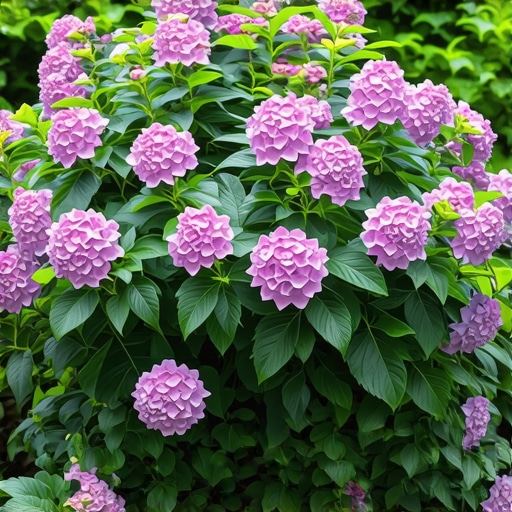
Stop Killing 2026 Hydrangeas: 3 Pruning Rules
The Hard Truth About Your Dying Hydrangeas
I always drill into my new crew members: if you don’t fix the soil grading and understand the plant’s biological clock first, every specimen you put in the ground is just expensive compost. Most homeowners treat their landscaping like furniture—they buy it, place it, and expect it to look the same forever. It does not work that way. I recently spent three hours explaining to an apprentice why his ‘clean-up’ on a client’s Hydrangea macrophylla just cost that client their entire 2026 bloom cycle. You cannot simply hack away at wood and expect the plant to forgive you. Gardening is a game of auxins and terminal buds. If you don’t know where the hormone indole-3-acetic acid is concentrating in the stem, you are not pruning; you are committing arboricultural malpractice. Stop looking for ‘pretty’ and start looking at node placement and bark texture. This is how we build landscapes that outlast the mortgage.
Rule 1: Identify Your Wood Before the First Cut
To successfully prune hydrangeas, you must first determine if the species blooms on old wood (growth from the previous season) or new wood (growth from the current season). Pruning Bigleaf (Macrophylla) or Oakleaf varieties in late winter will remove the dormant flower buds set the previous autumn, effectively killing your 2026 display. This is the cardinal sin of garden design. If you see a fat, green bud at the end of a brown, woody stem in January, leave it alone. That is your 2026 flower. If you cut it now, you are staring at a green bush with zero color for the next 18 months. Don’t be that person. Look for the ‘terminal bud’—it is the plant’s command center.
“A pruning cut is a wound; the plant must have the stored energy to compartmentalize that wound while simultaneously driving new vascular growth.” – Horticultural Science Manual
Rule 2: The 45-Degree Node Margin
Precision pruning requires making cuts exactly 1/4 inch above a viable leaf node at a 45-degree angle slanting away from the bud. This engineering choice prevents water from pooling on the raw tissue, which reduces the risk of fungal pathogens like Botrytis cinerea entering the stem’s pith. When you cut too far from a node, the remaining ‘stub’ cannot receive nutrients from the plant’s xylem and phloem. It dies, rots, and creates a highway for boring insects to enter the main crown. It will rot. I see this on 90% of DIY lawn care projects. Your shears must be bypass-style and razor-sharp. If you crush the stem instead of slicing it, you’ve already failed the plant.
How do I know if my hydrangea is dead or just dormant?
Use the scratch test. Use your thumbnail to lightly scrape a small section of bark on a branch. If you see bright green cambium underneath, the branch is alive and full of stored carbohydrates. If it is brittle, brown, and snaps like a dry cracker, it is dead wood. Remove it immediately. Dead wood serves no biological purpose and restricts airflow through the center of the shrub. Airflow is your primary defense against powdery mildew. Dense, tangled centers are a breeding ground for disease. Clear it out. You need atmospheric circulation to keep the stomata on the leaves functioning at peak efficiency.
Rule 3: The Rule of Thirds for Rejuvenation
For older, woody hydrangeas that have become leggy or unproductive, apply the Rule of Thirds: remove exactly one-third of the oldest, thickest canes down to the soil line every year. This stimulates the basal buds in the crown to push new, vigorous growth while maintaining the plant’s structural integrity and root-to-shoot ratio. By removing the oldest wood, you are forcing the plant to reallocate its nitrogen and phosphorus reserves into younger, more floriferous stems. This is how you maintain a landscaping masterpiece for decades rather than replacing shrubs every five years. It requires patience. Don’t scalp the whole plant at once. That’s a rookie move that shocks the root system and leads to root flare stress.
| Hydrangea Type | Pruning Window | Bloom Wood Type | Ideal Soil pH |
|---|---|---|---|
| Macrophylla (Bigleaf) | Immediately after flowering | Old Wood | 5.2 – 5.5 (Blue) |
| Paniculata (PeeGee) | Late Winter / Early Spring | New Wood | 6.0 – 7.0 |
| Quercifolia (Oakleaf) | Minimal – Post Flowering | Old Wood | 5.5 – 6.5 |
| Arborescens (Smooth) | Late Winter | New Wood | 6.0 – 7.0 |
What happens if I prune my Panicle hydrangea in the summer?
You will cut off the current year’s flowers. Paniculata varieties, like the ‘Limelight,’ develop their buds on the green growth produced in the spring. If you prune these in June, you are effectively decapitating the reproductive cycle of the plant for that season. Wait until the plant is dormant in late February. At that point, the starch reserves have retreated into the root system, and you can shape the plant without depleting its energy. I recommend cutting Paniculatas back by about 1/3 of their total height to encourage strong stems that won’t flop under the weight of heavy 12-inch flower heads. Gravity is a factor. Use it or lose it.
“Soil compaction is the silent killer of urban landscapes; without pore space for oxygen, root respiration ceases regardless of pruning skill.” – Penn State Agricultural Extension
The Master Landscaper’s Pruning Checklist
- Sterilize your bypass pruners with 70% isopropyl alcohol between every shrub to prevent mosaic virus spread.
- Identify the root flare; ensure no mulch is touching the bark (no mulch volcanoes).
- Remove the 3 Ds: Dead, Damaged, and Diseased wood first.
- Cut back to a strong pair of opposite buds to control the direction of new growth.
- Check soil moisture levels; never prune a drought-stressed plant.
Landscape success isn’t about the color of the petals; it is about the soil chemistry and the timing of the steel. If you are planting in heavy clay, your drainage is likely garbage. You need to amend with expanded shale or organic compost to break up those platelet structures in the soil. Hydrangeas love water, but they hate ‘wet feet.’ If the roots sit in standing water, anaerobic bacteria will take over, and your 2026 blooms will be the least of your worries. The plant will simply collapse. Dig a hole twice as wide as the root ball but no deeper. Keep that root crown slightly above the grade. It’s basic civil engineering for the backyard. Follow these rules, or keep wasting money at the big-box nursery. The choice is yours.

![Stop 2026 Pine Needle Drop [Soil Nutrition Fix]](https://lawnmajesty.com/wp-content/uploads/2026/07/Stop-2026-Pine-Needle-Drop-Soil-Nutrition-Fix.jpeg)