Stop 2026 Japanese Beetle Attacks with This Trap Hack
Why Your Current Japanese Beetle Trap is Actually Killing Your Garden
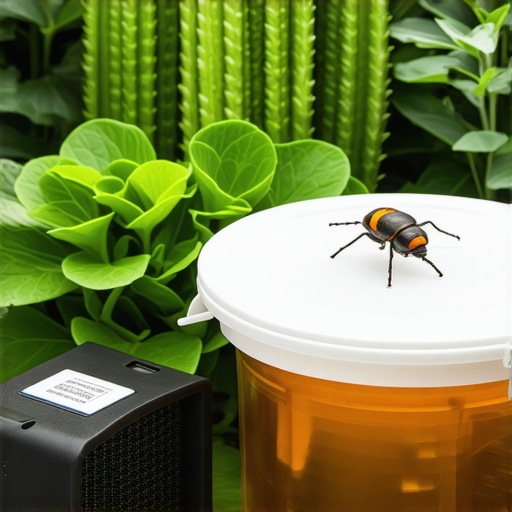
To stop Japanese beetle attacks in 2026, you must realize that standard pheromone traps are biological beacons. Improperly placed traps recruit beetles from up to 2 miles away, significantly increasing local infestation density on your prized roses, lindens, and fruit trees rather than protecting them from the swarm.
The Chemical Nightmare: A Tale of Pheromone Overload
I recall a client in late June of 2025 who called me in a full-blown panic. Her backyard, a meticulously designed space featuring over $15,000 in nursery-stock perennials, was literally humming with the sound of thousands of Popillia japonica. She had purchased ten ‘high-capacity’ bag traps and hung them directly from the branches of her Yoshino cherries. Within 48 hours, she hadn’t just caught the beetles in her yard; she had invited every beetle from the three surrounding subdivisions. The traps were overflowing, yes, but the beetles that didn’t fit in the bags were skeletonizing her trees at a rate of 30% leaf mass per day. This is the ‘lure-and-bleed’ effect. You think you’re winning because the bag is full, but your soil is being injected with thousands of new eggs that will define your 2026 disaster. If you don’t understand the chemistry of the lure, you’re just an unpaid intern for the beetle population.
“Traps can attract many more beetles than they actually catch. If traps are used, they should be placed at least 30 feet away from the plants you are trying to protect.” – Penn State Extension: Agricultural Research Division
The Life Cycle Engineering: Understanding the 12-Month Beetle Clock
To mitigate the 2026 population, you must target the first and second instar larvae currently living 2 to 4 inches beneath your turf. These grubs feed on the root systems of your Kentucky Bluegrass or Tall Fescue, creating structural instability in the lawn. If your turf feels ‘spongy’ when you walk on it, you aren’t dealing with a drainage issue; you’re dealing with root-shear caused by a massive grub infestation. These grubs will pupate in late spring, emerging as the armored flyers that destroy your garden in 2026. Control starts in the soil, not in the air.
How deep do Japanese beetle grubs live in the soil?
Japanese beetle grubs typically reside in the top 1 to 4 inches of soil where they feed on organic matter and tender grass roots. During extreme cold or drought, they may migrate as deep as 12 inches to find stable moisture levels and temperatures above freezing. Accurate depth depends on soil moisture and compaction levels.
The “Distal Perimeter Hack”: Turning Pheromones Against the Swarm
The secret to using traps effectively is strategic distal placement. Never place a trap near a host plant. Instead, place the traps at the absolute property line, downwind from your garden. You want to intercept the beetles before they reach your plants, drawing them toward a ‘dead zone.’ I tell my crew: if the trap is within 50 feet of a rose bush, you’ve failed the client. We use a 100-foot buffer rule. This forces the beetles to bypass your landscape to reach the lure. Combine this with ‘Pulse Trapping’—only setting traps for 48 hours every two weeks to monitor population spikes without creating a permanent local colony.
2026 Prevention Material Comparison Table
| Treatment Method | Target Phase | Application Timing | Pros/Cons |
|---|---|---|---|
| Milky Spore (Paenibacillus popilliae) | Grub/Larvae | Late Summer/Early Fall | Long-term bio-control; takes 2-3 years to establish. |
| Beneficial Nematodes (Heterorhabditis bacteriophora) | Grub/Larvae | August – September | Immediate kill; requires 1 inch of water post-app. |
| Perimeter Pheromone Trapping | Adult Beetle | June – July | Massive collection; high risk of recruitment if misplaced. |
| Acelepryn (Chlorantraniliprole) | Grub/Larvae | May – June | Very low avian toxicity; 90% efficacy; expensive. |
Soil Remediation and Biological Warfare
Chemical ‘quick-fixes’ like carbaryl are 1980s technology that kills your beneficial pollinators and predatory wasps. For a 2026 permanent solution, you need to inoculate your soil with milky spore or beneficial nematodes. These are live organisms. If you throw them on dry, 90-degree soil, they will die. I see homeowners waste hundreds of dollars because they don’t understand hydrostatic soil tension. You must pre-irrigate the lawn, apply the biologicals during a low-UV window (evening or overcast), and immediately water them into the root zone where the grubs live. It’s about biological delivery, not just spreading dust.
“Effective management of Japanese beetle populations requires an integrated approach that combines cultural practices, biological controls, and precisely timed treatments.” – USDA APHIS Plant Protection Manual
What is the best month to treat for Japanese beetle grubs?
The most effective window for Japanese beetle grub treatment is late July through early September. During this period, the eggs have hatched and the young grubs are feeding near the surface, making them highly susceptible to both biological and chemical control agents.
The 2026 Defensive Checklist
- Scout for Grubs: In late August, cut a 1-square-foot flap of turf. If you count more than 10 C-shaped grubs, your 2026 garden is at risk.
- Monitor Soil pH: Maintain a pH between 6.5 and 7.0. Stressed turf from improper acidity is more susceptible to root damage.
- Deploy Distal Traps: Place traps 100 feet away from host plants, at the property perimeter, at a height of 4 feet.
- Late Season Aeration: Core aerate in September. This physically destroys grubs and improves the penetration of biological treatments.
- Selective Planting: Replace high-risk species like Lindens with resistant varieties like Red Maples or Dogwoods.
Stop the Cycle: Why 1 Inch of Water Matters
Beetles love moisture. A drought-stressed lawn will actually see fewer eggs because the female Popillia japonica cannot easily burrow into hard, compacted clay to lay her eggs. However, your grass will also die. The ‘hack’ is to withhold water during the peak egg-laying window (July) to harden the soil surface, then heavily irrigate and treat for grubs in August. It is a game of geotechnical manipulation. You are making your yard a hostile environment for the eggs while maintaining the structural integrity of the turf. Don’t be the homeowner who waters every day in July; you’re just building a beetle nursery. Don’t skip the grub check. Your 2026 plants depend on the work you do in the dirt today.
![Stop Overwatering Your 2026 Tomato Crop [Drainage Fix]](https://lawnmajesty.com/wp-content/uploads/2026/07/Stop-Overwatering-Your-2026-Tomato-Crop-Drainage-Fix.jpeg)