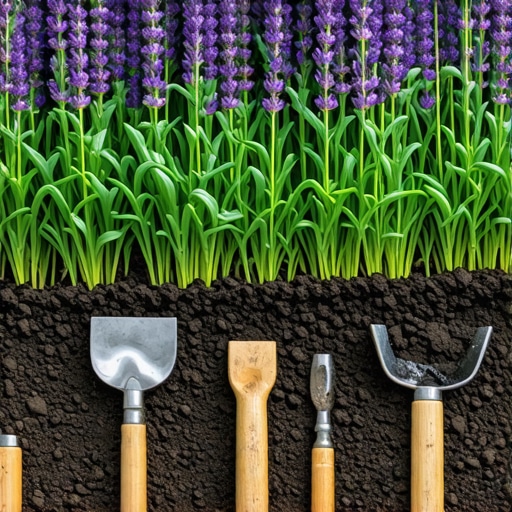
Stop Killing Your Lavender: 3 Drainage Fixes That Work
The Forensic Autopsy of a Dying Lavender
I always drill into my new crew members: if you don’t fix the soil grading first, every plant you put in the ground is just expensive compost. Last week, I walked a property where a homeowner had spent four grand on high-grade English Lavender, only to watch them turn a sickly, ash-grey color within three months. When I kicked the soil, it didn’t just feel damp; it felt anaerobic. I pulled one plant up and the root ball smelled like sulfur and rot. This is the reality of planting Mediterranean species in heavy, non-porous soil. You aren’t gardening; you’re building a botanical cemetery. Lavender doesn’t die from cold or neglect; it dies because the water can’t find the exit. If the roots cannot breathe, the plant will fail. Every time. No exceptions.
Why Lavender Dies in Your Yard
Lavender deaths are almost exclusively caused by root rot pathogens triggered by excessive soil moisture and poor gas exchange in the rhizosphere. To save your plants, you must increase hydraulic conductivity by amending soil with inorganic grit or elevating the root zone above the surrounding grade to prevent water saturation.
Understanding the microscopic reality of your yard is the first step toward horticultural success. Lavender, specifically varieties like Lavandula angustifolia, evolved in the rocky, calcareous soils of the Mediterranean. These soils are lean, gritty, and move water at a rate that would make a suburban lawn look like a swamp. In most residential developments, the soil is compacted clay from heavy machinery. When you dig a hole in clay and fill it with store-bought potting soil, you have effectively created a bathtub. The water enters the hole, hits the clay walls, and sits there. This is where Phytophthora and Pythium, the silent killers of the garden, begin their work. They thrive in the absence of oxygen. They eat the root tips first. You won’t even see the damage until the top of the plant starts to wilt, and by then, it is usually too late.
“Adequate soil drainage is essential for lavender as it cannot tolerate wet feet or saturated soil conditions for even short periods.” – Penn State Extension
Fix #1: Structural Soil Modification and Inorganic Grit
Structural soil modification involves replacing a significant portion of the native silt or clay with coarse inorganic aggregates to ensure permanent macropores for drainage. This process ensures that water moves through the root zone via gravity rather than being held by capillary action in small soil particles.
Most people make the mistake of adding sand to clay. Never do this. You are essentially making concrete. To fix drainage for lavender, you need 3/4-inch clean crushed stone or expanded shale. I tell my clients to aim for a mix that is 50 percent native soil and 50 percent grit. This sounds extreme, but lavender loves a lean environment. You want a soil that feels like a dry creek bed, not a sponge. This grit provides the mechanical structure that prevents the soil from collapsing and squeezing out the oxygen that roots need for respiration. Without oxygen, the plant cannot perform the metabolic processes required to uptake nutrients. It starves in a sea of water.
What is the best soil mix for lavender in clay?
The ideal soil mix for lavender in heavy clay consists of 40 percent coarse washed sand, 20 percent 3/4-inch crushed gravel, and 40 percent native soil, with a handful of lime to keep the pH between 6.5 and 7.5. Avoid organic compost as it holds too much moisture for these specific plants.
Fix #2: The Raised Berm Technique
The raised berm technique utilizes topography and gravity to pull water away from the root crown, ensuring the plant remains above the saturation zone during heavy rainfall. By elevating the planting site at least 6 to 8 inches, you create a percolation gradient that forces water to move laterally and downward away from the sensitive root flare.
If you don’t want to dig out your entire yard, build up. This is common sense engineering. I build my lavender beds as long, undulating mounds. We use a base of modified gravel for the core and then skin it with a grit-heavy soil. This ensures that even if we get a three-inch downpour, the actual root ball of the lavender is never sitting in standing water. It drains in minutes, not hours. Furthermore, the elevation increases airflow around the base of the plant. High humidity is the second enemy of lavender. By getting the plant up off the flat ground, you allow the wind to move through the foliage, drying out the morning dew and preventing fungal leaf spot.
| Material | Hydraulic Conductivity | Best Use for Lavender |
|---|---|---|
| River Rock | Very High | Surface drainage and mulch |
| 3/4 Clean Stone | High | Soil amendment for drainage |
| Coarse Sand | Moderate | Increasing soil porosity |
| Pea Gravel | High | Mulching the root crown |
| Clay Soil | Very Low | The enemy of Mediterranean plants |
Fix #3: Hardscape French Drains and Sub-surface Diversion
A French drain is a sub-surface drainage system consisting of a perforated pipe encased in a gravel envelope and wrapped in geotextile fabric to redirect groundwater away from garden beds. This engineering solution is necessary when the hydrostatic pressure of the surrounding landscape causes water to pool in low-lying planting areas.
Sometimes the soil isn’t the only problem; it is the grade of the entire property. If your garden sits at the bottom of a slope, no amount of sand will save your lavender. You need to move the water. We install 4-inch NDS perforated pipe at a 2 percent slope. We trench it out, lay a bed of 1-inch clean stone, and make sure that water has a clear path to a daylight exit or a dry well. This is hardscaping 101. If you ignore the civil engineering of your yard, your garden design is just a temporary decoration. I have seen million-dollar landscapes fail because someone forgot to account for where the gutter downspouts were pointing. Don’t be that person. Direct that water away from your herb beds.
“A retaining wall doesn’t fail because of the stone; it fails because of the water trapped behind it.” – Hardscape Engineering Axiom
How much modified gravel do I need for a lavender bed?
To properly drain a 10×10 foot lavender bed, you should plan for at least 1.5 to 2 cubic yards of clean stone or gravel to be integrated into the top 12 inches of soil. This ensures a consistent drainage layer that won’t compact over time under the weight of wet soil.
The Professional Planting Checklist
Follow these steps to ensure your lavender survives the first season and thrives for the next decade. If you skip a step, you are gambling with the plant’s life. Don’t skip them.
- Test the pH: Lavender needs a pH above 6.5. Use lime if your soil is acidic.
- Excavate Deep: Dig at least 12 inches down to break up the hardpan clay layer.
- Add the Grit: Mix in at least 50 percent inorganic material like crushed stone or expanded shale.
- Check the Flare: Ensure the root flare is slightly above the soil line. Never bury the stem.
- Ditch the Wood Mulch: Use pea gravel or stone mulch. Wood mulch holds moisture and breeds fungus.
- Initial Watering: Water deeply once to settle the soil, then back off.
- Sun Exposure: Ensure a minimum of 8 hours of direct, unfiltered sunlight.
Maintaining the Hydraulic Balance
Once you have the drainage fixed, the work isn’t over. You need to manage the environment. Stop the “mow-and-blow” hacks from blowing grass clippings into your lavender beds. Those clippings break down into nitrogen-rich matting that traps moisture and heat against the stems. It is a recipe for stem rot. You also need to prune correctly. Prune in the spring just as new growth starts, and never cut back into the old wood where there are no visible buds. If you cut too deep, the plant won’t have the energy to recover, especially if it is already fighting a humid climate.
Landscaping is about respecting the biology of the species you choose. You cannot force a lavender plant to live in a bog. You must change the bog into a hillside. It takes more sweat, more gravel, and more planning. But when you smell that first bloom and see the silver-green foliage standing firm in the heat of July, you will know the engineering was worth it. Do the work. Fix the dirt. Save the lavender.
{“@context”:”https://schema.org”,”@type”:”Article”,”headline”:”Stop Killing Your Lavender: 3 Drainage Fixes That Work”,”author”:{“@type”:”Person”,”name”:”Veteran Horticulturist”},”description”:”A technical guide to saving lavender using advanced drainage engineering, soil modification, and hardscape solutions.”,”articleBody”:”Lavender deaths are almost exclusively caused by root rot pathogens triggered by excessive soil moisture and poor gas exchange in the rhizosphere. To save your plants, you must increase hydraulic conductivity by amending soil with inorganic grit or elevating the root zone above the surrounding grade to prevent water saturation.”},{“@context”:”https://schema.org”,”@type”:”FAQPage”,”mainEntity”:[{“@type”:”Question”,”name”:”How much modified gravel do I need for a lavender bed?”,”acceptedAnswer”:{“@type”:”Answer”,”text”:”To properly drain a 10×10 foot lavender bed, you should plan for at least 1.5 to 2 cubic yards of clean stone or gravel to be integrated into the top 12 inches of soil.”}},{“@type”:”Question”,”name”:”What is the best soil mix for lavender in clay?”,”acceptedAnswer”:{“@type”:”Answer”,”text”:”The ideal soil mix for lavender in heavy clay consists of 40 percent coarse washed sand, 20 percent 3/4-inch crushed gravel, and 40 percent native soil, with a pH between 6.5 and 7.5.”}}]}