The Best Time to Prune Azaleas for Maximum Bloom
Why Pruning Timing Dictates Your Landscape Success
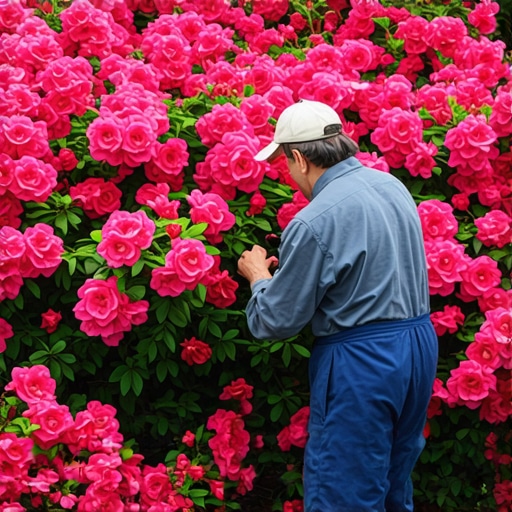
The best time to prune azaleas is immediately after the spring bloom cycle concludes, typically between late April and early June depending on your local climate. By removing spent flowers and shaping the plant during this narrow window, you allow the shrub enough time to develop new growth and set dormant flower buds for the following year. Pruning after July 4th in most temperate regions will result in a significant loss of bloom potential because azaleas produce flowers on old wood growth from the previous season.
The Apprentice Lesson: Soil Grading and Plant Health
I always drill into my new crew members: if you don’t fix the soil grading first, every plant you put in the ground is just expensive compost. I remember a job site three years ago where a client wanted a massive installation of Rhododendron viscosum. The previous contractor had buried the root flares three inches too deep and ignored a two percent grade sloping toward the foundation. Within six months, those plants were drowning in anaerobic soil. We had to excavate the entire bed, correct the drainage with a French drain system, and replant at the proper elevation. Landscaping is not about aesthetics; it is about engineering a living environment where biology can thrive. If your soil pH is not between 4.5 and 6.0, your azaleas will fail to uptake nutrients regardless of how well you prune them. We use elemental sulfur to drop pH and test the soil every six months to ensure we are maintaining the acidic environment these ericaceous plants demand.
“A common mistake in landscape maintenance is pruning spring-flowering shrubs like azaleas in late summer, which removes the dormant flower buds already set for the following season.” – Horticultural Standards Manual
The Biological Window for Pruning Azaleas
Azaleas are part of the Rhododendron genus and follow a strict physiological schedule. Once the final petals drop, the plant enters a period of rapid vegetative growth. This is when the plant is most resilient to pruning stress. If you wait until August, the plant has already begun the process of bud initiation. Cutting at that point removes the 15 to 25 percent of the plant’s energy already dedicated to next year’s display. You must understand the difference between maintenance pruning and rejuvenation pruning. Maintenance pruning involves thinning out crossing branches to improve airflow, which reduces the risk of Lace Bug infestations and fungal pathogens like Cercospora leaf spot. Rejuvenation pruning is a multi-year process where you take the plant down to within 12 inches of the ground to restart the structure. Only do this in early spring before the first flush of growth.
How much modified gravel do I need for a patio base?
To calculate the modified gravel needed for a patio base, multiply the square footage by the depth in feet (usually 0.5 feet for a 6-inch base) then divide by 27 to get cubic yards. For stable hardscaping, you need a 2A modified stone compacted in two-inch lifts to ensure zero settling. Proper compaction requires a vibratory plate compactor hitting at least 3,000 PSI. Don’t skip the geotextile fabric between the subgrade and the base stone. It prevents the soil from migrating into your clean gravel, which is the primary cause of patio failure in freeze-thaw cycles.
Pruning Mechanics: The Technical Breakdown
Do not use hedge shears on azaleas. Shearing creates a thick outer shell of foliage that prevents sunlight from reaching the interior of the plant. This leads to a hollow, woody center that is susceptible to disease. Instead, use high-quality bypass pruners. A bypass pruner works like a pair of scissors, creating a clean cut that heals quickly. Anvil pruners crush the stem tissue, which invites rot. When making a cut, find a lateral branch or a dormant bud and cut at a 45-degree angle about a quarter-inch above it. This directs the plant’s auxins to that specific point, controlling the direction of new growth. [IMAGE_PLACEHOLDER] Proper sanitation is also non-negotiable. We dip our blades in a ten percent bleach solution or 70 percent isopropyl alcohol between every single plant to prevent the spread of Phytophthora root rot.
Pruning and Maintenance Reference Table
| Action Type | Optimal Timing | Primary Goal | Target Removal |
|---|---|---|---|
| Deadheading | Immediately after bloom | Seed prevention | Spent flower trusses only |
| Thinning | Late Spring | Airflow improvement | Internal crossing branches |
| Heading Back | Early June | Size control | Terminal 4 to 6 inches of growth |
| Rejuvenation | Late Winter (Dormant) | Total restart | Top 70% of plant mass |
What is the best fertilizer for azaleas after pruning?
The best fertilizer for azaleas after pruning is a high-nitrogen, acidic formula like a 10-5-4 NPK ratio or organic cottonseed meal. Apply the fertilizer at the drip line of the plant, not against the trunk. This ensures the nutrients are available to the feeder roots which extend to the edge of the canopy. Avoid high-phosphorus fertilizers in the late summer, as this can stimulate soft growth that will be killed by the first hard frost. A three-inch layer of pine bark mulch will help maintain soil acidity and moisture levels while suppressing weed competition.
Advanced Hardscaping and Garden Integration
Garden design is not just about where the plants go; it is about how they interact with the hardscape. When we install a Pennsylvania bluestone patio, we always account for the mature width of the surrounding azaleas. A common rookie mistake is planting a Formosa azalea two feet from a walkway. Within five years, that plant will be six feet wide, forcing the homeowner to shear it into a box. This ruins the natural habit of the plant. Instead, we use dwarf cultivars like the Gumpo series for tight spaces. Every hardscape project must include a drainage plan. We use 4-inch perforated PVC pipe buried in clean 3/4 inch stone to move water away from planting beds. High hydrostatic pressure in the soil will suffocate azalea roots faster than any disease. Don’t build a retaining wall without a gravel chimney and weep holes. Water is the enemy of both stone and root.
Mandatory Pruning Checklist for Homeowners
- Verify soil moisture levels before pruning; never prune a drought-stressed plant.
- Inspect for signs of Azalea Gall or Leaf Miner before making cuts.
- Sharpen bypass pruners using a diamond whetstone to ensure surgical precision.
- Identify the branch collar and avoid making flush cuts that damage the trunk.
- Apply one inch of water per week post-pruning to support new vegetative growth.
- Remove any dead, damaged, or diseased wood (the three Ds) immediately regardless of the season.

![Why Your 2026 Boxwoods are Turning Yellow [3 Soil Rules]](https://lawnmajesty.com/wp-content/uploads/2026/05/Why-Your-2026-Boxwoods-are-Turning-Yellow-3-Soil-Rules.jpeg)