The Best Native Trees for Providing Backyard Shade
The Engineering of a Backyard Canopy: Why 80% of Success Happens Before Planting
Eighty percent of a successful canopy installation happens before the shovel ever hits the dirt. If you are just picking a tree because it looks good at a big-box nursery, you have already failed. A real landscape professional treats a shade tree as a long-term piece of biological infrastructure. You must account for mature height, canopy spread, root architecture, and the hydrostatic demands the tree will place on your soil. [image_placeholder]
I always drill into my new crew members: if you do not fix the soil grading first, every plant you put in the ground is just expensive compost. I once spent three days on a site remediation where a homeowner had planted three mature White Oaks in a low-lying area with zero drainage. Within two years, the soil became anaerobic, the roots rotted, and $12,000 worth of nursery stock became firewood. We had to excavate the entire area, install a French drain system with 4-inch perforated pipe and 1-inch clean stone, and regrade the site to a 2% slope before we could even think about planting again. Technical wisdom matters more than a green thumb.
Selecting the Right Species for Thermal Regulation and Structural Integrity
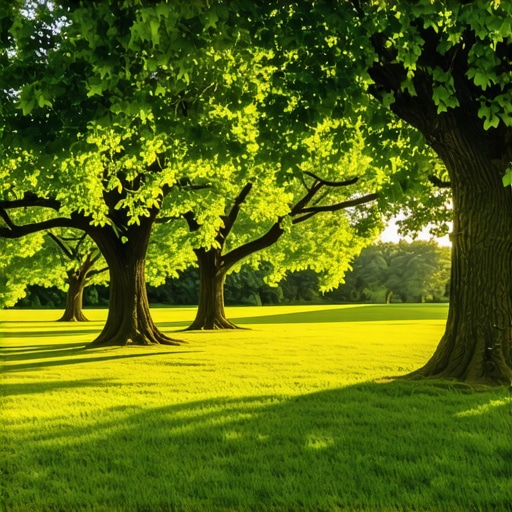
The best native trees for backyard shade include the White Oak, Sugar Maple, and Tulip Poplar because they offer superior structural wood density and significant evapotranspiration for cooling. These species integrate with existing hardscaping and lawn care systems without causing the surface upheaval or structural damage associated with invasive, shallow-rooted species like the Norway Maple.
| Species | Growth Rate | Root System | Soil Preference |
|---|---|---|---|
| White Oak | Slow to Moderate | Deep Taproot | Well-drained Loam |
| Sugar Maple | Moderate | Heart System | Slightly Acidic |
| Tulip Poplar | Fast | Deep Spreading | Rich, Moist Soil |
| Bald Cypress | Moderate | Deep/Wide | Wet to Well-drained |
Which native shade tree grows the fastest?
The Tulip Poplar (Liriodendron tulipifera) is the fastest-growing native shade tree in North America, often gaining 2 feet or more per year. However, speed comes with a cost; the wood is less dense than an Oak, making it more susceptible to limb breakage during high-wind events or heavy ice loads. It requires a massive footprint to thrive.
The Mechanics of the Planting Hole: Root Flares and Soil Compaction
Most DIYers and cheap contractors plant trees too deep. This is a death sentence. You must identify the root flare—the point where the trunk widens at the base—and ensure it is 1-2 inches above the finished grade. If you bury the flare, you encourage adventitious roots that will eventually girdle the trunk and choke the tree. It will rot. Don’t skip this. Excavate the hole three times wider than the root ball, but no deeper. You want the root ball to sit on undisturbed subsoil so it does not settle over time. Use a hand tamper on the backfill in 3-inch lifts to eliminate air pockets, but do not over-compact. The soil needs a bulk density that allows for oxygen exchange.
“A tree planted too deep will eventually succumb to stem-girdling roots that choke the vascular system and lead to premature decline.” – ISA Arborists’ Certification Study Guide
How far should I plant a shade tree from my house?
For large native shade trees, the minimum distance from any foundation or hardscaping should be 20 to 30 feet. This distance protects your footings from hydrostatic pressure changes and prevents roots from infiltrating drainage pipes or lifting patio pavers. Always check the mature spread of the specific cultivar before digging.
The Interaction Between Canopy and Turf: Managing Nitrogen and Light
High-end garden design requires balancing shade with lawn care. As your canopy grows, your turf species must transition. Most Kentucky Bluegrass blends will fail under a dense Sugar Maple canopy. You will need to overseed with Fine Fescues that can handle lower light levels. Furthermore, trees are nutrient hogs. They will out-compete your grass for nitrogen and potassium every time. I recommend a deep-root feeding program for the trees every two years, using a 3-1-1 ratio fertilizer injected 8-12 inches into the soil profile to bypass the turf roots. This ensures the tree gets the minerals it needs without causing a surge in lawn thatch.
“Properly placed shade trees can reduce air conditioning costs by 15 to 35 percent by intercepting solar radiation before it hits the building envelope.” – USDA Forest Service, Urban Forestry Manual
The Maintenance Protocol: Post-Installation Care
Once the tree is in the ground, the work begins. Forget the ‘water every day’ advice you read on forums. Turf grass and trees need deep, infrequent watering. Exactly 1 inch per week is the baseline. This forces roots to chase the moisture downward, creating a drought-resistant specimen. Use a 3-inch layer of triple-shredded hardwood mulch, but keep it 4 inches away from the trunk. No mulch volcanoes. They trap moisture against the bark and invite fungal pathogens and rodents.
- Soil pH test: Ensure it falls between 6.0 and 7.0 for optimal nutrient uptake.
- Utility line marking: Call 811 before any excavation.
- Root flare exposure: Confirm the flare is visible at the soil surface.
- Drip-line irrigation: Focus water delivery at the edge of the canopy, not the trunk.
In the first year, expect the tree to focus on root establishment rather than top growth. This is the ‘settling in’ period. If you see yellowing leaves (chlorosis), check your soil pH before dumping more fertilizer. High pH often locks up iron and manganese, especially in heavy clay soils. Address the chemistry, don’t just mask the symptoms. A well-engineered landscape is a legacy that should outlive the person who planted it.
![Why Your 2026 Lavender is Dying [Drainage Secret]](https://lawnmajesty.com/wp-content/uploads/2026/07/Why-Your-2026-Lavender-is-Dying-Drainage-Secret.jpeg)