The Best Way to Kill Poison Ivy for Good
The Forensic Autopsy of a Failed Eradication
Poison ivy eradication requires a systemic understanding of Toxicodendron radicans biology and urushiol chemical stability to prevent recurring infestations and soil toxicity. Most homeowners fail because they treat the leaves while ignoring the rhizomatous root system that stores vast carbohydrate reserves. I recently walked onto a job site where a homeowner had spent $400 on big-box store ‘Groundclear’ products. They didn’t just kill the ivy; they created a sterile dead zone where nothing, not even grass, will grow for three years. Worse, the poison ivy was already pushing new shoots from the root crown six feet away. They had torched their soil microbiology and left the enemy intact. This is the result of ‘mow-and-blow’ logic applied to a biological war. To kill poison ivy for good, you must move beyond surface-level aesthetics and address the vascular system of the plant. It is a game of chemical timing and mechanical precision. Stop reaching for the spray bottle until you understand the translocation process. One mistake can lead to systemic soil contamination or a trip to the emergency room. Professional lawn care and garden design experts treat this as a hazardous material extraction, not a weekend chore. Every cell of this plant contains urushiol oil. It stays active for years. It will find you.
Why Most DIY Poison Ivy Removal Fails
Successful poison ivy removal fails when users rely on contact herbicides that only burn the foliage without penetrating the xylem and phloem to reach the root tips. Many people think if the leaves turn brown, the plant is dead. It is not. Poison ivy is a woody perennial. It has a massive root-to-shoot ratio. When you kill the leaves with a ‘hot’ mix of vinegar or salt, the plant goes into a defensive dormancy. It waits. Then, it sends up three more shoots from the lateral roots. This is why landscaping professionals use systemic auxin mimics. These chemicals trick the plant into growing itself to death from the inside out. They travel down to the root tips where the real battle is won. If you don’t achieve a total kill of the root system, you are just pruning it. This makes the plant stronger over time. It thickens the root flare and makes future removal twice as hard. You must be methodical. Do not skip steps. Precision matters more than volume.
“Effective control of poison ivy requires the use of systemic herbicides like triclopyr or glyphosate, which move through the plant’s vascular system to kill the roots and prevent regrowth.” – Penn State Extension Agronomy Manual
How much modified gravel do I need for a patio base?
While often asked during hardscaping projects near ivy-infested zones, the answer is a four-to-six-inch compacted layer of 2A modified stone to ensure a stable, non-shifting foundation. This depth prevents frost heave and provides the structural integrity needed to support polymeric sand joints and heavy pavers. Do not compromise on base depth. If you do, your patio will settle within two seasons. Proper soil grading is also required to move water away from the structure. Water is the primary cause of hardscape failure. It must be managed with French drains or proper pitch.
| Method | Success Rate | Soil Impact | Recovery Time |
|---|---|---|---|
| Manual Extraction | 85% | Low | Immediate |
| Glyphosate (Systemic) | 90% | Moderate | 2-4 Weeks |
| Triclopyr (Woody Brush) | 95% | High | 6-8 Weeks |
| Vinegar/Salt (DIY) | 15% | Catastrophic | 12+ Months |
The Professional Eradication Protocol
The professional eradication protocol involves a two-phase attack using triclopyr-ester formulations applied during the plant’s peak translocation window to ensure 100 percent root mortality. This is not about drenching the ground. It is about targeted foliar application. You want the plant to drink the poison. If you spray during a drought, the plant’s stomata are closed. The chemical just sits on the leaf and evaporates. You must time your application for a period of active growth. This usually means late spring or early summer when the leaves are fully expanded but still tender. I always tell my crew: if the plant isn’t ‘breathing,’ don’t spray it. You are wasting money and polluting the watershed. We use a surfactant to break the surface tension of the waxy leaves. This allows the herbicide to stick and penetrate the cuticle. Without a surfactant, the chemical just beads up and rolls off like water on a duck’s back. Don’t be a hack. Use the right chemistry.
What is the best herbicide for woody vines in garden design?
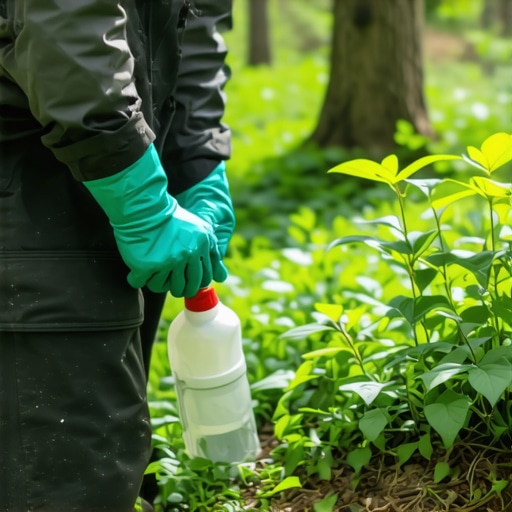
For garden design projects, a triclopyr-based herbicide is the gold standard because it targets dicots (broadleaf plants and woodies) without killing the surrounding turf grass. This allows for surgical strikes in lawn care environments where monocots (grasses) must be preserved. It is a selective tool. Using a non-selective herbicide like glyphosate will leave a dead brown patch in your yard. That is the mark of an amateur. A pro leaves the grass green and the weeds dead. Always read the label. The label is the law. Personal Protective Equipment (PPE) is mandatory. This includes long sleeves, chemical-resistant gloves, and eye protection. Urushiol can aerosolize if you use a high-pressure sprayer. You do not want this in your lungs. It can be fatal.
- Step 1: Identify the root crown and avoid disturbing the soil to prevent dormant seed germination.
- Step 2: Apply a systemic herbicide with an 18% to 41% active ingredient concentration.
- Step 3: Tag the area and wait 14 days for the vascular collapse to become visible.
- Step 4: Manually extract dead vines using gauntlet-style gloves to prevent skin contact.
- Step 5: Bag all debris in 4-mil plastic bags for landfill disposal. Never burn poison ivy.
“Burning poison ivy releases urushiol into the smoke, which can cause severe respiratory distress and internal blistering if inhaled by humans or animals.” – Texas A&M AgriLife Extension Service
The Physics of Soil and Root Persistence
The physics of soil and root persistence dictates that any hardscaping or landscaping project must account for the hydrostatic pressure and nutrient cycles that allow invasive species to thrive. Poison ivy thrives in disturbed soil and edge habitats. If you clear a wooded lot for a new garden design, you are literally inviting poison ivy to the party. The increased sunlight triggers dormant seeds. Some of these seeds can stay viable in the seed bank for over five years. This is why a one-and-done approach never works. You need a maintenance schedule. I tell my clients to expect a two-year war. We visit the site every quarter to check for new seedlings. We look for the ‘mitten’ leaf shape and the hairy aerial roots. If you see ‘hair’ on a vine, it’s poison ivy. Don’t touch it. Those hairs are adventitious roots that help the vine climb. They are also loaded with oil. Even in winter, the bare vines are dangerous. The oil doesn’t go away just because the leaves are gone. It persists through freeze-thaw cycles. Respect the biology. Or pay the price in itchiness and steroids.
[image-placeholder]
Long-Term Management and Soil Rehabilitation
Long-term landscaping success after a poison ivy infestation requires soil rehabilitation to restore the nitrogen-to-carbon ratio and encourage the growth of native groundcovers. Once the ivy is dead, the soil is often left bare. Nature hates a vacuum. If you don’t plant something desirable, the ivy—or something worse—will come back. I recommend mulching the area with three inches of arborist wood chips. This smothers any remaining seeds and feeds the mycorrhizal fungi. Healthy soil produces healthy plants. Healthy plants can out-compete weeds. We often install native ferns or creeping phlox to take up the space. This is biological layering. It’s the most effective form of long-term weed control. Forget the ‘mow-and-blow’ guys who want to spray every month. They want a subscription. I want a solution. Build a resilient ecosystem in your yard. It takes work. It takes dirt under your fingernails. But it’s the only way to win. Fix the soil. Fix the yard. [FAQ-Schema] {“@context”: “https://schema.org”, “@type”: “FAQPage”, “mainEntity”: [{“@type”: “Question”, “name”: “What is the best chemical to kill poison ivy permanently?”, “acceptedAnswer”: {“@type”: “Answer”, “text”: “The most effective chemical for permanent poison ivy removal is a systemic herbicide containing triclopyr or glyphosate. These active ingredients translocate from the leaves to the root system, ensuring a total kill rather than just surface foliage burn.”}}, {“@type”: “Question”, “name”: “Can I burn poison ivy to get rid of it?”, “acceptedAnswer”: {“@type”: “Answer”, “text”: “No, you should never burn poison ivy. Burning releases urushiol oil into the smoke, which can be inhaled and cause life-threatening respiratory inflammation and internal allergic reactions.”}}]} [HowTo-Schema] {“@context”: “https://schema.org”, “@type”: “HowTo”, “name”: “How to Safely Remove Poison Ivy Roots”, “step”: [{“@type”: “HowToStep”, “text”: “Wear full PPE including chemical-resistant gloves and long sleeves.”}, {“@type”: “HowToStep”, “text”: “Apply a systemic herbicide to the foliage during active growth.”}, {“@type”: “HowToStep”, “text”: “Wait 10-14 days for the plant to turn completely brown and brittle.”}, {“@type”: “HowToStep”, “text”: “Carefully excavate the root crown and all lateral roots using a spade.”}, {“@type”: “HowToStep”, “text”: “Dispose of all plant material in sealed plastic bags in the trash.”}]}
![Stop 2026 Pine Needle Drop [Soil Nutrition Fix]](https://lawnmajesty.com/wp-content/uploads/2026/07/Stop-2026-Pine-Needle-Drop-Soil-Nutrition-Fix.jpeg)