The Secret to Getting Vibrant Blue Hydrangeas
Why Your Blue Hydrangeas Are Turning Pink
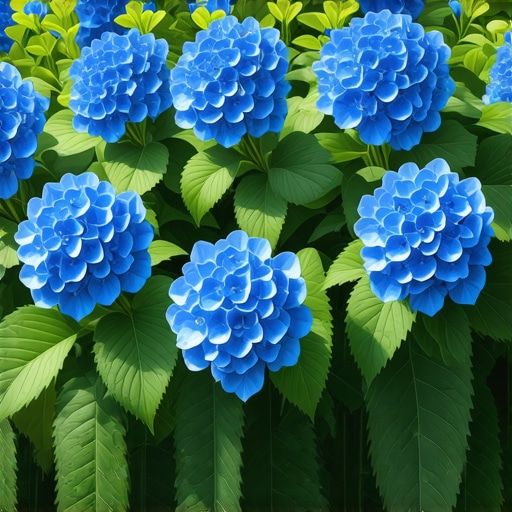
The secret to achieving electric blue hydrangea blooms is not a mystery or a miracle product; it is the precise management of aluminum ion availability through soil pH manipulation. In Hydrangea macrophylla, the sepal color is determined by the presence of aluminum in the plant tissue, which only becomes soluble and absorbable when the soil pH is maintained between 5.0 and 5.5. If your soil is alkaline, the aluminum remains locked away, regardless of how much you add to the ground.
I always drill into my new crew members: if you don’t fix the soil grading and chemistry first, every plant you put in the ground is just expensive compost. I remember a job in a high-end development where a homeowner had spent four figures on ‘Nikko Blue’ cultivars, only to have them turn a dusty mauve within two seasons. They were blaming the nursery stock. I took a core sample and found the soil was sitting at a 7.2 pH because the builder had dumped lime-heavy concrete washout right into the planting beds. We didn’t just add ‘blue juice’; we had to excavate the contaminated soil, install a drainage layer to manage hydrostatic pressure, and rebuild the soil profile from the microorganisms up. It is about the foundation, not the facade.
“The availability of aluminum is the primary driver of sepal color in H. macrophylla, but this availability is entirely dependent on a soil pH below 5.5. At higher pH levels, aluminum forms insoluble hydroxides that the roots cannot uptake.” – Penn State Extension
The Bio-Chemical Reality of Color Shift
Hydrangeas are unique aluminum accumulators. The blue pigment is a complex formed by delphinidin-3-glucoside and aluminum ions within the plant’s vacuoles. To get that deep, saturated blue, you need two things: acidic soil and available aluminum. Most soils have enough aluminum naturally, but it is stuck in a solid state. By lowering the pH, you dissolve that aluminum, making it bioavailable. If you use a fertilizer with high phosphorus, you will fail. Phosphorus binds with aluminum to create aluminum phosphate, which is a solid. This makes the aluminum useless for color. You want a low-phosphorus, high-potassium fertilizer. Look for an NPK ratio like 12-4-8 or 15-5-10. Professional landscapers avoid the cheap 10-10-10 bags found at big-box stores.
How much aluminum sulfate do I need for blue flowers?
To shift your soil chemistry effectively, apply one tablespoon of aluminum sulfate per gallon of water for established plants, or half a pound per 10 square feet of bed space. Do not over-apply. Excess aluminum can cause root burn and toxicity. It is a slow process. Soil chemistry is a marathon, not a sprint. You should start your amendments in late autumn or very early spring before the buds set. If you wait until the flowers are already opening, you are too late for that season. The plant needs time to transport those ions from the root flare through the xylem and into the developing sepals.
| Soil pH Range | Aluminum Solubility | Resulting Bloom Color |
|---|---|---|
| 4.5 to 5.0 | High | Deep Indigo / Violet |
| 5.1 to 5.5 | Moderate | Sky Blue / Clear Blue |
| 5.6 to 6.2 | Low | Lavender / Mauve / Purple |
| 6.3 to 7.0+ | None | Pink / Red |
The Hardscape and Drainage Connection
You cannot talk about plant health without talking about engineering. Most people drown their hydrangeas. These plants have massive leaf surfaces and lose water fast, but their roots will rot in standing water. If your yard has heavy clay, you are fighting a losing battle. I recommend planting on a slight mound or a ‘berm’ to ensure the root flare stays 1 to 2 inches above the surrounding grade. This prevents crown rot. When we install hardscaping near hydrangea beds, we always ensure the pavers are pitched away from the plants. Concrete pavers and limestone gravel leach lime into the soil over time. This raises the pH and turns your blue flowers pink. We use acid-washed stone or granite near acid-loving plants to prevent this chemical drift.
“Soil compaction and poor drainage lead to anaerobic conditions that can stunt root development, rendering even the most precise chemical amendments useless.” – Hardscape Engineering Axiom
How do I test my soil pH at home?
Stop using those cheap plastic probes with the two metal prongs; they are notoriously inaccurate and rely on moisture levels more than chemical ions. Use a liquid reagent kit or a digital glass-electrode meter that has been calibrated with a 4.0 and 7.0 buffer solution. For the most accurate results, send a sample to your local agricultural extension office. They will give you a full breakdown of your Cation Exchange Capacity (CEC), which tells you how well your soil holds onto the nutrients you’re adding. High clay soils have a high CEC and are harder to change, while sandy soils change quickly but leach out just as fast. Know your soil type before you spend a dime on amendments.
- Step 1: Test soil pH in early spring.
- Step 2: Incorporate elemental sulfur for long-term acidity or aluminum sulfate for a quick fix.
- Step 3: Apply a 3-inch layer of pine bark mulch (pine needles and bark are naturally acidic).
- Step 4: Use rainwater or acidified irrigation; hard tap water often contains calcium carbonate which raises pH.
- Step 5: Avoid high-phosphorus ‘Bloom Booster’ fertilizers which lock out aluminum.
The Maintenance Schedule for Blue Success
Once you achieve the color you want, you have to defend it. Every time it rains, or you irrigate, you are potentially shifting the pH back toward neutral. I tell my clients that hydrangea care is an annual commitment. In the first year, expect the plant to ‘settle.’ It is focusing on root establishment. Do not prune them heavily in the first 24 months. Hydrangea macrophylla blooms on ‘old wood’ (growth from the previous year). If you hack them back in the winter, you are cutting off next year’s blue flowers. Only prune to remove dead canes or to shape the plant after the first flush of blooms has faded. Use sharp, bypassed pruners. Don’t crush the stems with anvil pruners. Clean cuts prevent fungal pathogens like Cercospora leaf spot from taking hold. It’s about precision. It’s about the biology of the plant. If you respect the chemistry, the garden will reward you. Skip the shortcuts.