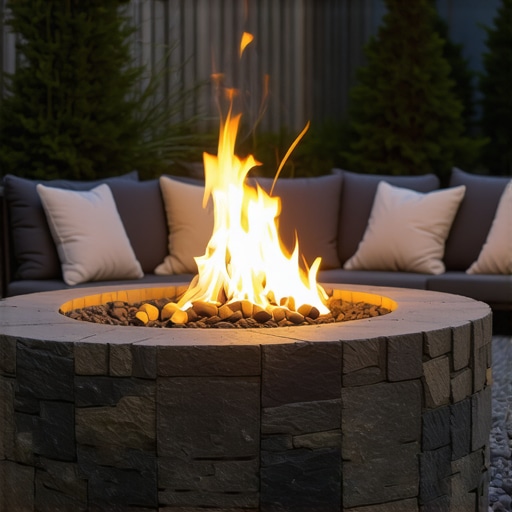
Why You Should Add a Fire Pit to Your Side Yard
Maximizing Dead Space with Fire Pit Engineering
Adding a fire pit to your side yard turns an underutilized transition zone into a functional hardscaped asset that manages drainage and increases property value. Most side yards are neglected ‘dead zones’ characterized by poor soil health and turf failure due to limited sunlight or high-velocity wind tunnels between structures.
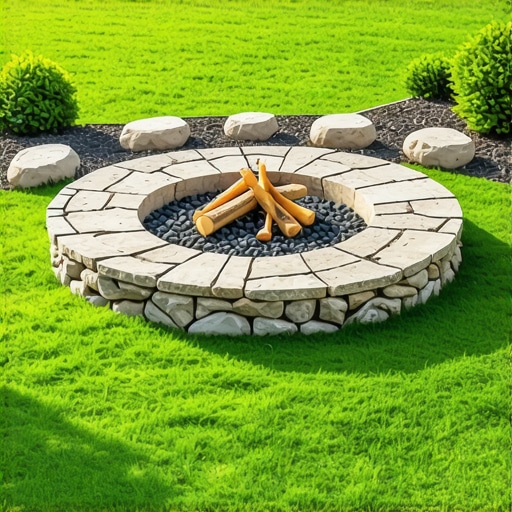
I recently got called out to tear up a $30,000 patio that was sinking because the previous contractor skipped the most basic rule of landscaping: you cannot build on uncompacted subgrade. They tossed some decorative stone over topsoil and called it a day. Within two seasons, the hydrostatic pressure from trapped water turned that expensive fire pit into a lopsided mess of cracked masonry. We had to excavate 8 inches down, install a geotextile fabric, and rebuild with 2A modified gravel just to fix the incompetence. If you don’t respect the physics of the ground, the ground will win every time.
The Engineering Blueprint for Side Yard Fire Pits
Before you buy a single fire brick, you have to analyze the soil compaction and grading of your side yard. Most side yards are designed as primary drainage swales. If you drop a solid stone structure in the middle of it without a French drain or a dedicated runoff path, you are effectively damming your yard. This leads to soil saturation and root rot in nearby plantings.
“A retaining wall or fire pit foundation doesn’t fail because of the stone; it fails because of the water trapped behind it.” – Hardscape Engineering Axiom
How much modified gravel do I need for a patio base?
To calculate the modified gravel base for a fire pit, you must measure the total square footage and multiply by the required depth—usually 4 to 6 inches for pedestrian-grade hardscaping—then convert to tons. For a standard 10×10 side yard area, you will typically need 2.5 to 3 tons of CR-6 or 2A modified stone to ensure the structure doesn’t heave during freeze-thaw cycles. This base must be mechanically compacted in 2-inch lifts. If you are just hand-tamping, you are wasting your time. The PSI required to stabilize the sub-base is only achievable with a plate compactor.
| Material Factor | Wood-Burning Pit | Gas-Powered Pit |
|---|---|---|
| Base Depth | 6-8 inches 2A Modified | 4-6 inches 2A Modified |
| Internal Liner | 304 Stainless Steel or Fire Brick | Burner Pan & Media |
| Clearance | 15-20 feet from structures | 10 feet from structures |
| Ventilation | Natural Cross-Draft | Required 18 sq in minimum |
What is the safe distance for a fire pit from a house?
A fire pit should be located a minimum of 10 to 20 feet away from any structure, including your home, sheds, or overhanging trees, to mitigate thermal stress and ember drift. In narrow side yards, this often requires using natural gas or propane inserts rather than wood-burning units, as gas allows for immediate flame suppression and zero ember production. Check your local International Residential Code (IRC) and HOA bylaws, as many municipalities require a permit for permanent hardscape installs that involve gas lines or specific setback requirements.
The Science of Thermal Mass and Masonry Choice
Don’t use standard landscaping pavers for the interior of a fire pit. They will explode. Standard concrete blocks contain moisture; when that moisture turns to steam under high heat, the pressure causes spalling or catastrophic failure. You must use refractory fire bricks (kiln-fired) and high-temperature mortar. The outer shell is for aesthetics—the inner liner is for survival.
- Excavation: Dig to a depth of 12 inches below finished grade.
- Filter Fabric: Lay down non-woven geotextile to keep the stone from migrating into the clay.
- Screeding: Use 1-inch pipes to level your setting bed of sand or fine chips.
- Polymeric Sand: Use high-quality sand to lock joints and prevent weed growth.
- Draft Holes: Ensure at least two 2-inch gaps at the base to feed oxygen to the fire.
“Proper aeration in turf management and hardscape design prevents anaerobic conditions that lead to structural and biological decay.” – Penn State Agricultural Extension
Biological Integration and Landscape Design
When you install a fire pit in a side yard, you are changing the micro-climate. The heat from the pit can scorch ornamental grasses or evergreens if they are planted too close. I recommend drought-tolerant native species that can handle the increased radiant temperature. Also, consider the nitrogen cycle of your remaining lawn. High traffic around a new fire pit causes soil compaction, which starves grass roots of oxygen. You must core aerate these areas annually to prevent the soil from turning into concrete.
Side yards often suffer from the ‘wind tunnel’ effect. A strategically placed hardscape feature like a fire pit, combined with tiered plantings, can break up this airflow, making the space more comfortable. Use heavy-gauge steel liners to protect the stone. It will rot if you don’t. Cheap kits from big-box stores last two seasons. A professional build lasts thirty years. Stop buying junk and start building for structural integrity.