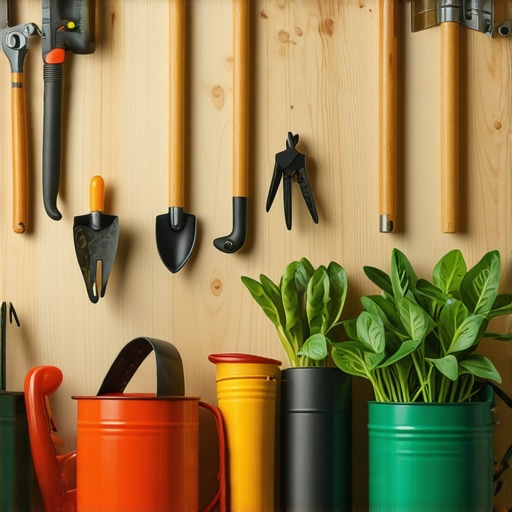
The Best Tools for Every New Gardener’s Shed
Why Tool Selection Starts with Site Analysis
The selection of professional-grade garden tools hinges on understanding the mechanical leverage and metallurgical properties required to manipulate soil structure, manage root systems, and maintain hardscape integrity without causing repetitive strain or equipment failure during intensive landscape installation and garden design projects.
I always drill into my new crew members: if you don’t fix the soil grading first, every plant you put in the ground is just expensive compost. You can buy the finest Japanese steel bypass pruners in the world, but if your site has 5% slope toward the foundation and zero drainage, those plants are dead in six months. I remember a kid we hired last spring who thought a shovel was just a shovel. He spent three hours trying to cut through heavy clay with a flat-head spade. I had to take him aside and explain that without a sharpened, round-point forged steel spade, he was fighting physics, not the dirt. We aren’t just digging holes; we are engineering a biological environment. If your tools aren’t an extension of that engineering mindset, you’re just a guy with a hobby, not a land manager.
“A retaining wall doesn’t fail because of the stone; it fails because of the water trapped behind it. Proper grading and drainage tools are the first line of defense in any hardscape longevity.” – Hardscape Engineering Axiom
How much modified gravel do I need for a patio base?
Calculating base material is simple math but frequently botched. For a standard hardscaping project, you need 6 inches of modified gravel (2A or CR-6) compacted in 2-inch lifts. Multiply your square footage by 0.02 to find the cubic yardage required. Do not guess. If you under-compact, the pavers will heave during the first freeze-thaw cycle. Use a plate compactor with at least 3,000 lbs of centrifugal force. Anything less is just a vibration machine.
The Engineering of the Primary Excavation Tools
Essential excavation tools like the forged steel round-point shovel and trenching spade are designed to overcome soil shear strength and penetrate high-density clay subsoils while preserving the structural integrity of the handle under high-torque prying motions.
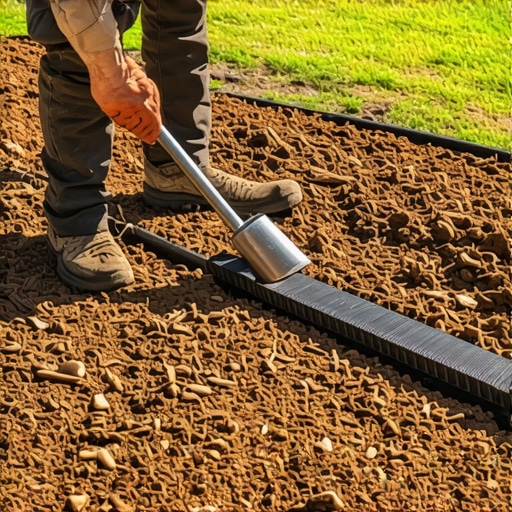
Most beginners buy shovels with stamped blades. These are garbage. A stamped blade will flex and eventually snap at the frog. You want a solid-shank, forged steel head. The weight matters. A heavier head uses gravity to help the bite. When you are dealing with lawn care and installing landscape beds, you encounter roots and rocks. A sharpened edge is not optional. I keep a mill file in the truck and sharpen every spade every morning. If it can’t slice a root like a knife, it’s dull. For hardscaping work, the square-point shovel is your best friend for moving 1B stone or leveling a modified gravel base. It’s about the flat edge meeting the flat grade. Don’t use a round-point for leveling. It leaves divots. Divots lead to air pockets. Air pockets lead to settling. Settling leads to a phone call I don’t want to take three years from now.
| Tool Type | Material Requirement | Typical PSI Resistance | Primary Use Case |
|---|---|---|---|
| Round-Point Shovel | Forged Carbon Steel | 45,000 PSI | Breaking virgin soil/clay |
| Square-Point Shovel | Heat-Treated Steel | 38,000 PSI | Material transfer/Grading |
| Bypass Pruners | High-Carbon SK5 Steel | N/A | Live tissue maintenance |
| Garden Rake | Forged 14-Tine Steel | 25,000 PSI | Seedbed prep/Leveling |
Precision Cutting and Plant Health
High-quality pruning tools utilize bypass blade technology to ensure clean, scissor-like cuts that minimize cambium layer damage and facilitate rapid callus formation, preventing pathogens from entering the plant’s vascular system during garden design maintenance.
If you use anvil pruners on live wood, you are crushing the tissue. It’s a death sentence for delicate shrubs. You need bypass pruners. Period. Look for a brand that offers replaceable parts. If you can’t replace the spring or the blade, it’s a disposable tool, and I don’t keep disposables in my shed. We focus on the root flare when planting. If the tool you’re using to clear the pot-bound roots isn’t surgical, you’re causing trauma. I also recommend a high-quality soil knife, or Hori-Hori. It is the most versatile tool for landscaping. It can weed, it can cut sod, and it can measure depth. Most homeowners plant too deep. The root flare must be visible at the soil surface. Use the knife to find it before the plant goes in the hole. Don’t skip this.
“Successful establishment of woody ornamentals is 80% dependent on proper soil-to-root contact and the prevention of girdling roots through mechanical intervention during planting.” – Texas A&M AgriLife Extension
What is the best shovel for heavy clay soil?
For heavy clay soil, a narrow-profile trenching spade with a sharpened forged head is superior to a standard shovel because it reduces surface area friction. This allows for deeper penetration with less downward force. Use a fiberglass or steel-reinforced handle to prevent snapping under the extreme suction of wet clay. Always clean the blade between strikes to maintain efficiency.
The Essential Tool Maintenance Protocol
- Daily Cleaning: Use a wire brush to remove soil. Soil holds moisture; moisture creates rust. Rust is friction.
- Sharpening: Use a 10-inch mill file at a 20-degree angle on all digging tools. A sharp tool is a safe tool.
- Sanitization: Dip pruners in a 10% bleach solution or 70% isopropyl alcohol between plants to stop the spread of blight.
- Oiling: Apply a light coat of linseed oil to wooden handles and mineral oil to metal heads before storage.
- Handle Check: Inspect for cracks near the ferrule. A snapping handle in the middle of a pry is how you end up in the ER.
Modern lawn care isn’t just about the grass. It’s about the biology of the thatch layer and the soil microbiology. When we core aerate, we use hollow tines, not spikes. Spikes increase soil compaction by pushing dirt sideways. Hollow tines remove a plug, creating a void for oxygen and water to reach the root zone. Your tools should reflect this understanding of physics. If you buy a cheap spreader from a big-box store, the gear housing will fail the second a pebble gets in it. Buy a commercial-grade spreader with stainless steel components. It costs three times as much but lasts ten times longer. The cheap stuff is a tax on people who don’t know better. Don’t pay it. Your shed should be a collection of assets, not a graveyard of broken plastic. The first year of your garden will involve a lot of settling. Watch the drainage. If water pools, your grade is off. Use your level. Use your eyes. Dig it up and do it right. Nature doesn’t forgive laziness.
![Stop 2026 Leaf Rust on Your Rose Bushes [Fix]](https://lawnmajesty.com/wp-content/uploads/2026/07/Stop-2026-Leaf-Rust-on-Your-Rose-Bushes-Fix.jpeg)