Why Your Lawn Mow Height is Crucial for Weed Control
The Forensic Autopsy of a Failing Turf Canopy
Mowing height is the single most important cultural practice in lawn care that determines the competitive dominance of turf over weeds. When you maintain a mow height of 3.5 to 4 inches, you are creating a biological barrier that regulates soil temperature, preserves soil moisture, and physically blocks the photosynthetic light required for weed seed germination.
I recently walked a property where the homeowner was in a state of absolute despair. They had spent over four thousand dollars on premium sod and another two thousand on a professional-grade irrigation system, yet their front yard looked like a botanical garden for dandelions and crabgrass. The culprit was not the soil chemistry or the water schedule. It was their mower. They were scalping the lawn at 1.5 inches because they liked the look of a golf course fairway. This decision had effectively torched the root system and opened the door for every opportunistic weed seed in the county. By cutting the grass that low, they had reduced the leaf surface area to a point where the plant could no longer produce enough carbohydrates to sustain a healthy root structure. The lawn was starving in plain sight. This is a classic case of the chemical nightmare: the homeowner tried to fix the problem by dumping high-nitrogen fertilizer and heavy doses of 2,4-D on the stressed turf, which only served to further dehydrate the grass crowns and ionize the soil profile. They didn’t need more chemicals; they needed a higher blade setting.
How Lawn Mow Height Directly Influences Weed Germination
Mowing height controls weed germination by regulating the amount of photosynthetic light reaching the soil surface. A canopy maintained at 3.5 to 4 inches creates a biological umbrella that shades out opportunistic weed seeds like crabgrass and clover, preventing them from reaching the critical soil temperatures and light thresholds required for sprouting.
The mechanics of weed suppression are grounded in basic plant biology. Most common turf weeds are heliophytes, meaning they require direct sunlight to trigger their germination cycle. When you maintain a tall, dense canopy of Kentucky Bluegrass or Tall Fescue, you are essentially creating a light-deprived environment at the soil level. Research from various agricultural extensions confirms this. For example:
“Increased mowing height leads to a deeper root system, which enhances the turfgrass plant’s ability to withstand drought stress and compete with weeds.” – Penn State Center for Turfgrass Science
When the sun hits the soil directly because the grass is too short, the soil temperature can spike by 10 to 15 degrees in a single afternoon. This heat signal tells the dormant crabgrass seeds that it is time to wake up. By the time you notice the green shoots, the battle is already lost. You must keep the soil cool. A higher cut acts as a layer of insulation for the rhizosphere, the zone of soil surrounding the roots where all the microbial magic happens.
How much does mowing height affect soil temperature?
Soil temperature is regulated by the density and height of the turf canopy. In a lawn cut at 4 inches, the soil temperature can remain a steady 65 degrees, while a scalped lawn nearby may see soil temperatures exceeding 80 degrees. This difference is the primary toggle switch for the germination of summer annual weeds.
The Biological Mechanics of the 4-Inch Cut
The height of the grass blade is directly proportional to the depth of the root system. For every inch of leaf tissue above the ground, there is a corresponding network of fibrous roots below the ground. This relationship is governed by the plant’s photosynthetic capacity and its ability to store energy in the crown.
If you scalp your lawn, you are forcing the plant to go into emergency recovery mode. It will pull nutrients and sugars out of the roots to grow new leaves as fast as possible. If this happens repeatedly, the roots will wither and retract. A lawn with a 1-inch root system cannot survive a three-day dry spell in July. Conversely, a lawn maintained at 4 inches will develop roots that reach 6 to 8 inches into the soil. These deep roots can tap into subsoil moisture that shallow-rooted weeds like chickweed or spurge simply cannot reach. You are literally out-competing them for the most basic resource: water. In landscaping and garden design, we call this resource partitioning. You want your turf to own the deep soil so the weeds can’t survive the surface heat.
| Mowing Height (Inches) | Weed Suppression Rate | Average Root Depth | Drought Tolerance |
|---|---|---|---|
| 1.0 – 2.0 | Less than 20% | 1 – 2 inches | Very Poor | 2.5 – 3.0 | Approx. 50% | 3 – 4 inches | Fair | 3.5 – 4.5 | Greater than 90% | 6 – 8 inches | Excellent |
Does a higher mowing height attract more pests?
This is a common myth in lawn care. While some worry that taller grass harbors more insects, the reality is that a healthy, dense turf provides a habitat for beneficial predatory insects like spiders and ground beetles that keep pests in check. A scalped, stressed lawn is actually more susceptible to grubs and armyworms because the plant lacks the vigor to repair the damage caused by feeding.
Technical Checklist for Proper Mowing Execution
- Verify Blade Sharpness: A dull blade tears the grass tissue rather than cutting it, leading to white, frayed ends and increased water loss through the wound.
- Observe the One-Third Rule: Never remove more than one-third of the total grass height in a single mowing session to avoid physiological shock to the plant.
- Adjust for Seasonality: In the heat of summer, push your height to the maximum setting. In the late fall, you can gradually lower it to 2.5 inches to prevent snow mold.
- Leave the Clippings: Grass clippings are 80% water and contain up to 4% nitrogen. Let them decompose to feed the soil microbiology.
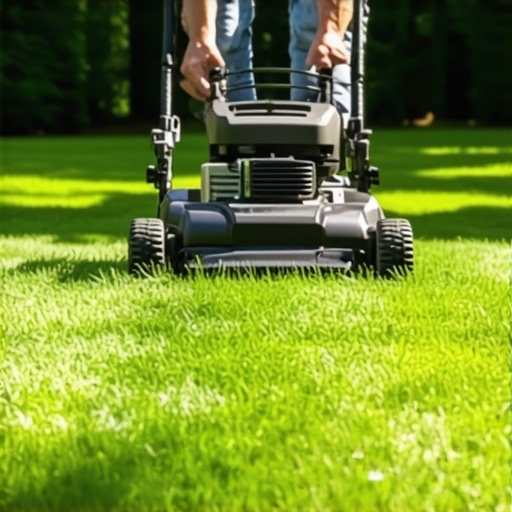
- Check Mower Deck Leveling: Ensure your mower deck is level on a flat surface like a concrete driveway to prevent uneven cuts and scalping on turns.
The Scalping Trap: Why Low Mowing is a Death Sentence
Scalping is the intentional or accidental act of cutting the grass so low that the crown—the growing point of the plant located at the soil surface—is exposed to the sun or physically damaged by the mower blade. Once the crown is damaged, the plant is likely to die.
Most people scalp because they want more time between mows. It is a lazy man’s trade-off that costs a fortune in the long run. When you scalp, you trigger a massive release of ethylene, a plant hormone that signals stress. This stress weakens the turf’s natural defenses against pathogens like Rhizoctonia (Brown Patch) or Pythium blight. It also creates bare patches. In the world of hardscaping and civil engineering, we talk about structural integrity. A lawn’s structural integrity is its density. Once you have a hole in the canopy, a weed seed will fill it. Nature abhors a vacuum. If you don’t fill that space with grass, the environment will fill it with whatever is blowing in the wind. Don’t skip the height adjustment.
“A lawn is a living organism, not a carpet. If you treat it like a carpet, it will respond by dying.” – Agronomy Field Manual
The Remediation Process: From Scalped to Stable
If you have been cutting too low, you cannot simply jump from 1 inch to 4 inches overnight and expect results. The process of remediation requires patience and a systematic approach to rebuilding the plant’s vascular system. Start by raising the mower one notch every two weeks. This allows the plant to gradually relocate its energy reserves from the roots back into the leaf tissue without causing a massive growth surge that would deplete its sugars.
Simultaneously, you should focus on aeration and overseeding. Use a core aerator to pull 3-inch plugs from the soil. This relieves compaction and allows oxygen to reach the roots, which is vital for the aerobic bacteria that break down organic matter into usable nitrogen. Follow this with a high-quality seed blend that is rated for your specific USDA hardiness zone. Avoid the cheap bags at the big-box stores; they often contain high percentages of weed seeds and inert matter. Invest in professional-grade seed. Once the new grass is established, maintain that 4-inch height religiously. You will see a 70% reduction in weed pressure within a single growing season without even touching a sprayer. It is physics and biology working in tandem. Stick to the plan. It works.