Why Your New Grass Seed Isn’t Growing
The Forensic Autopsy of a Failed Lawn
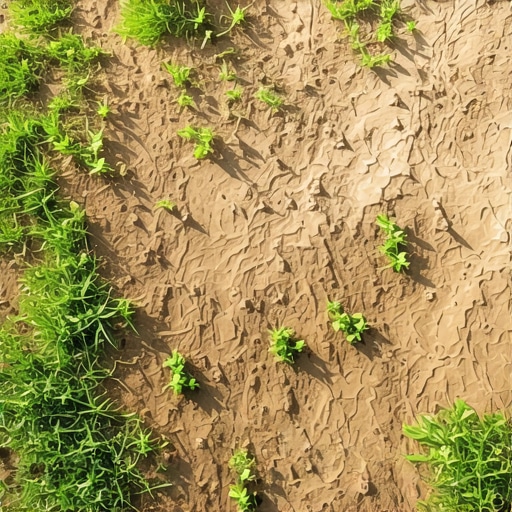
Your lawn is a biological system, not a green carpet you simply unroll. When new grass seed fails to germinate, it is rarely a matter of bad luck and almost always a failure of site conditions, soil chemistry, or physical preparation. To understand why your investment is currently just expensive bird food, we have to look at the microscopic reality of the soil profile, from cation exchange capacity to the specific moisture levels required for seed imbibition. It is frustrating to see a brown patch where you expected a green expanse. I see it every season. Homeowners treat grass seed like a ‘set it and forget it’ product, but nature does not work on your schedule. Most failures happen because the foundational requirements for plant life were ignored in favor of convenience.
The Chemical Nightmare: A Cautionary Tale
A homeowner called me in a panic last spring after they completely torched their front lawn by applying a heavy-duty pre-emergent herbicide and a high-nitrogen ‘starter’ fertilizer on the same day they seeded. They essentially created a toxic chemical barrier that prevented the delicate radicles from ever piercing the soil surface. By the time I arrived, the soil was chemically locked, and the microbial life was practically non-existent. We had to core aerate the entire lot and flush the system with humic acid just to get the pH back into a range where a blade of fescue could survive. It was a $4,000 mistake that could have been avoided with a $20 soil test. If you ignore the chemistry, you are just throwing money into the wind. Soil biology is unforgiving. One wrong application can sterilize your yard for months.
The Critical Role of Soil Temperature in Germination
Grass seed germination is triggered by consistent soil temperatures, not air temperatures, typically requiring levels between 55 and 65 degrees Fahrenheit for cool-season grasses like Fescue and Bluegrass. If the soil is too cold, the seed remains dormant and eventually rots in the damp earth; if it is too hot, the seedling desiccates before the root system can establish. You cannot guess this. Buy a soil thermometer. Stop looking at the weather app and start looking at the ground. Germination is a hormonal response within the seed. It needs a specific thermal window to activate the enzymes required for growth.
“A lawn is only as resilient as the soil structure beneath it; without proper aeration and nutrient availability, the finest seed varieties will succumb to environmental stress.” – Penn State Center for Turfgrass Science
How long does it take for grass seed to grow?
Depending on the species, you should see ‘green fuzz’ within 7 to 21 days, provided soil moisture is maintained and temperatures are within the 60-75 degree range. Perennial Ryegrass is fast, often appearing in a week, while Kentucky Bluegrass can take a full three weeks of patience. Do not panic at day 10. If you have no growth after 30 days, the seed is dead. At that point, you must investigate the soil for compaction or chemical inhibitors. Patience is a tool in landscaping. Use it.
The Seed-to-Soil Contact Barrier
Successful germination requires direct seed-to-soil contact to ensure the seed can absorb moisture from the surrounding earth, a process known as imbibition. If your seed is sitting on top of a thick layer of dead grass, known as thatch, or on compacted clay that mimics concrete, the roots cannot penetrate the surface to find nutrients. Thatch acts like a sponge that keeps moisture away from the seed. You must remove it. Use a power rake or a vertical mower. If the soil is hard, the seed stays on top. It dies there. It is that simple.
The Soil Compaction Matrix
| Soil Type | Compaction Risk | Germination Success Rate | Remediation Required |
|---|---|---|---|
| Heavy Clay | Extreme | Low (20-30%) | Core Aeration + Sand/Compost Mix |
| Sandy Loam | Low | High (80-90%) | Light Rolling Only |
| Silty Soil | Moderate | Medium (50-60%) | De-thatching + Topdressing |
Notice how clay destroys your chances. Most new builds have zero topsoil. Builders scrape it off and sell it, leaving you with ‘B-horizon’ subsoil that is devoid of life. You cannot grow a premium lawn on subsoil without massive intervention. You need organic matter. You need pore space for oxygen. Roots need to breathe just as much as they need water. If the soil is tight, the plant suffocates. I have seen 50-pound bags of seed wasted because the ground was as hard as a sidewalk. It is a waste of time. Fix the earth first.
The Hydration Paradox: Why Your Watering is Killing the Seed
New grass seed requires consistent, light moisture to keep the seed coat soft, but over-watering leads to ‘damping off’ fungus or oxygen deprivation in the soil. You should mist the area 2-3 times daily for 10 minutes rather than drenching it once a week, as a saturated soil profile prevents the necessary gaseous exchange for root development. If the seed dries out once after it has started to sprout, it is dead. The cell walls collapse. You cannot revive a dried seedling. On the flip side, if you see puddles, you are drowning it. Water displaces the air in the soil pores. Without air, the seed rots. It turns into a mushy, grey mess. Balance is everything.
Can you put too much grass seed down?
Yes, excessive seeding creates intraspecific competition where too many seedlings fight for limited nitrogen, water, and sunlight, leading to a weak, spindly stand that is highly susceptible to fungal pathogens like Pythium blight. More is not better. Follow the bag rate, usually 5-8 pounds per 1,000 square feet for new lawns. Over-seeding creates a ‘matted’ effect. The seedlings choke each other out. It looks good for two weeks, then it all dies at once. Use a calibrated spreader. Do not throw it by hand like you are feeding chickens.
“Hydrostatic pressure and soil porosity dictate the movement of water through the root zone; without aggregate balance, saturation will inevitably lead to root necrosis.” – Texas A&M Agronomy Manual
Nutrient Lock and pH Imbalance
Even with perfect water and light, grass seed will fail if the soil pH is outside the 6.0 to 7.0 range, as this causes nutrient lockout where essential minerals like Phosphorus and Iron become chemically unavailable to the plant. Most homeowners in acidic regions ignore lime applications, resulting in stunted, yellowing grass that cannot develop a deep root system. If your pH is 5.0, your fertilizer is useless. It stays in the soil but the plant cannot ‘eat’ it. It is like being at a banquet with your mouth sewn shut. Get a lab test. Do not use those cheap color-changing strips from the hardware store. They are inaccurate. You need a professional analysis of your CEC and base saturation. Knowledge is power in the garden.
The Pre-Emergent Trap
Many ‘weed and feed’ products contain pre-emergent herbicides designed to stop seeds from growing. They do not distinguish between a crabgrass seed and your expensive fescue seed. If you applied a ‘Step 1’ fertilizer in the spring, you likely killed your new lawn before it started. Most pre-emergents last 90 days. You must wait. Or, use a specific starter fertilizer that contains Mesotrione, which is the only chemical that allows grass to grow while stopping weeds. Read the label. The label is the law. If you skip the fine print, you pay the price in dead dirt.
The Maintenance Roadmap for Survival
- Check Soil Temperature: Ensure the ground is at least 55°F for three consecutive days.
- Scalp the Existing Turf: Mow as low as possible to allow sunlight to reach the soil.
- Core Aerate: Pull 3-inch plugs to relieve compaction and allow oxygen flow.
- Topdress with Compost: Apply a 1/4 inch layer of organic matter to retain moisture.
- Seed at Recommended Rates: Use a broadcast or drop spreader for even distribution.
- Light Rolling: Use a water-filled roller to press seed into the soil.
- Irrigation Schedule: Set timers for 10:00 AM, 1:00 PM, and 4:00 PM for the first 14 days.
Once the grass reaches 3 inches in height, you can begin to back off the watering. Transition to deep, infrequent soakings. This forces the roots to grow downward in search of water. If you keep the surface wet forever, the roots stay shallow. Shallow roots die in the first heatwave of July. You are building a system that must eventually survive on its own. The first 30 days are a nursery period. After that, it is basic training. Mow with a sharp blade. A dull blade tears the grass, leaving it open to disease. Treat it like the living organism it is. Your yard is a reflection of your patience and your understanding of biology. Do the work. Get the results.
![Why Your 2026 Grass Seed Isn't Growing [3 Critical Mistakes]](https://lawnmajesty.com/wp-content/uploads/2026/05/Why-Your-2026-Grass-Seed-Isnt-Growing-3-Critical-Mistakes.jpeg)