
3 Signs Your 2026 Tree Roots are Destroying Pipes
The Underground Forensic: Identifying Root Intrusion Before the Blowout
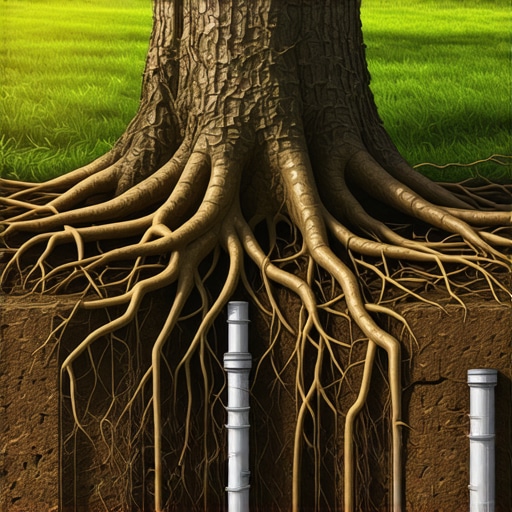
The sound of a sewer line failing isn’t a bang; it is a wet, rhythmic gurgle that indicates your home’s waste-water management system has become a feeding trough for nearby woody perennials. Tree root intrusion in 2026 pipes occurs when opportunistic root hairs detect vapor trails escaping from microscopic fissures in aged plumbing, eventually exerting over 200 PSI of radial pressure to compromise the joint. I always drill into my new crew members: if you don’t fix the soil grading and account for the eventual mature spread of a root system first, every plant you put in the ground is just expensive compost. I’ve seen $50,000 hardscaping projects ripped to shreds because someone planted a Silver Maple twelve feet from a sewer lateral. The tree doesn’t care about your garden design; it cares about the nitrogen-rich effluent flowing through your pipes. It is biological warfare happening under your lawn care routine.
“A tree’s root system can extend two to three times the radius of the canopy, and roots will prioritize moisture-rich environments, including utility conduits and sewer lines, especially in compacted urban soils.” – International Society of Arboriculture (ISA) Best Management Practices
Sign 1: Recurring Drainage Slowdowns and Gurgling Fixtures
Slow drainage and gurgling noises in toilets or floor drains indicate that root masses have likely breached the pipe wall and are currently acting as a biological filter for solid waste. When your drainage system slows, it is rarely a simple clog. It is often a fibrous mat of roots slowing the velocity of the effluent. You’ll hear that gurgle because air is being trapped behind the root obstruction as water attempts to navigate the mesh. In 2026, as older infrastructure continues to settle, these microscopic entries become easier for trees like Willows or Elms to exploit. Root tips use hydrotropism to find even the smallest vapor leaks. Once they find a crack in a clay pipe or a loose joint in SDR 35 PVC, they enter as thin as a hair. Once inside, they have an unlimited supply of water and nutrients. They thicken. They expand. They shatter the pipe from the inside out. Don’t waste money on chemical drain cleaners. They won’t touch a woody root. You need a mechanical auger or hydro-jetting to even start the conversation.
Sign 2: Unexplained Greening and Localized Turf Vigor
Unusually dense, dark green patches of turf grass located directly over a sewer or water line often signify a subsurface leak that is being fertilized by the nutrient-rich water escaping into the surrounding soil. If one section of your lawn looks like it’s on a professional sports-field fertilization program while the rest is dormant, you have a problem. The tree roots have already found the breach and are actively mining it. This localized surge in growth is the result of the plant receiving a constant supply of nitrogen, phosphorus, and potassium (NPK) directly at the root zone. This is a common failure point in poor landscaping planning. Homeowners see a ‘vibrant’ patch and think their lawn care is working. In reality, the hydrostatic pressure within the pipe is forcing moisture out, and the trees are winning. If you see this over a utility path, stop the mower and get a camera down the line. It is only a matter of time before the structural integrity of the soil above that pipe fails.
Sign 3: Surface Heaving and Sinkholes Near Hardscaping
Localized soil sinking or the sudden lifting of pavers and retaining walls near mature trees usually indicates that large structural roots are displacing soil or that water from a pipe breach is eroding the sub-base. When roots grow, they don’t just move through the soil; they displace it. If a root is pinned between a concrete pipe and a compacted gravel base, something has to give. Usually, it’s the pipe or your $20-per-square-foot pavers. We often see ‘sinkholes’ that are actually voids created by water escaping a root-punctured pipe and washing away the fines in the soil. This leads to a total loss of load-bearing capacity. If your hardscaping is pitching at an odd angle, check the nearest tree. The mechanical force of secondary growth in woody roots is enough to lift slabs of granite. It’s a slow-motion car crash. You cannot stop it with a bigger tamper or more polymeric sand. You have to address the biological source.
How do I stop roots from growing into my pipes?
Preventing root intrusion requires a multi-front approach involving physical barriers and species selection. We use copper-sulfate impregnated fabrics or physical root barriers made of high-density polyethylene (HDPE) installed to a depth of at least 24 inches. These barriers force the roots to grow downward rather than laterally toward the utility trench. Additionally, when planning your garden design, you must select species with non-aggressive root systems. For instance, replacing an invasive Willow with a smaller cultivar or a tap-rooted species can save you thousands in future plumbing repairs. If you are already dealing with an established tree, professional foaming treatments that contain a root growth inhibitor like Dichlobenil can temporarily clear the line, but it’s a bandage, not a cure.
Can a plumber tell if roots are the problem?
A professional plumber or site engineer will use a fiber-optic sewer camera to provide a visual ‘autopsy’ of the pipe’s interior. This is the only way to distinguish between a collapsed pipe, a simple grease clog, or a massive root ball. In 2026, the technology has advanced to include high-definition imaging that can locate the exact footage from the cleanout where the intrusion occurs. This allows us to perform ‘spot repairs’ or trenchless pipe lining rather than excavating the entire yard. If you see roots on the camera, they will look like a bird’s nest filling the diameter of the pipe. At that point, the pipe’s structural life is over. You are looking at a relining or a full replacement.
| Tree Species | Root Aggressiveness | Safe Distance from Pipes |
|---|---|---|
| Silver Maple | High | 30+ Feet |
| Willow | Extreme | 50+ Feet |
| American Elm | High | 30+ Feet |
| Japanese Maple | Low | 10 Feet |
| Eastern Redbud | Moderate | 15 Feet |
“Hydrostatic pressure from leaking joints acts as a beacon for root systems, which can exert enough mechanical force to enlarge cracks in concrete and clay pipes by 500% over a single growing season.” – Civil Engineering Soil Mechanics Handbook
- Inspect your cleanouts: Ensure caps are tight to prevent vapor escape.
- Monitor water bills: A sudden spike can indicate a root-punctured supply line.
- Hydro-jet annually: If you have high-risk trees, high-pressure water can clear small roots before they woody-up.
- Map your utilities: Call 811 before any hardscaping or planting to know exactly where the ‘danger zones’ are.
- Use Copper Sulfate: Periodic applications can kill small root hairs near the pipe joints without killing the tree.
The reality is simple: the tree will always find the water. Your job in landscaping and hardscaping is to make sure that water isn’t coming from your sewer lateral. Fix the grading. Select the right species. Don’t let your garden design become a plumbing nightmare. It’s much cheaper to move a sapling now than it is to dig up a foundation in five years. Roots are patient. They are strong. They are hungry. Plan accordingly.
![Why Your 2026 Drip Emitters Keep Clogging [Fix]](https://lawnmajesty.com/wp-content/uploads/2026/06/Why-Your-2026-Drip-Emitters-Keep-Clogging-Fix.jpeg)
![Stop 2026 Leaf Rust on Hydrangea Shrubs [Fix]](https://lawnmajesty.com/wp-content/uploads/2026/07/Stop-2026-Leaf-Rust-on-Hydrangea-Shrubs-Fix.jpeg)