Why Your Compost Pile Isn’t Breaking Down Fast Enough
I always drill into my new crew members: if you don’t fix the soil grading and chemistry first, every plant you put in the ground is just expensive compost in training. But lately, I have seen a surge in homeowners trying to run their own organic waste programs without understanding the basic thermodynamics and microbiology involved. I walked onto a job site last week in a high-end development where the owner was frustrated that his expensive cedar compost bins were full of the same oak leaves he put in there eighteen months ago. He thought he had a ‘compost pile,’ but what he actually had was a dry trash heap. Composting is not a passive waiting game; it is an active engineering feat performed by billions of aerobic bacteria and fungi that require specific environmental parameters to survive and scale. If your pile is stalled, you have likely violated a fundamental law of soil biology or bulk density compaction. It is time to stop guessing and start measuring the microbial throughput of your garden design.
The Anatomy of a Stalled Compost Pile
A stalled compost pile fails to decompose when the microbial population lacks the necessary balance of nitrogen, carbon, moisture, or oxygen to maintain metabolic activity. Without these inputs, the thermophilic bacteria cannot generate the heat (135 to 160 degrees Fahrenheit) required to break down lignin and cellulose structures effectively. To fix it, you must identify which limiting factor is currently choking the biological engine of your landscaping soil health.
Is your carbon to nitrogen ratio out of whack?
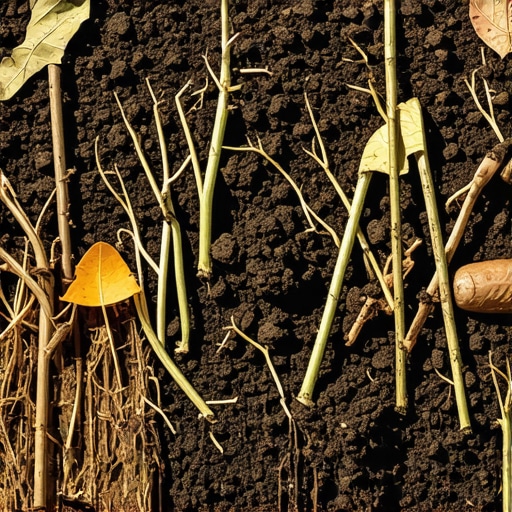
The most common failure in backyard composting is a massive surplus of carbon (browns) and a deficit of nitrogen (greens). Microbes need carbon for energy and nitrogen for protein synthesis to build their own bodies. In my firm, we target a C:N ratio of 30:1. If you dump three bags of shredded hardwood mulch or dry oak leaves into a pile without adding high-nitrogen sources like fresh grass clippings, vegetable scraps, or even blood meal, the decomposition process will grind to a halt. The bacteria essentially starve for the building blocks of life. You can see this when the pile stays cold to the touch and looks like a pile of dry sticks. You need to introduce nitrogen-rich green matter immediately to kickstart the thermophilic phase. Do not skip this balance.
The moisture problem: Too wet or too dry?
Microbes live in the thin film of water surrounding organic particles. If your pile is too dry, the bacteria go dormant or die. If it is too wet, you drive out the oxygen and transition into anaerobic decomposition, which is slow, cold, and smells like a sewer. In a professional landscaping context, we use the ‘squeeze test.’ Take a handful of material from the center of the pile and squeeze it. It should feel like a wrung-out sponge. You want perhaps one or two drops of water to escape. If it crumbles, add water. If it drips like a leaky faucet, you have a drainage and aeration crisis that will require adding dry carbon and turning the entire mass to introduce air. Standing water at the base of a pile is a death knell for aerobic activity.
The Microbiological Engine: Why Oxygen Matters
Oxygenation is the primary driver of rapid decomposition because aerobic bacteria are significantly more efficient at breaking down organic matter than their anaerobic counterparts. When a pile becomes compacted due to its own weight or excessive moisture, oxygen levels drop below 5 percent, causing the microbial population to crash and halting the breakdown of hardscaping organic debris. Frequent turning or the use of aeration pipes is mandatory for success.
“A compost pile is a living organism that breathes just as surely as a plant does; when pore space collapses, the aerobic cycle terminates and pathogens begin to dominate the substrate.” – Agronomy Manual for Soil Health
How can I speed up my compost pile?
To accelerate decomposition, you must increase the surface area of your materials and optimize the pile’s internal temperature. Use a wood chipper or a mulching mower to shred leaves and twigs into pieces smaller than one inch. This allows more bacteria to attach to the material simultaneously. Furthermore, ensure the pile is at least 3 feet wide by 3 feet tall. This volume provides enough insulation to trap the heat generated by microbial respiration. Small, thin piles lose heat too quickly to reach the critical thermophilic stage where weed seeds and pathogens are neutralized. If you aren’t seeing steam when you turn the pile on a cool morning, you aren’t winning.
Why does my compost pile smell like rotten eggs?
That sulfurous odor is a direct indicator of anaerobic conditions. When oxygen is depleted, anaerobic bacteria take over and produce hydrogen sulfide gas as a byproduct. This usually happens because the pile is too wet or too compacted. To fix this, you must physically turn the pile with a pitchfork or a tractor bucket to break up the anaerobic pockets and introduce fresh air. Mix in ‘bulking agents’ like wood chips or straw to create permanent air channels (macropores) within the structure. A healthy compost pile should have an earthy, forest-floor scent. Anything else is a sign of management failure. Fix it now before you ruin the soil pH for your future lawn care efforts.
Particle Size and Surface Area Dynamics
The rate of decomposition is directly proportional to the surface area available to the microbial community within the pile. Large, intact branches or thick mats of wet grass clippings create clumping that resists penetration by fungal hyphae and bacteria, leading to a stalled or unevenly finished product. Shredding all inputs to a uniform particle size is the most effective way to ensure a rapid turnover of organic matter into stable humus.
| Material Type | Carbon:Nitrogen Ratio | Surface Area Needs | Decomposition Speed |
|---|---|---|---|
| Fresh Grass Clippings | 15:1 (High Nitrogen) | Moderate – Needs Mixing | Fast (3-6 weeks) |
| Dry Autumn Leaves | 60:1 (High Carbon) | Must be Shredded | Medium (4-8 months) |
| Wood Chips / Sawdust | 400:1 (Extreme Carbon) | Very High – Fine Particles | Slow (1-2 years) |
| Fruit & Veggie Scraps | 20:1 (Balanced) | Low – High Moisture | Fast (2-4 weeks) |
| Straw / Hay | 80:1 (Carbon) | High – Bulking Agent | Medium (3-5 months) |
Troubleshooting the Temperature Gradient
Internal compost temperature is the most reliable metric for assessing the health of your biological reactor. If the core of your pile is not reaching at least 131 degrees Fahrenheit for three consecutive days, you are failing to achieve thermophilic decomposition, which is necessary to break down complex proteins and waxes. You must adjust your C:N ratio or increase the total mass volume of the pile to provide sufficient thermal insulation against ambient weather conditions.
“The engineering of a compost windrow requires precise monitoring of bulk density and porosity to ensure that hydrostatic pressure does not collapse the internal air voids required for aerobic respiration.” – ICPI Hardscape Engineering Axiom
The Master Landscaper’s Compost Tune-Up Checklist
- Invest in a long-stem compost thermometer. If you aren’t measuring, you’re guessing.
- Shred every piece of carbon (browns) to under 1 inch in length to maximize surface area.
- Layer your greens and browns in 3-inch intervals to ensure the nitrogen is adjacent to the carbon.
- Turn the pile every 7 to 10 days to redistribute moisture and re-oxygenate the core.
- Check the moisture level weekly; the pile should feel like a wrung-out sponge, not a swamp or a desert.
- Maintain a minimum pile size of 3x3x3 feet to ensure heat retention.
Stop treating your compost pile like a trash can. If you want high-quality soil that supports vigorous garden design and healthy lawn care, you have to manage the chemistry. I see so many people spend thousands on premium mulch and hardscaping only to choke their plants with ‘finished’ compost that is actually just half-rotted, nitrogen-stealing debris. When compost is properly finished, it should be dark, crumbly, and have no recognizable fragments of the original waste. If you can still see leaf skeletons, it isn’t ready for the garden. It is a biological process, and like any process, it requires inputs, monitoring, and labor. Get your hands dirty and fix the C:N ratio. Your soil will thank you. Don’t skip the turning. It’s work. Do it anyway.