Why Your Compost Isn’t Breaking Down Fast Enough
You see a pile of garden waste; I see a biological reactor that has stalled due to mechanical or chemical failure. Most homeowners treat composting like a trash can, tossing in grass clippings and kitchen scraps and then wondering why, twelve months later, they still have a stinking, anaerobic mess instead of the black gold required for high-end garden design. If your compost isn’t breaking down, it isn’t ‘resting’—it is failing. Composting is an engineered process of aerobic decomposition where specific microorganisms consume organic matter. When that process stops, the biology has been compromised.
The Diagnostic Core: Why Compost Stagnates
Stagnant composting usually stems from a skewed carbon-to-nitrogen ratio, insufficient oxygenation for aerobic microbes, or moisture levels falling outside the critical 40-60% range. Without the correct balance of chemical energy and atmospheric oxygen, the thermophilic bacteria responsible for rapid breakdown go dormant or die, allowing anaerobic pathogens to take over. I always drill into my new crew members: if you don’t fix the soil grading and the biology first, every plant you put in the ground is just expensive compost in the making. I remember a job where a client spent four figures on rare Japanese Maples, only to have them choke because they used ‘homemade compost’ that was actually just fermented, high-nitrogen sludge. It had a pH of 4.5 and literally burned the root flares. We had to excavate the entire bed. If you don’t understand the chemistry, you’re just a glorified leaf-shuffler.
“A compost pile is a living entity that requires the same basic needs as any organism: a balanced diet, water, and air. Failure to provide these results in a metabolic shutdown.” – USDA National Resources Conservation Service
How do I speed up my compost pile?
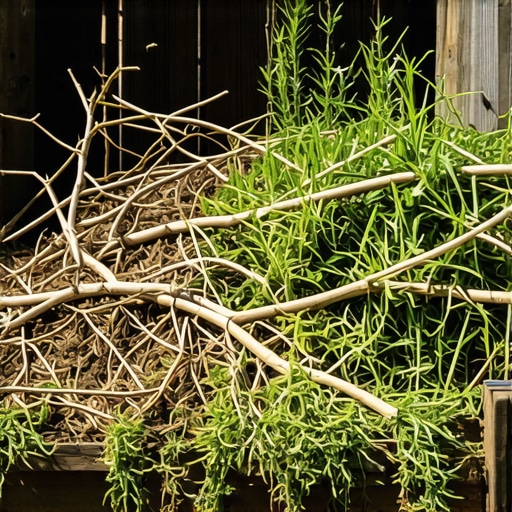
To accelerate decomposition, you must maximize the surface area of your materials and maintain a core temperature between 135°F and 160°F. This is achieved by shredding ‘browns’ like dried oak leaves or cardboard into pieces smaller than two inches, which allows microbes to colonize the material faster. In my 20 years in landscaping, I’ve seen guys throw whole branches into a pile. It won’t work. It will rot in a decade, maybe, but it won’t compost. You need to feed the thermophilic bacteria. These microbes are the heavy lifters. If the pile is cold, the biology is sluggish. Use a long-stemmed compost thermometer. If you aren’t hitting 140 degrees, your C:N ratio is off or your pile is too small to insulate itself. A pile needs to be at least 3x3x3 feet to maintain the thermal mass required for rapid breakdown.
Why does my compost smell like rotten eggs?
A foul, sulfurous odor is the definitive signature of anaerobic activity, meaning your pile has run out of oxygen and is now being processed by bacteria that thrive in suffocating environments. This usually happens because the pile is too wet or too compacted. In the world of hardscaping and drainage, we talk about pore space. The same logic applies to compost. If you saturate the pile, you fill those pore spaces with water instead of air. The aerobic bacteria drown. You must turn the pile to introduce O2 and add ‘bulking agents’ like wood chips or straw to create structural integrity that prevents the pile from collapsing under its own weight.
| Material Type | C:N Ratio (Approximate) | Role in the Reactor |
|---|---|---|
| Fresh Grass Clippings | 15:1 | Nitrogen (The Fuel) |
| Dried Leaves | 60:1 | Carbon (The Energy) |
| Cardboard/Paper | 200:1 | Structural Carbon |
| Vegetable Scraps | 12:1 | High-Moisture Nitrogen |
| Straw | 80:1 | Aeration / Carbon |
The Three Stages of Biological Incineration
To troubleshoot a stalled pile, you have to know which stage of the cycle failed. First is the Mesophilic stage, where moderate-temperature bacteria start the breakdown. This lasts a few days. If your pile never leaves this stage, it’s usually a lack of nitrogen. Next is the Thermophilic stage. This is where the heat lives. The temperature spikes, killing weed seeds and pathogens. This is the stage most DIYers miss. Finally, the Maturation stage is where fungi and larger organisms like actinomycetes take over to finish the job. If your pile is just a wet mat of grass, you’ve skipped the chemistry and gone straight to putrefaction. Don’t skip the brown layers. You need a 30:1 carbon-to-nitrogen ratio. Too much nitrogen (green) and it smells like ammonia; too much carbon (brown) and nothing happens for years. It stays cold.
“Active composting is characterized by the rapid consumption of oxygen and the release of carbon dioxide; if oxygen levels drop below 5%, the process shifts from aerobic to anaerobic, significantly slowing decomposition.” – Cornell Waste Management Institute
- Perform the Squeeze Test: Grab a handful of compost. It should feel like a wrung-out sponge. If water drips out, it’s too wet. If it falls apart, it’s too dry.
- Monitor the Core: Use a thermometer. No heat equals no progress.
- Increase Surface Area: Run a lawnmower over your leaves before adding them. Small particles equals fast food for microbes.
- Turn the Pile: Every 7 days during the heat of summer. Every 14 in the spring.
The Impact of Poor Compost on Lawn Care and Landscaping
Using unfinished compost is a death sentence for high-end turf grass. When you spread ‘active’ or unfinished compost on a lawn, those microbes are still hungry for nitrogen to finish their job. They will actually pull nitrogen out of your soil to process the carbon in the compost, effectively starving your grass. This is called ‘nitrogen drawdown.’ Your lawn will turn yellow and thin out, and you’ll think you need more fertilizer, but you’ve actually just created a chemical deficit. In garden design, we see the same thing with mulch volcanoes. People pile raw mulch against tree trunks, which traps moisture and invites rot while the wood chips rob the soil of nutrients. Professional landscaping requires a finished product—humus that has stabilized. If you can still recognize a leaf or a banana peel in your pile, it’s not ready for your garden. It’s still a work in progress. It’s not about the look; it’s about the cation exchange capacity. Finished compost improves the soil’s ability to hold onto nutrients. Unfinished compost is just trash sitting on your lawn. Don’t be a hack. Do the work. Turn the pile. Check the temps. Your soil biology depends on it.
![Why Your 2026 Hydrangeas Won't Bloom [Soil Fix]](https://lawnmajesty.com/wp-content/uploads/2026/07/Why-Your-2026-Hydrangeas-Wont-Bloom-Soil-Fix.jpeg)