
3 Signs Your Tree Roots are Destroying Your House Foundation
The Hard Truth About Arboriculture and Civil Engineering
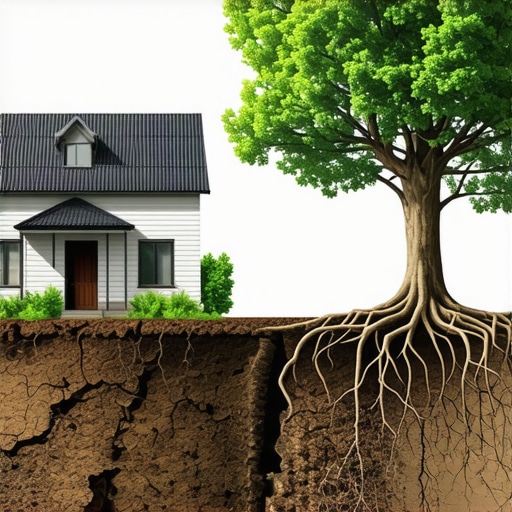
I always drill into my new crew members: if you don’t fix the soil grading and respect the footprint of the structure first, every plant you put in the ground is just expensive compost. I’ve seen $500,000 homes compromised because a homeowner wanted a ‘stately’ Silver Maple ten feet from their egress window. They see a tree; I see a 40-ton hydraulic pump that’s slowly dismantling a concrete footer. Landscaping isn’t just about aesthetics; it is about managing the conflict between biology and the built environment. When roots meet a foundation, the tree usually wins. This is a forensic look at how that destruction happens.
Sign 1: Stair-Step Cracking and Differential Settlement
Root-induced foundation damage manifests as vertical or stair-step cracks in masonry and floor slab heaving, caused by roots physically exerting pressure or, more commonly, dehydrating the soil beneath the footing, leading to differential settlement. When the soil moisture is sucked dry by a massive root system, the soil volume decreases. This causes the house to drop. It isn’t just the physical ‘push’ of the root; it’s the removal of the earth’s support.
“A retaining wall doesn’t fail because of the stone; it fails because of the water trapped behind it, and in the case of trees, it fails because the biological demand for that water alters the soil plasticity.” – Hardscape Engineering Axiom
Check your mortar lines. If you see a jagged crack following the joints of the brickwork, your foundation is moving. This is often the result of roots penetrating the ‘zone of influence.’ This zone is the area of soil that supports the weight of your home. Once a root enters this space, it competes with your foundation for stability. It will rot if the moisture levels aren’t stabilized. Don’t ignore the cracks.
Sign 2: Visible Root Flare and Surface Heaving Near Footings
Visible surface roots crossing the foundation line and buckling walkways indicate that the tree’s structural roots have reached the foundation’s zone of influence, often leading to moisture intrusion through existing micro-fissures. If you see a root the size of a firehose disappearing under your siding, you have a problem. This is not just a trip hazard for your lawn care crew; it is a structural intrusion.
| Tree Species | Root Invasiveness Level | Recommended Min. Distance (ft) |
|---|---|---|
| Silver Maple | Extreme | 50 |
| Willows | High (Water Seeking) | 100 |
| American Elm | Moderate/High | 40 |
| Oaks (Red/White) | Moderate | 30 |
We use the term ‘root flare’ to describe the area where the trunk expands into the root system. If this flare is tight against the concrete, the lateral growth of the wood will exert hundreds of pounds per square inch (PSI) of pressure. Concrete has high compressive strength but low tensile strength. It will snap.
Sign 3: Internal Flooring Slopes and Door Misalignment
When large deciduous trees are planted too close to a structure, they act as biological pumps, extracting hundreds of gallons of water daily from the expansive clay soil, which causes the ground to shrink and the foundation to drop. You might notice your kitchen door suddenly sticks or there is a mysterious gap in your baseboards. This is the ‘Forensic Autopsy’ of a failing home.
How far should a tree be from a house foundation?
For large canopy trees, you need a minimum of 20 to 30 feet. Smaller ornamental species can be closer, but you must account for the mature spread of the root system, which is typically 2 to 3 times the width of the dripline. If you are in a high-clay region, double those distances. Clay shrinks significantly during droughts, and a large tree accelerates this process tenfold.
Can tree roots really crack a concrete slab?
Yes, but they usually take the path of least resistance. Roots don’t ‘drill’ through solid, uncracked concrete. They find existing hairline fractures caused by settling or hydrostatic pressure. Once inside, the root expands as it grows, acting like a slow-motion wedge that eventually splits the slab wide open.
“Subsurface moisture depletion by tree roots is a primary cause of foundation subsidence in expansive clay soils across the United States.” – USDA Forest Service Technical Report
The Remediation Checklist: How to Save Your Slab
- Install a Root Barrier: Use a High-Density Polyethylene (HDPE) sheet buried 30 inches deep between the tree and the house.
- Maintain Soil Moisture: Use drip-line irrigation to keep the soil around the foundation at a consistent moisture level during droughts.
- Prune the Canopy: Reducing the leaf surface area reduces the tree’s water demand.
- Install French Drains: Manage water away from the foundation to prevent the ‘moisture attractant’ that draws roots in.
- Check 811 Before Digging: Always mark your utilities before installing barriers.
Landscaping is a long game. A 2-gallon pot from a big-box store looks harmless now, but in twenty years, it’s a structural liability. Always check your USDA hardiness zones and soil pH before planting. If you already have a giant Oak overhanging your gutters, call a certified arborist and a foundation specialist. Don’t wait for the windows to start popping out of their frames. The soil doesn’t lie. Get it right the first time.
![5 Low-Maintenance 2026 Front Yard Layouts [DIY]](https://lawnmajesty.com/wp-content/uploads/2026/06/5-Low-Maintenance-2026-Front-Yard-Layouts-DIY.jpeg)