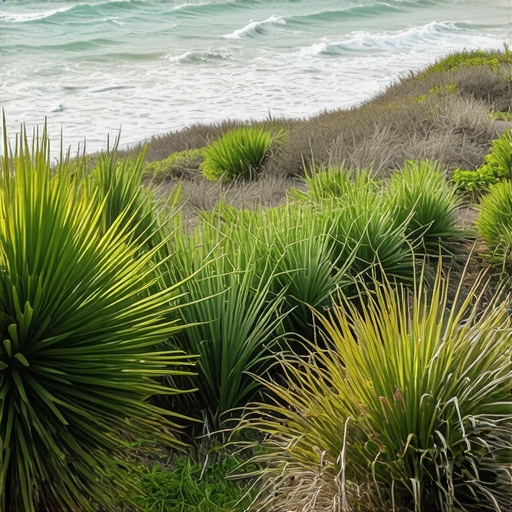
5 2026 Best Plants for Modern Concrete Planters
Mastering the Micro-Climate of Modern Concrete Planters
Selecting the best plants for modern concrete planters in 2026 requires a deep understanding of thermal mass, porosity, and the perched water table phenomenon that occurs in container gardening. Concrete is a brutal environment; it absorbs solar radiation during the day and leaches lime over time, which can swing soil pH toward the alkaline side. To succeed, you must choose cultivars that thrive in restricted root zones and can handle the fluctuating internal temperatures of a heavy-cast vessel.
I always drill into my new crew members: if you don’t fix the soil grading and drainage first, every plant you put in the ground is just expensive compost. This applies double to concrete planters. If that drainage hole is plugged or the soil mix is too heavy, the roots will drown in a week. I’ve seen $5,000 worth of specimen Boxwoods turn into brown sticks because a crew forgot to clear the weep holes. It is about the engineering beneath the surface, not just the greenery on top.
“The choice of container material significantly impacts root zone temperature; concrete provides high thermal mass but requires specific attention to internal moisture management to prevent root rot in high-heat environments.” – USDA Agricultural Research Service
The Physics of Concrete Planters
Concrete is a porous, alkaline material. It breathes, which is good for aeration but bad for moisture retention in high-wind or high-heat areas. In 2026, the trend in garden design has shifted away from fussy, high-maintenance annuals toward architectural perennials that provide structure year-round. Modern landscaping demands plants that can survive the “pot-in-pot” method or direct planting in high-density reinforced concrete. You need a substrate with high porosity—aim for a mix of 60% inorganic matter like expanded shale or perlite to prevent compaction over time.
1. Yucca rostrata (Beaked Yucca)
The Beaked Yucca is the gold standard for modern hardscaping due to its architectural blue-gray foliage and extreme drought tolerance. It handles the heat-sink effect of concrete perfectly. Its slow growth rate means it won’t outgrow the planter in two seasons, making it a sustainable long-term investment. Just ensure the root flare is slightly elevated to prevent crown rot.
2. Calamagrostis x acutiflora ‘Karl Foerster’
For verticality in garden design, Karl Foerster Feather Reed Grass is unmatched. It provides a rigid, upright structure that contrasts the heavy, brutalist lines of concrete. It is a cool-season grass, meaning it greens up early in the spring. It is resilient against the wind-tunnel effect often found in urban patio settings. It is a workhorse, not a diva.
3. Heuchera ‘Obsidian’ (Coral Bells)
When you need dark, dramatic contrast against gray concrete, Heuchera ‘Obsidian’ delivers. This isn’t your grandmother’s garden plant; its leaves are nearly black and have a leathery texture that resists scorching. It thrives in the part-shade micro-climates created by large planters. Note: its shallow root system requires consistent moisture, so don’t let it go bone-dry.
4. Taxus x media ‘Beanpole’ (Upright Yew)
The Beanpole Yew is the professional’s choice for narrow, modern concrete troughs. It provides a deep green, dense texture that remains consistent through winter. Unlike many evergreens, it can handle the alkaline shift caused by leaching concrete. It is slow-growing and requires minimal pruning to maintain its columnar form. It is the definition of low-maintenance landscaping.
5. Salvia nemorosa ‘May Night’
For a burst of color that won’t die the moment the temperature hits 90 degrees, ‘May Night’ Salvia is the solution. It is a tough-as-nails perennial that handles the restricted root space of containers with ease. Its deep purple spikes attract pollinators, adding a functional biological layer to your hardscape. Deadhead it once, and it will give you a second flush of blooms.
Planter Material and Plant Compatibility Matrix
| Plant Name | Light Requirement | Water Need | Hardiness Zone | Growth Habit |
|---|---|---|---|---|
| Yucca rostrata | Full Sun | Low | 5-10 | Architectural |
| Karl Foerster Grass | Full Sun | Medium | 4-9 | Vertical |
| Heuchera ‘Obsidian’ | Part Shade | Medium/High | 4-9 | Mounding |
| Beanpole Yew | Sun/Shade | Medium | 4-7 | Columnar |
| May Night Salvia | Full Sun | Low/Medium | 4-8 | Spreading |
How do you keep plants alive in concrete containers?
To keep plants alive in concrete, you must manage thermal stress and pH levels. Line the interior with a 1-inch layer of rigid foam insulation to protect roots from temperature spikes. Use a high-quality potting medium specifically designed for drainage, and avoid using garden soil, which will compact and suffocate the roots in a closed system.
The Hardscape Engineering Checklist
- Verify drainage holes are at least 1 inch in diameter for every 2 feet of planter length.
- Install a non-woven geotextile fabric over the drainage layer to prevent soil migration.
- Use a pot-feet system or shims to elevate the planter slightly, allowing water to escape freely.
- Apply a silane-based sealer to the interior of the concrete to prevent lime leaching into the soil.
- Monitor the soil pH annually; apply elemental sulfur if the levels climb above 7.5.
Do concrete planters need drainage holes?
Absolutely. Without drainage, water collects at the bottom, creating an anaerobic environment that rots roots. This is hydrostatic pressure in a small scale; eventually, the water has to go somewhere, and if it stays, the plant dies. Never rely on a layer of gravel at the bottom to act as drainage; this only raises the perched water table and makes the problem worse.
“Proper drainage in containerized plants is not merely an option but a structural necessity to prevent the accumulation of salts and the onset of Phytophthora root rot.” – Penn State Extension
Managing the First Year
The first year is the most critical. Concrete is thirsty. It will pull moisture out of the soil until the material is fully cured and saturated. You must check the moisture levels twice as often as you would in a plastic or glazed ceramic pot. Use your hands; stick a finger three inches into the soil. If it feels dry, water it. If it feels like a swamp, back off. There is no middle ground in professional horticulture. Either you manage the water, or the water manages you. The result of doing it right is a landscape that looks intentional, architectural, and permanent.
![Stop Killing 2026 Lavender: 3 Drainage Secrets [Zone 7]](https://lawnmajesty.com/wp-content/uploads/2026/06/Stop-Killing-2026-Lavender-3-Drainage-Secrets-Zone-7.jpeg)
![4 2026 Best Plants for Salty Roadside Soil [Tested]](https://lawnmajesty.com/wp-content/uploads/2026/05/4-2026-Best-Plants-for-Salty-Roadside-Soil-Tested.jpeg)
![4 Shade-Tolerant Groundcovers for 2026 Clay Soil [No Grass]](https://lawnmajesty.com/wp-content/uploads/2026/05/4-Shade-Tolerant-Groundcovers-for-2026-Clay-Soil-No-Grass.jpeg)