5 2026 Best Trees for High Privacy in Zone 6 Suburban Yard
Top 5 High-Performance Privacy Trees for Zone 6 Suburban Landscapes: The 2026 Professional Selection
Successful privacy screens in Zone 6 require species with high cold hardiness, structural integrity against snow loads, and resistance to Phytophthora. Selecting American Pillar Arborvitae or Columnar Norway Spruce ensures a vertical barrier that withstands heavy clay and fluctuating winter temperatures without splaying or dying. Most homeowners approach a privacy screen as a decoration; I approach it as a living retaining wall. If you fail to account for the soil’s bulk density or the tree’s ultimate caliper width, your investment will be dead in three years.
The Critical Engineering of a Living Barrier
Planning for a privacy screen involves more than digging holes; it requires an audit of the site’s hydrology and subsurface soil structure. I always drill into my new crew members: if you don’t fix the soil grading first, every plant you put in the ground is just expensive compost. I have seen countless $10,000 installs fail because the contractor didn’t realize the yard had a heavy clay pan that held water like a concrete bowl. In Zone 6, we deal with aggressive freeze-thaw cycles. If your soil doesn’t drain, that water expands as ice, crushes the fine root hairs, and you wake up in April to a row of brown, desiccated sticks. We don’t just ‘plant’ trees. We engineer an environment where the rhizosphere can thrive despite the compaction common in suburban developments.
“Site preparation is the single most important factor in the long-term health of a suburban windbreak or screen.” – ISA Arborists’ Certification Study Guide
How much modified gravel do I need for a patio base?
While the focus here is planting, if you are integrating these trees with hardscaping, you need a minimum of 6 inches of compacted 2A modified gravel for a stable base. This base prevents shifting that could crush the root systems of your new trees. Never skip the compaction step. Use a plate compactor until the machine literally bounces off the surface. It must be rock solid.
The 2026 Top 5 Privacy Trees for Zone 6
These selections are based on genetics, growth habit, and resistance to common pathogens like needle cast and bagworms. We are looking for high turgor pressure and dense cambium growth.
1. Thuja occidentalis ‘American Pillar’
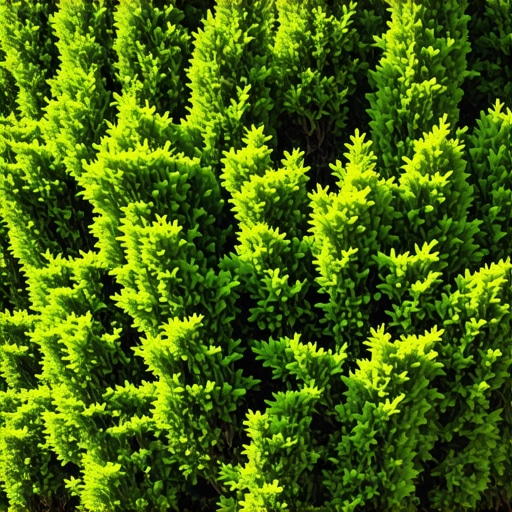
This is the superior successor to the overused ‘Emerald Green.’ It grows at a rate of 3 feet per year while maintaining a narrow 4-foot footprint. This makes it ideal for tight suburban corridors where you need height without losing your entire lawn to the tree’s width. Unlike the ‘Green Giant,’ it won’t overwhelm a small lot. It handles the heavy snow of Zone 6 by maintaining a single, strong apical leader. It won’t splay open under a 4-inch snow load.
2. Picea abies ‘Cupressina’ (Columnar Norway Spruce)
If you have heavy clay and high winds, this is your workhorse. The ‘Cupressina’ is an evergreen that brings the toughness of a Norway Spruce into a columnar form. It is highly resistant to the Cytospora canker that kills off Blue Spruces in our region. It prefers a soil pH between 5.5 and 7.0. It will survive a Zone 6 winter without any needle burn. It is built like a tank. It doesn’t care about your neighbor’s leaf blower or the salt spray from the road.
3. Juniperus virginiana ‘Taylor’
The ‘Taylor’ Juniper is a native cultivar that offers an upright, refined aesthetic similar to an Italian Cypress, which wouldn’t survive a Zone 6 winter. Being a native Eastern Red Cedar derivative, it is nearly bulletproof. It thrives in poor, rocky soil and has extreme drought tolerance once the adventitious roots are established. It is the best choice for the ‘low-maintenance’ homeowner who forgets that trees need water.
4. Taxus x media ‘Hicksii’ (Hicks Yew)
For areas with partial shade, the Hicks Yew is the only professional choice. Thujas will thin out and become leggy in the shade; the Yew stays dense. It can be sheared into a formal, 10-foot-tall wall that looks like something out of an English estate. Warning: these are toxic to pets and livestock. Also, they cannot handle ‘wet feet.’ If your site has standing water, you must install a French drain before these go in the ground. They will rot otherwise. No exceptions.
5. Carpinus betulus ‘Fastigiata’ (Columnar European Hornbeam)
This is a deciduous option, but it is so dense that it provides 90% privacy even in winter. It is famous for marcescence, the tendency to hold onto its dried leaves until the new buds push them off in spring. It is highly resistant to pests and can handle the urban heat island effect better than almost any evergreen. If you have a site with high compaction and varying soil pH, the Hornbeam is your best bet.
| Species | Growth Rate (ft/yr) | Mature Width (ft) | Soil Preference | Salt Tolerance |
|---|---|---|---|---|
| American Pillar | 3.0 | 4 | Loam/Moist | Low |
| Cupressina Spruce | 2.0 | 6 | Clay/Acidic | Moderate |
| Taylor Juniper | 1.5 | 3 | Rocky/Dry | High |
| Hicks Yew | 1.0 | 4 | Well-Drained | Low |
| Hornbeam | 1.5 | 10 | Variable | Moderate |
How do I prevent my privacy trees from dying in the first year?
The number one killer of new trees is planting depth. You must locate the root flare—the point where the trunk widens at the base—and ensure it is slightly above the soil grade. If you bury the flare, you are essentially slowly suffocating the tree. It will rot. Don’t skip this check. Use a tensiometer or a simple finger test to monitor moisture levels 4 inches below the surface. Do not rely on a generic irrigation timer.
“A retaining wall doesn’t fail because of the stone; it fails because of the water trapped behind it. The same logic applies to tree pits in clay soil; without drainage, you’ve built a bathtub.” – Hardscape Engineering Axiom
The Ground-Up Installation Checklist
- Utility Marking: Call 811 before you even think about a shovel. One severed gas line ruins your weekend.
- Site Grading: Ensure water flows away from the root ball. Use a transit level to verify a 2% slope.
- Hole Dimensions: Dig the hole 3 times wider than the root ball, but no deeper. We want the roots to move laterally into loosened soil.
- The Backfill Rule: Do not amend the hole with peat moss. Use 100% native soil. Amending creates a ‘teacup effect’ where roots refuse to leave the hole.
- Mulching: Use 2-3 inches of triple-shredded hardwood mulch. No mulch volcanoes. Keep mulch 3 inches away from the trunk.
- Irrigation: Install a drip-line system. Overhead watering is inefficient and promotes fungal growth on the needles.
Suburban landscapes are often biological deserts of compacted subsoil. When we install a privacy screen, we are trying to re-establish a functional ecosystem. Use mycorrhizal inoculants during planting to help the roots uptake phosphorus. In Zone 6, we typically plant in early spring or late fall to avoid the mid-summer heat stress. If you plant in July, you better have a dedicated person on a hose every single morning. Deep, infrequent watering is the key. You want to force the roots to chase the water down. Shallow watering creates weak trees. Weak trees fall over in January windstorms. Do it right the first time or don’t do it at all.