
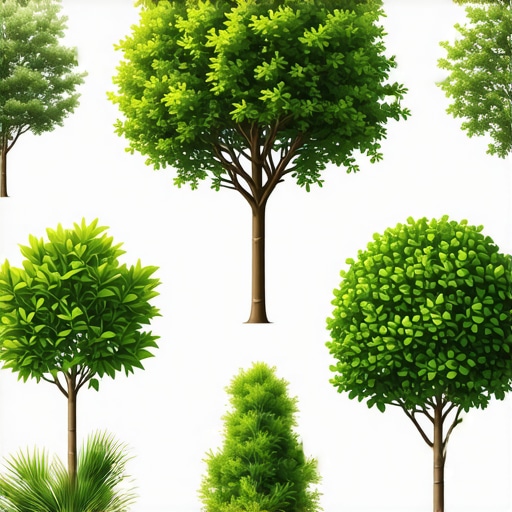
5 2026 Best Trees for Modern Small Gardens
The Hard Truth About Modern Arboriculture
I always drill into my new crew members: if you don’t fix the soil grading first, every plant you put in the ground is just expensive compost. I have seen countless $5,000 installations fail within eighteen months because the contractor ignored the fundamental biology of the site. In the world of high-end landscaping, we don’t just dig holes; we engineer biological systems. For 2026, the trend in small gardens is shifting away from messy, fast-growing species toward precision-cultivated specimens that offer structural integrity without the invasive root systems that destroy your expensive pavers. Most homeowners go to a big-box store and buy whatever looks green, but that is a recipe for root girdling and foundation cracks. You need trees that respect the footprint of a modern urban lot while providing the physiological benefits of a full-scale canopy. We are looking at specific cultivars that have been trialed for heat resilience and atmospheric carbon sequestration in tight spaces. Don’t let a mow-and-blow hack tell you a Silver Maple is fine for a 10×10 courtyard. It isn’t. It will lift your patio in three years and starve your lawn of nitrogen. You need technical precision.
Selecting the Best Trees for Modern Small Gardens in 2026
The best trees for modern small gardens in 2026 must possess compact root systems, predictable canopy spreads, and high pest resistance. Select species like Acer palmatum or Cercis canadensis cultivars that thrive in USDA Hardiness Zones 4-9 while providing multi-seasonal interest without encroaching on hardscape foundations or underground utilities. Every tree listed below has been selected for its ability to thrive in a 100-square-foot root zone while maintaining a height-to-width ratio that complements modern architecture.
“Trees planted too deep fail because the lenticels on the trunk bark are not designed for the anaerobic environment of the soil, leading to secondary infections and systemic collapse.” – Texas A&M AgriLife Extension
1. Acer palmatum ‘Skeeter’s Broom’
This is not your average Japanese Maple. ‘Skeeter’s Broom’ is a witches’ broom mutation that offers a dense, upright habit. It stays narrow, rarely exceeding 5 feet in width. This makes it perfect for planting near hardscaping or as a focal point in a narrow garden bed. The root system is non-aggressive, which is critical if you have invested in polymeric sand and a 6-inch modified gravel base for your patio. It requires a soil pH between 5.5 and 6.5. If your soil is alkaline, you will see chlorosis by year two. I tell my clients: test your soil before you buy the tree. A $20 pH test saves a $400 specimen.
2. Cercis canadensis ‘Ace of Spades’
The ‘Ace of Spades’ Redbud is a game-changer for 2026. It provides the classic heart-shaped foliage but in a much more controlled, weeping or dwarf form depending on the graft. Redbuds are nitrogen-fixers, meaning they work with rhizobia bacteria in the soil to convert atmospheric nitrogen into a form the plant can use. This reduces your reliance on synthetic fertilizers that kill soil microbiology. However, you must watch for Verticillium wilt. Do not plant this in soil with poor drainage. If your yard has heavy clay that holds water for more than 24 hours after a rain, you need to install a French drain or a raised berm before this goes in the ground.
3. Amelanchier laevis ‘Snowcloud’
Serviceberries are the workhorses of the modern landscape. They offer white spring flowers, edible fruit, and intense fall color. The ‘Snowcloud’ cultivar is selected for its strong central leader and upright growth habit. It is highly resistant to the rust diseases that plague many other Rosaceae family members. In terms of engineering, the wood density of Amelanchier is superior to many fast-growing ornamentals, meaning it won’t snap in a 60-mph wind gust. It is a structural asset, not a liability. We plant these where we need a 15-foot screen that only takes up 8 feet of lateral space.
4. Parrotia persica ‘Persian Spire’
If you want a tree that looks like a piece of living architecture, the Persian Spire is it. It is columnar, rarely growing wider than 6 feet while reaching 15 feet in height. The bark exfoliates as it matures, providing winter interest that most “picturesque” trees lack. It is incredibly tough. I’ve seen these survive in urban heat islands where the ambient temperature of the asphalt reaches 120 degrees Fahrenheit. It is the ultimate tree for modern, narrow garden design. It prefers well-drained loamy soil but can tolerate the heavy red clay found in many suburban developments if you don’t over-water it.
5. Cornus kousa ‘Little Pony’
This is one of the smallest Kousa Dogwoods on the market. It maxes out at about 5 to 6 feet. Most people think they want a Flowering Dogwood (Cornus florida), but those are prone to anthracnose and powdery mildew. The Kousa varieties are tougher. ‘Little Pony’ has thick, leathery leaves that resist transpiration stress during mid-August droughts. It provides a dense floral display that lasts longer than almost any other spring-blooming tree. It is the perfect choice for a container on a modern terrace or a small planting pocket in a courtyard.
How far from a house should I plant a small tree?
For small ornamental trees with a mature spread of 10-15 feet, you should maintain a minimum distance of 5 to 8 feet from any foundation or hardscape structure. This prevents hydrostatic pressure issues and ensures the root flare has adequate gas exchange. Always account for future gutter cleaning and siding maintenance access.
Which trees have non-invasive root systems for patios?
Trees like Acer palmatum, Cornus kousa, and Amelanchier are ideal for proximity to patios because they lack the aggressive lateral roots found in species like Willow or Poplar. To further protect hardscaping, use a linear root barrier to redirect root growth downward rather than outward toward your pavers.
| Acer palmatum ‘Skeeter’s Broom’ | 8 | 5 | 5-9 | Acidic, Well-drained |
| Cercis canadensis ‘Ace of Spades’ | 12 | 10 | 5-9 | Loamy, Neutral |
| Amelanchier ‘Snowcloud’ | 15 | 8 | 4-8 | Adaptable |
| Parrotia persica ‘Persian Spire’ | 15 | 6 | 5-8 | Heat-tolerant, Moist |
| Cornus kousa ‘Little Pony’ | 6 | 5 | 5-8 | Rich, Organic |
“Standard practice for urban tree planting requires a pit three times the width of the root ball to facilitate lateral root elongation into uncompacted soil, ensuring long-term structural stability.” – International Society of Arboriculture (ISA)
The Professional Installation Checklist
- Check for underground utilities by calling 811 before any excavation.
- Identify the root flare; it must be 1 inch above the final soil grade.
- Dig a hole twice as wide as the root ball but no deeper than the root ball.
- Remove all burlap, twine, and wire cages from the top half of the root ball.
- Backfill with native soil; do not add heavy amendments to the hole as this creates a ‘bathtub effect.’
- Apply a 2-inch layer of organic mulch, keeping it 3 inches away from the trunk bark.
- Water deeply (5-10 gallons) immediately after planting to remove air pockets.
The Physics of Planting: Why 80% of Pros Fail
The biggest mistake I see is the “mulch volcano.” When you pile mulch against the trunk, you trap moisture against the bark, which leads to rot and provides a highway for boring insects. Bark is the plant’s skin; it needs to breathe. Another failure point is over-amending the planting hole. If you fill a hole with rich potting soil in the middle of heavy clay, the roots will never leave the hole. They will circle around and eventually girdle the tree. You want the roots to struggle slightly so they push out into the native soil, anchoring the tree against wind and drought. In 2026, we are moving toward a more ecological approach: let the tree adapt to the site, rather than trying to change the site for the tree. It is about biology, not aesthetics. If you follow these technical steps, your small garden will have a canopy that lasts for decades, not just a single season. Don’t skip the compaction check either. If you are planting near a new patio, the soil has likely been compacted to 95% Procto density. Roots cannot penetrate that. You must use a tilling or air-spading technique to break up that compaction before you even think about putting a tree in the ground. It is the difference between a thriving specimen and a dying stick.
![4 Native Groundcovers for 2026 Clay Soil [No-Mow]](https://lawnmajesty.com/wp-content/uploads/2026/07/4-Native-Groundcovers-for-2026-Clay-Soil-No-Mow.jpeg)
![4 Drought-Tolerant Perennials for 2026 Full Sun [Zone 8]](https://lawnmajesty.com/wp-content/uploads/2026/05/4-Drought-Tolerant-Perennials-for-2026-Full-Sun-Zone-8.jpeg)
![Stop Drowning Succulents: 3 Gritty Soil Secrets [Fix]](https://lawnmajesty.com/wp-content/uploads/2026/06/Stop-Drowning-Succulents-3-Gritty-Soil-Secrets-Fix.jpeg)