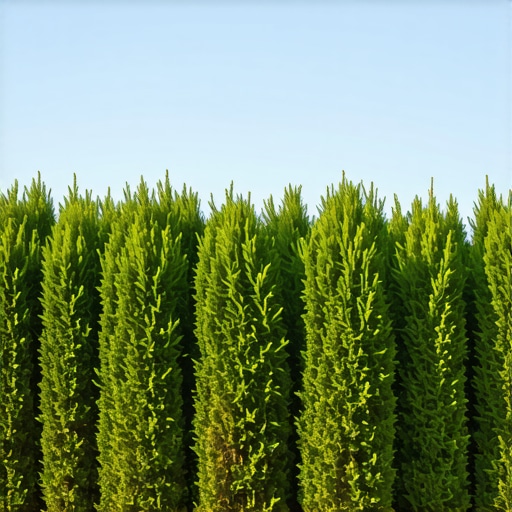
5 2026 Best Trees for Small Urban Backyard Privacy Screen
The Engineering of Urban Privacy: Why 80 Percent of Success Happens Before Planting
Urban privacy is an engineering challenge masquerading as a gardening project. In tight city lots, the best trees for small urban backyard privacy must provide vertical density without encroaching on hardscapes or neighbor property lines. Success requires a deep understanding of soil compaction, drainage, and the specific growth habits of columnar cultivars that will thrive in limited rooting volumes through 2026 and beyond.
I always drill into my new crew members: if you don’t fix the soil grading first, every plant you put in the ground is just expensive compost. Last season, I walked onto a job site where a homeowner had spent four thousand dollars on specimen Sky Rocket Junipers. They were all dead within six months. Why? Because the site was a bowl of heavy clay with zero drainage. The roots literally drowned in a subterranean bathtub of stagnant water. We had to excavate the entire perimeter, install a French drain system with a 2 percent slope, and replace the dead clay with a structural soil mix before a single new tree could be sited. If you skip the forensics of your dirt, you are just throwing money into a hole. You have to respect the biology of the root system.
The Urban Soil Challenge and Site Preparation
Urban soils are frequently characterized by high bulk density and low organic matter, which limits the oxygen available to the root flare and slows vascular development in young trees. Before selecting a species, you must test your soil pH and drainage capacity; most urban trees fail because they are planted too deep or in soil that cannot support the necessary cation exchange for nutrient uptake.
“Trees in urban environments face unique stressors including soil compaction and limited rooting volume which can lead to chronic moisture stress and nutrient deficiencies.” – Texas A&M Forest Service
The 2026 Selection Matrix for Narrow Screens
Use the following table to compare the specific physiological requirements and growth habits of the top cultivars for 2026 installs.
| Tree Species | Mature Width (Feet) | USDA Hardiness Zone | Growth Rate | Key Engineering Benefit |
|---|---|---|---|---|
| European Hornbeam | 10 to 15 | 4 to 8 | Medium | Extreme wind resistance |
| Taylor Juniper | 3 | 4 to 9 | Fast | Drought tolerance |
| Slender Silhouette | 6 | 5 to 9 | Fast | Zero footprint |
| Sky Pointer Ilex | 2 to 3 | 6 to 9 | Slow | Hardscape proximity |
| Degroot’s Spire | 4 to 5 | 3 to 8 | Medium | Heavy snow load rating |
1. Columnar European Hornbeam (Carpinus betulus ‘Fastigiata’)
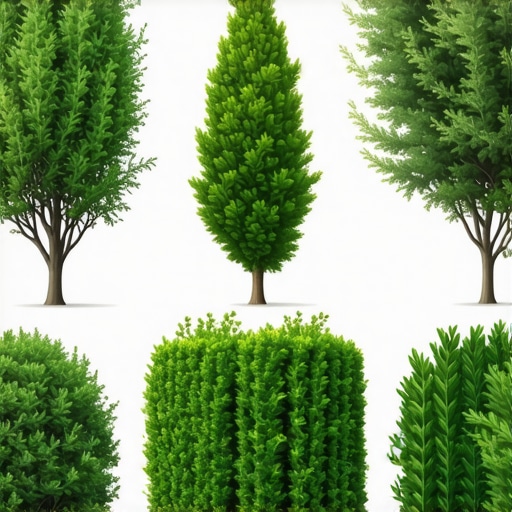
The Columnar European Hornbeam is the gold standard for structural landscaping in small yards. It features a dense, egg-shaped habit that becomes more columnar with age. This tree is prized for its marcescent foliage, meaning it holds onto its brown leaves through much of the winter, providing a year-round visual break even when deciduous. It handles heavy pruning with ease, making it ideal for pleached hedges where space is a premium. It is a tough tree that resists the typical urban heat island effect. It will survive where others fail. Do not plant it in standing water.
2. Taylor Juniper (Juniperus virginiana ‘Taylor’)
For those needing an extremely narrow footprint, the Taylor Juniper is a technical marvel. It rarely exceeds three feet in width but can reach fifteen to twenty feet in height. This is a cultivar of our native Eastern Red Cedar, meaning it has a high resistance to local pathogens and can handle the salt spray often found near urban sidewalks. It provides a fine-textured, silvery-green screen that stays tight without the splaying often seen in other upright evergreens. It needs full sun. Shade will make it thin out and lose its structural integrity.
3. Slender Silhouette Sweetgum (Liquidambar styraciflua)
If you want vertical height but only have a five-foot wide planting strip, this is your solution. The Slender Silhouette is a genetic anomaly that grows into a literal green pillar. It produces almost no fruit (the annoying “gumballs”) compared to the straight species. Its root system is deep rather than wide, which is critical if you are planting near a patio or a retaining wall. High hydrostatic pressure behind walls is often exacerbated by invasive root systems; the Slender Silhouette minimizes this risk. It offers incredible fall color that transitions from yellow to deep burgundy.
4. Sky Pointer Ilex (Ilex crenata)
This is the surgical tool of the garden design world. The Sky Pointer Ilex is an upright Japanese Holly that provides a dark green, small-leafed texture that resembles Boxwood but in a tall, narrow form. It is perfect for flanking a small urban patio or creating a hedge in a large planter box. Because it is slow-growing, it requires minimal maintenance. You won’t be out there with shears every weekend. It needs slightly acidic soil. If your pH is above 7.0, you will see chlorosis in the leaves. Fix the soil first.
5. Degroot’s Spire Arborvitae (Thuja occidentalis)
I despise the standard ‘Emerald Green’ Arborvitae because it’s overused and prone to splitting under snow. However, ‘Degroot’s Spire’ is different. It has a twisted, fine-textured foliage that gives it a rugged, architectural look. It is much more resistant to winter burn and heavy snow loads. It is a slower grower, but the wait is worth it for the density it provides. This tree is an excellent candidate for drip-line irrigation systems. Constant, low-volume moisture is the key to preventing the interior browning that plagues most Thuja species.
“Planting a tree too deep is the leading cause of premature death in landscape specimens. The root flare must remain visible above the soil line to ensure gas exchange.” – ISA Arborist Manual
How much space is needed for a privacy screen?
For most small urban backyard privacy screens, you need at least three to four feet of lateral space to accommodate the root ball and future trunk flare. While columnar trees grow vertically, their root systems still expand horizontally to provide structural stability and nutrient access. Never plant closer than 36 inches to a fixed structure.
When is the best time to plant privacy trees?
The best time to plant is during the dormant season, either in early spring before bud break or in late autumn after leaf drop. This allows the root system to establish in the native soil without the metabolic demand of supporting new leaf growth in the summer heat. Avoid planting in the middle of July. The heat stress will kill the fine feeder roots.
Proper Installation: Beyond the Hole
Installing these trees is a mechanical process that requires precision. You cannot just dig a hole and walk away. You must manage the hydrostatic pressure and soil aeration. If you are planting near a hardscape feature like a stone patio, ensure you have a root barrier or adequate drainage to prevent frost heave or settling. Compaction is your enemy. When you backfill the hole, do not stomp the life out of the dirt. Use water to settle the soil around the roots. It prevents air pockets without crushing the soil structure.
- Locate utility lines by calling 811 before any excavation.
- Measure the root ball diameter and dig the hole twice as wide.
- Locate the root flare; this is where the trunk widens at the base.
- Remove all twine, wire cages, and burlap from the top half of the ball.
- Backfill with native soil to ensure the roots don’t get “lazy” in potting mix.
- Apply 3 inches of wood chip mulch, keeping it 2 inches away from the trunk.
- Set a timer for deep, infrequent irrigation during the first two seasons.
The final stage is the settling-in period. During the first year, the tree is essentially in the ICU. It needs regular monitoring of its soil moisture levels. Don’t use a sprinkler; use a soaker hose. You want the water to penetrate at least 12 inches deep to force the roots to chase the moisture downward. This creates a drought-resistant tree. Shallow watering creates weak trees. In year two, you will see the leader take off. That is when you know the engineering worked. Get the grade right. Pick the right cultivar. Stop buying cheap trees. Your privacy depends on it.