
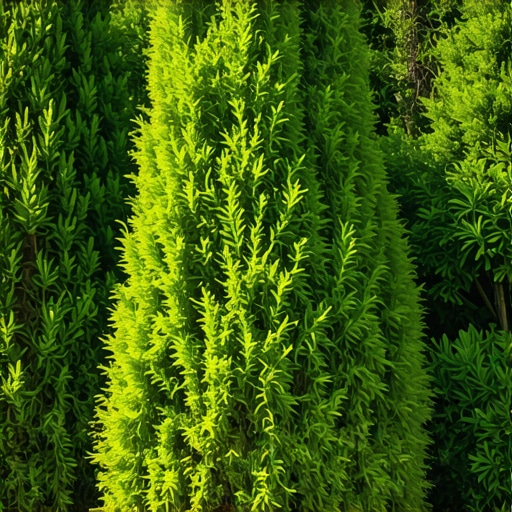
5 Native Shrubs That Provide Total Privacy in Two Seasons
The Living Screen Engineering: Beyond the Green Wall
Native privacy shrubs serve as biological barriers that leverage localized soil microbiology and USDA Hardiness Zone adaptations to establish structural density within two growing seasons, outpacing invasive alternatives through superior root-to-shoot ratios and drought resistance. Choosing the right species is only 20% of the battle; the rest is soil physics and hydraulic management. I always drill into my new crew members: if you don’t fix the soil grading first, every plant you put in the ground is just expensive compost. I’ve seen $15,000 screens die in three months because a sub-contractor buried the root flares or ignored the hydrostatic pressure of a nearby slope. Real landscaping is civil engineering with living materials. If you want a wall that actually stops a neighbor’s prying eyes and survives a 100-year storm, you have to stop thinking like a gardener and start thinking like a foreman. Don’t buy the $19.99 big-box specials. They are root-bound junk. We use nursery-grade stock with intact lateral roots.
“Native plant communities provide the structural complexity required for site stabilization and long-term ecological resilience, often requiring 50% less supplemental irrigation than non-native counterparts once established.” – USDA Natural Resources Conservation Service
The Physics of Fast Growth: Soil Prep and Site Analysis
Establishing a privacy screen in two seasons requires maximizing the nitrogen cycle and ensuring bulk density of the soil is low enough for rapid root penetration. You cannot simply dig a hole and drop a plant in. That creates a ‘teacup effect’ where water sits in the hole and rots the roots. You must assess the perc rate of your soil. If you have heavy clay, you are looking at a drainage nightmare. We use a 48-inch steel probe to check for hardpan layers. If that probe doesn’t sink, your shrubs won’t either. You need to fracture that subsoil. Don’t skip this. A plant’s ability to provide privacy is directly correlated to its transpiration rate and its access to capillary water in the soil profile. We target a soil pH between 6.0 and 7.0 for most native deciduous shrubs to ensure cation exchange capacity is optimized. This allows the plant to actually take up the nutrients you provide.
How much space do I need between privacy shrubs?
To achieve a total privacy screen within 24 months, spacing should be calculated based on 60% of the species’ mature spread, allowing for lateral branch interlacing without inducing fungal pathogens due to restricted airflow. Typical spacing ranges from 4 to 6 feet on center for most upright native shrubs. Do not overcrowd. Overcrowding leads to lower-limb defoliation as the plants compete for light. You want a solid wall, not a row of dying sticks. Measuring from the center of the root ball is the only way to ensure accuracy. Use a transit level if you are working on a slope. If the line is crooked, the privacy is compromised.
| Wax Myrtle | 3-5 Feet | 5.5 – 7.5 | 15-20 Feet | Moderate/Low |
| Arrowwood Viburnum | 2-3 Feet | 6.0 – 7.0 | 10-12 Feet | Moderate |
| American Elderberry | 3-4 Feet | 5.5 – 8.0 | 12-15 Feet | High/Wet |
| Ninebark | 2-3 Feet | 6.0 – 7.5 | 8-10 Feet | Low |
| Bottlebrush Buckeye | 1-2 Feet | 6.0 – 7.0 | 8-12 Feet | Moderate |
5 Native Shrubs for Rapid Privacy
1. Wax Myrtle (Morella cerifera): This is the king of the South and Mid-Atlantic. It is an actinorhizal plant, meaning it fixes its own nitrogen. It grows in sand, clay, or salt spray. It stays evergreen in warmer zones. It smells like bayberry. It grows like a weed. 2. Arrowwood Viburnum (Viburnum dentatum): This shrub is structural iron. The wood is so straight and strong Native Americans used it for arrow shafts. It handles pH fluctuations better than almost any shrub. Its white spring blooms and blue fall fruit provide biodiversity while the dense branching creates a literal wall. 3. American Elderberry (Sambucus canadensis): If you have a ‘wet’ spot where other plants die, put this in. It has explosive growth. You can prune it to the ground and it will hit 6 feet by July. It creates a soft, feathered screen. 4. Ninebark (Physocarpus opulifolius): Ideal for northern climates with freeze-thaw cycles. It has exfoliating bark that looks great in winter. It is tough as nails and resists powdery mildew if you choose the right cultivar. 5. Bottlebrush Buckeye (Aesculus parviflora): This is for the homeowner who needs a massive, wide screen. It suckers and spreads, creating a thicket. It thrives in partial shade, making it perfect for the edges of wooded lots. It creates a massive wall of green that nothing can see through.
“A retaining wall doesn’t fail because of the stone; it fails because of the water trapped behind it, much like a plant fails not because of the species, but because of the hydrology of the hole.” – Hardscape Engineering Axiom
Will native shrubs grow faster than Leyland Cypress?
While Leyland Cypress is often cited for speed, native shrubs like Wax Myrtle often achieve canopy closure faster because they are not prone to the canker diseases and bagworms that devastate non-native evergreens. Native species synchronize with local pollinators and mycorrhizal networks, leading to more robust biomass accumulation in the first 24 months. Leylands often look great for five years then die all at once. Natives are a 30-year investment. Don’t fall for the fast-growth trap of the ‘big-box’ evergreens.
The Installation Protocol: Professional Standards
We use a double-wide planting hole. The hole should be twice the width of the root ball but no deeper. If you dig too deep, the plant settles, the root flare is buried, and the phloem is strangled. We use untreated wood chips for mulch. Never use ‘black-dyed’ mulch; it is often made from ground-up pallets and contains chemicals that inhibit soil fungi. You need 3 inches of mulch, but keep it 2 inches away from the trunk. No mulch volcanoes. This is a non-negotiable rule on my job sites. Mulch volcanoes kill trees. Period.
- Conduct a 12-inch soil core sample before purchasing.
- Check for underground utilities (Call 811) to avoid line strikes.
- Remove all burlap and wire cages from the root ball.
- Identify the first main lateral root to set the planting depth.
- Backfill with native soil; do not over-amend the hole.
- Install drip irrigation with emitters at the drip line, not the trunk.
Watering is the final piece of the engineering puzzle. You need deep, infrequent watering to force roots down. If you mist the surface every day, the roots stay shallow. Then, when the August heat hits, the plant cooks. You want one inch of water per week, delivered slowly. This encourages geotropism—roots chasing water into the subsoil. In two seasons, you will have a wall that can withstand a hurricane while your neighbor’s fence is blowing down the street. It takes work. It takes dirt. But it works. Stop buying plastic fences. Plant a machine that cleans the air and blocks the noise. That is the Master Landscaper way.
![5 Best Trees for 2026 Heat Waves [Zone 8]](https://lawnmajesty.com/wp-content/uploads/2026/09/5-Best-Trees-for-2026-Heat-Waves-Zone-8.jpeg)