
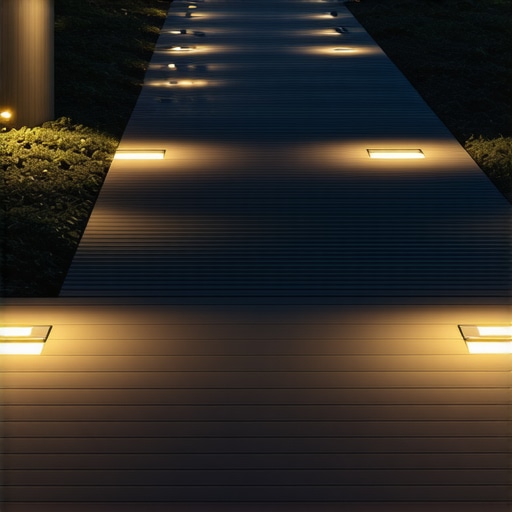
7 Modern 2026 Lighting Ideas for Dark Walkways
The Hardscape Autopsy: Why Most Walkway Lighting Fails
I recently got called out to tear up a $30,000 bluestone patio and walkway because the previous contractor decided to bury low-voltage lines without any conduit or proper bedding. Over three seasons of freeze-thaw cycles, the sharp edges of the modified gravel base sliced through the insulation like a hot knife through butter. The resulting short circuit didn’t just kill the lights; it created a localized heat pocket that cracked two four-hundred-dollar thermal-finished treads. People think lighting is about the fixtures. It is not. It is about the infrastructure, the electrical load calculations, and the environmental resistance of your connections. If you do not respect the physics of the ground, your 2026 lighting design will be an expensive pile of electronic waste by 2028. Don’t skip the fundamentals.
“A retaining wall doesn’t fail because of the stone; it fails because of the water trapped behind it, and a lighting system fails because of the moisture trapped inside the wire.” – Hardscape Engineering Axiom
The Engineering of Visibility: Why 2026 Path Lighting Transcends Aesthetics
Modern 2026 walkway lighting focuses on integrated low-voltage LED systems that utilize smart-grid connectivity and high-CRI (Color Rendering Index) outputs to ensure safe navigation while maintaining Dark-Sky compliance and soil integrity. This shift away from generic floodlights toward precision-engineered luminaires ensures that homeowners can navigate dark paths without light pollution or blinding glare.
1. Core-Drilled In-Grade LED Well Lights
We are moving away from fixtures that stick out of the ground where a mower or an errant foot can snap them. In-grade well lights are core-drilled directly into the pavers or the concrete base of the walkway. This requires a diamond-tipped core bit and a steady hand. You must account for 1/4-inch of drainage stone beneath the fixture. If the water has nowhere to go, the fixture becomes a miniature swimming pool. Even IP68-rated lights will eventually fail if they are submerged 24/7. Use 12AWG wire to prevent voltage drop over long runs. It is more expensive but necessary for consistency.
2. Smart-Integrated Micro-Linear Hardscape Lights
Linear lighting is no longer just for high-end hotels. We are now installing ultra-thin LED strips into the 1/8-inch gaps between wall caps or under the lip of a stair tread. The 2026 trend is “invisible sources.” You see the glow, not the bulb. These systems require a dedicated 300-watt transformer with multi-tap outputs (12V, 13V, 14V, 15V) to ensure the lights at the end of the 100-foot run have the same 11.5V arrival as the first light. Anything less than 10.5V and your LEDs will flicker or shift color toward the blue spectrum. It looks cheap. Don’t do it.
How deep should I bury low-voltage lighting wire?
For residential hardscaping and landscaping projects, low-voltage wire (12V-15V) must be buried at least 6 inches deep according to standard practices, though 12 inches is preferred in high-traffic garden beds. This prevents accidental damage from aerators, shovels, or edge trimmers during routine lawn care and maintenance.
3. Bio-Mimetic Solar Bollards with High-Efficiency Capacitors
Stop buying $5 solar lights from big-box stores. They are plastic trash. The 2026 professional-grade solar bollards use monocrystalline panels and lithium-iron phosphate (LiFePO4) batteries. They are designed to last 10 years, not 10 weeks. These fixtures are heavy, often made of marine-grade aluminum or Corten steel. They are bolted to a concrete pier buried 18 inches deep. This prevents frost heave from tilting your expensive bollard into a 45-degree angle of shame. Engineering matters more than the light output here.
4. Kinetic-Powered Pressure Sensors
The cutting edge of garden design is lighting that reacts to the user. Kinetic sensors embedded under the sand-set pavers trigger a soft 2700K (Warm White) glow as you step. This isn’t just for show; it’s a security feature. It uses Zigbee or Matter-enabled protocols to communicate with your home automation system. If someone is on the path at 3:00 AM, the lights ramp up to 100% brightness and send a notification. This requires a stable 2.4GHz mesh network covering the entire property. Plan your Wi-Fi extenders before you lay the first brick.
5. Dark-Sky Compliant Moonlighting
If you have mature trees flanking your walkway, use them. We mount 5-watt LED spotlights 20-30 feet up in the canopy, aiming them straight down through the branches. This creates a dappled, natural light pattern that mimics moonlight. Arboriculture rules apply: never use nails or screws that will girdle the tree. Use stainless steel stand-off bolts that allow the tree to grow. Check them every two years. If the bark starts swallowing the fixture, you’ve failed as a steward of the land.
How much modified gravel do I need for a patio base?
Calculating hardscaping materials requires precision. For a standard walkway base, you need a 4-to-6-inch layer of 3/4-inch modified gravel (2A or CR6). To calculate the volume, multiply the square footage by the depth in feet (e.g., 100 sq ft x 0.5 ft = 50 cubic feet), then divide by 27 to get cubic yards. Always add 10% for compaction.
6. Architectural Shadow Casting with Laser-Cut Steel
This is for the homeowners who want art. We install high-intensity 12V lamps inside laser-cut steel cylinders. The patterns—often geometric or organic branch shapes—are projected onto the walkway surface. This turns a boring grey concrete path into a high-contrast visual experience. However, keep the lumen count low. You don’t want to blind the person walking toward the light. Aim for 50-100 lumens per fixture. Use a dimmable driver so you can fine-tune the ambiance after the sun goes down.
7. Fiber Optic Concrete Inlays
In 2026, we are literally casting light into the concrete. By running fiber optic cables through the rebar grid before the pour, we create a “star field” effect on the walkway surface. The light source (the illuminator) stays in a dry, accessible box 20 feet away. There are no electrical components in the walkway itself. This is the ultimate in durability. You can drive a truck over it, and the lights won’t break. It’s expensive, labor-intensive, and requires a master mason who understands how to vibrate concrete without snapping the fibers. It is the pinnacle of modern landscaping engineering.
The 2026 Lighting Material Comparison
| Feature | Traditional Halogen | Standard LED (2020) | Integrated Smart Systems (2026) |
|---|---|---|---|
| Energy Draw | 20W – 50W per bulb | 3W – 7W per bulb | 1W – 5W (Dynamic) |
| Lifespan | 2,000 Hours | 25,000 Hours | 50,000+ Hours |
| Control | Manual/Timer | Dusk-to-Dawn Cell | AI-Adaptive/Mesh Network |
| Color Accuracy | Excellent (Warm) | Variable (Often Blue) | High-CRI (Natural) |
| Installation | Simple/DIY | Moderate | Complex/Engineering-Required |
“Illumination is the final layer of hardscape engineering. If the base is weak, the light will tilt. If the wire is thin, the light will dim. Build for the next decade, not the next party.” – Agronomy Manual Volume IV
The 2026 Walkway Lighting Pre-Flight Checklist
- Voltage Drop Test: Use a multimeter to verify at least 11.0V at the furthest fixture.
- Drainage Check: Ensure all in-grade fixtures have a 6-inch vertical drainage chimney of 1/2-inch clean stone.
- Wire Gauge: Minimum 12/2 direct-burial wire for runs over 50 feet.
- Connection Integrity: Use heat-shrink solder sleeves or grease-filled wire nuts. Never use electrical tape alone.
- Transformer Load: Never exceed 80% of the transformer’s rated wattage to prevent overheating.
- Conduit Protection: Run all wires through 1/2-inch PVC or flexible conduit under high-traffic zones or turf.
Landscape lighting is not a hobby. It is an extension of your home’s electrical and structural footprint. If you treat it like an afterthought, the soil will reclaim your investment within two seasons. Water, pH levels, and soil pressure are constantly working against your equipment. Use professional-grade components, calculate your loads, and for the love of the craft, bury your wires properly. Your yard deserves better than a cheap fix.

![Build a $1000 2026 Flagstone Patio [DIY Step-by-Step]](https://lawnmajesty.com/wp-content/uploads/2026/05/Build-a-1000-2026-Flagstone-Patio-DIY-Step-by-Step.jpeg)