5 Vertical Garden Ideas for Privacy on Small Decks
I always drill into my new crew members: if you don’t fix the soil grading first, every plant you put in the ground is just expensive compost. On a deck, the ‘grading’ is your structural load-bearing capacity. You can’t just slap two tons of wet soil against a railing and expect the rim joist to hold. In twenty years of hardscaping, I have seen more deck failures from ‘pretty’ planters than from actual structural decay. Vertical gardening for privacy is an exercise in weight management, hydraulic engineering, and horticultural survival. If you do not account for the saturated weight of your substrate or the wind-load on your screens, you are not landscaping; you are creating a liability.
The Structural Physics of Deck-Based Privacy Screens
Vertical privacy screens on small decks must balance wind-load resistance with weight distribution to prevent structural warping. Using 316-grade stainless steel cables or rot-resistant cedar frames anchored directly into the deck’s rim joists ensures that your privacy barrier remains upright during high-velocity wind events without exceeding the 50-pound-per-square-foot load limit.
Before you buy a single seed, you need to understand the ‘dead load’ versus the ‘live load.’ A standard residential deck is usually engineered for 40 to 60 pounds per square foot. A 48-inch long planter box filled with wet soil can easily exceed 300 pounds. That is a concentrated point load that can cause joist deflection. You must spread that weight. I refuse to install any vertical system until I have inspected the lag bolts on the ledger board. If the house connection is weak, your vertical garden is just a lever prying the deck off the foundation.
“A retaining wall doesn’t fail because of the stone; it fails because of the water trapped behind it.” – Hardscape Engineering Axiom
How much weight can a residential deck hold for planters?
Most modern decks are designed to support 40 lbs per square foot of live load. When planning a vertical garden, you must calculate the weight of the containers, the dry soil, the mature plants, and most importantly, the water-saturated weight of the growing medium. Use lightweight aggregates like perlite or expanded clay to reduce the structural burden by up to 40%.
1. The Integrated Cedar Trellis and Native Vine System
An integrated cedar trellis utilizes rot-resistant heartwood to create a permanent vertical plane for native perennial vines. By anchoring the trellis to 4×4 support posts that extend from the deck frame, you create a biological screen that provides 90 percent opacity during the growing season while allowing for critical airflow.
I despise cheap plastic lattices. They brittle in the UV and shatter in the first hail storm. We use Western Red Cedar or Ipe. When selecting vines, avoid Wisteria or Trumpet Vine on small decks. They are invasive monsters that will tear your siding apart. Instead, look at Lonicera sempervirens (Coral Honeysuckle) or Clematis virginiana. These species provide dense coverage without the destructive woody mass of their larger cousins. You need to manage the root flare. Even in a container, the root system needs oxygen. We use a 2-inch layer of lava rock at the bottom of every trough to prevent anaerobic rot.
| Substrate Component | Weight (Dry) | Water Retention | Longevity |
|---|---|---|---|
| Field Soil | Heavy | High (Compacts) | 2 Years |
| Peat-Based Mix | Light | Extreme (Hydrophobic) | 1 Year |
| Coconut Coir Mix | Medium | Moderate | 3-4 Years |
| Expanded Clay Pebbles | Ultra-Light | Low | Indefinite |
2. Modular Living Wall Panels with Automated Drip Lines
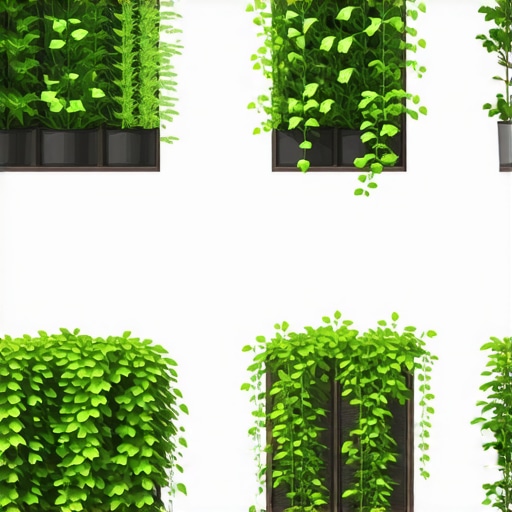
Modular living wall panels offer a high-density privacy solution by using recycled HDPE pockets or felt-based vertical systems. These modules must be paired with an automated drip irrigation system and pressure-compensating emitters to combat the rapid evapotranspiration rates inherent in vertical containers exposed to wind and sun.
A living wall is a high-maintenance machine. Because the soil volume is so small, the root zone temperature fluctuates wildly. In the heat of July, a vertical pocket can hit 110 degrees Fahrenheit, effectively cooking the roots of your Heuchera or Ferns. I tell my clients: if you aren’t going to install an auto-timer, don’t bother. You will forget to water once, and $800 worth of plants will be dead by Tuesday. We use a nutrient injector in the line because vertical soil loses its NPK (Nitrogen, Phosphorus, Potassium) values through leaching faster than any ground-based garden.
3. Stainless Steel Cable Espalier for Modern Aesthetics
The stainless steel cable espalier system uses high-tension wire and heavy-duty turnbuckles to train woody plants into a flat, two-dimensional privacy screen. This method maximizes sqft efficiency on small decks while providing a modern architectural aesthetic that does not block light or air circulation as much as solid wood structures.
This is where civil engineering meets botany. You are undercutting the plant’s natural desire to grow outward. By using 1/8-inch stainless steel cables, you can train plants like Pyracantha or even certain dwarf fruit trees. The tension on these cables can reach hundreds of pounds of force. You cannot just screw an eye-hook into a cedar plank. You need to through-bolt into the 6×6 posts. It is about PSI. If that cable snaps, it’s a whip. But done right? It’s the most sophisticated privacy screen money can buy.
“Proper plant selection for containers must prioritize species with high drought tolerance and fibrous root systems to ensure long-term viability in restricted volumes.” – USDA Horticultural Research Service
4. Tiered Galvanized Troughs with Sub-Irrigation
Tiered galvanized troughs utilize industrial stock tanks arranged in a stepped configuration to create a multi-layered privacy barrier. These systems must include internal drainage layers and sub-irrigation reservoirs to prevent hydrostatic pressure from bursting the seams and to ensure consistent moisture for tall ornamental grasses.
Stock tanks are popular because they are cheap and look ‘farmhouse.’ But they are ovens. Metal conducts heat directly to the soil. We line them with 1/2-inch R-value foam board before we ever put soil in. And for the love of the craft, drill your drainage holes 2 inches up from the bottom, not on the flat base. This creates a small reservoir. If you have Calamagrostis x acutiflora ‘Karl Foerster’ in there, it needs that water. Those grasses will hit six feet tall, providing a perfect screen that rustles in the wind. It’s a sensory experience, not just a visual one.
What is the best soil for vertical garden containers?
Avoid standard topsoil. It is too heavy and will compact, suffocating the roots. The best medium for vertical privacy screens is a ‘soilless’ mix consisting of 40% coconut coir, 30% perlite, and 30% composted pine bark. This mixture provides the necessary porosity for oxygen exchange and reduces the total weight on your deck structure.
5. Mobile Privacy Planters with Industrial Casters
Mobile privacy planters incorporate heavy-duty industrial casters with locking brakes to allow for a reconfigurable privacy layout. These units require a low center of gravity and weighted bases to prevent wind-tipping when planted with high-profile species like Thuja Occidentalis ‘Emerald Green’.
I see people put skinny, tall planters on wheels all the time. One 40mph gust and that thing is a sail that tips over and cracks your sliding glass door. You need a base-to-height ratio of at least 1:3. If your screen is 6 feet tall, your planter base better be at least 2 feet wide. We use locking stainless steel casters rated for 500 lbs each. Why? Because after five years, cheap casters will seize, and you’ll be dragging a 400-pound box across your expensive composite decking, scratching it to hell. Use the right hardware. Don’t be a hack.
Vertical Garden Maintenance Checklist
- Weekly: Check soil moisture at 3-inch depth; probe for compaction.
- Monthly: Inspect cable tension and turnbuckle hardware for loosening.
- Bi-Annually: Flush the irrigation lines to remove mineral buildup and scale.
- Annually: Top-dress with 2 inches of fresh organic compost to replenish microbes.
Landscaping on a deck isn’t about the plants; it’s about the infrastructure that keeps them alive. If you ignore the physics of weight and the chemistry of the soil, you’re just throwing money into a dumpster. Build it for the long haul. Use the right fasteners. Respect the load limits. That’s how you get privacy that actually lasts through more than one season.
![Why Your 2026 Deck Stain is Peeling [Preparation]](https://lawnmajesty.com/wp-content/uploads/2026/06/Why-Your-2026-Deck-Stain-is-Peeling-Preparation.jpeg)