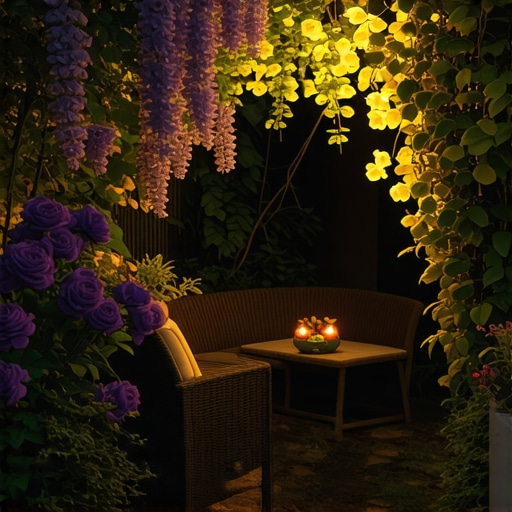
5 2026 Fragrant Perennials for Night-Time Patios
Why Night-Time Fragrance Requires Structural Soil Planning
Designing a high-end night-scented patio landscape for 2026 requires selecting drought-tolerant perennials that release volatile organic compounds (VOCs) at lower ambient temperatures, while ensuring the engineered soil substrate provides a minimum of 12 inches of aerobic pore space for root respiration. I always drill into my new crew members: if you don’t fix the soil grading first, every plant you put in the ground is just expensive compost. Most rookie contractors spend all their budget on the stone and then stick $5,000 worth of perennials into compacted heavy clay. It is a death sentence. I recall a site visit last July where a homeowner had spent $40,000 on a bluestone patio. They wanted that evening ‘perfume’ but the crew had buried the root flares of their night-blooming jasmine under four inches of mulch. The stems were already showing signs of basal rot. We had to excavate the entire perimeter, install a French drain system using 1.5-inch washed stone, and replace the ‘topsoil’ (which was actually just excavated fill) with a 60/40 blend of composted organic matter and coarse sand. If you ignore the physics of drainage, your plants will rot before they ever bloom. Nature doesn’t care about your budget.
“Planting a tree or shrub too deep is the leading cause of landscape failure in the first five years, as it leads to root girdling and oxygen deprivation in the rhizosphere.” – Texas A&M AgriLife Extension
The Physics of Fragrance: Thermal Mass and Airflow
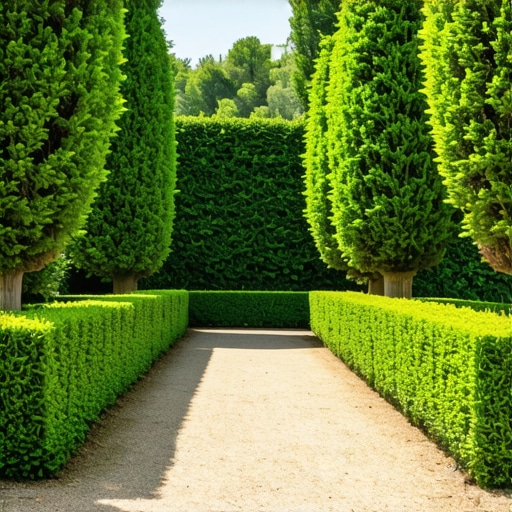
To maximize the olfactory output of nocturnal perennials, you must leverage the thermal mass of your hardscaping to maintain a micro-climate that prevents rapid cooling of plant tissues after sunset. Darker pavers, such as basalt or deep charcoal concrete, absorb UV radiation during the day and radiate infrared heat at night. This heat triggers the enzymatic release of floral oils. However, if your patio is in a wind-tunnel, that scent is gone. You need ‘scent traps’—structural elements like low masonry walls or dense boxwood hedging (Buxus microphylla) that slow air velocity to less than 3 mph. This allows the heavy molecules of night-scented stock or phlox to pool around the seating area rather than dissipating into the neighbor’s yard.
The Top 5 Fragrant Perennials for 2026 Night-Scented Patios
Selecting the right cultivars for 2026 involves looking for improved disease resistance and longer bloom cycles. These five selections are the gold standard for engineering an evening sensory experience.
1. Zaluzianskya ovata (Night Phlox ‘Midnight Candy’)
This South African native is a powerhouse of scent, often described as a mix of vanilla, honey, and almond. It is a low-growing perennial reaching only 10-12 inches. It requires a well-drained soil profile with a pH between 6.5 and 7.5. Do not over-fertilize with high nitrogen; you will get leggy growth and zero scent. Stick to a 5-10-10 ratio in early spring. The buds remain closed and unassuming during the day, opening only as the light fades. We install these in 4-inch pots, spaced 8 inches apart, right at the edge of the pavers where the heat radiation is most intense.
2. Nicotiana alata (Grandiflora Jasmine Tobacco)
Forget the hybrid bedding plants sold at big-box stores. For 2026, we are returning to the species Nicotiana alata. These reach 3 feet in height and produce white, trumpet-shaped flowers. They are biological scent factories. Because they are taller, they should be placed behind the lower phlox. They require consistent moisture but hate ‘wet feet.’ Ensure you have a 2-inch layer of organic mulch, but keep it 3 inches away from the stem to prevent fungal pathogens. The fragrance is most potent after 9:00 PM when the sphingid moths—their primary pollinators—are active.
3. Matthiola longipetala (Night-Scented Stock)
This is the workhorse of the night garden. It is a cool-season perennial in many zones, often treated as a hardy annual. Its scent is so powerful it can carry over 50 feet in still air. It prefers a firm, slightly alkaline soil. If your soil is acidic (below 6.0 pH), you must incorporate pelletized lime at a rate of 50 lbs per 1,000 square feet. It won’t look like much during the day—the flowers actually look withered—but at dusk, they revive. It is the definition of a high-performance plant.
4. Cestrum nocturnum (Night-Blooming Jessamine)
In USDA zones 8-11, this is a permanent perennial shrub; in colder zones, it is the center-piece of large patio containers. A single Cestrum can scent an entire half-acre lot. It requires a high-porosity potting mix if grown in containers. Use a mix of 40% pine bark fines, 30% peat moss, and 30% perlite. This ensures the hydrostatic pressure doesn’t build up at the base of the pot. Warning: all parts of this plant are toxic. Don’t plant it where the client’s Labrador is going to chew on it.
5. Oenothera biennis (Evening Primrose)
For a more naturalistic, ‘meadow-style’ hardscape edge, Oenothera is essential. Its yellow blooms pop open in real-time as the sun sets—a literal show for guests. It is extremely hardy and thrives in poor, rocky soils. We use it to stabilize slopes adjacent to patios. It has a deep taproot, which makes it incredibly drought-resistant once established. Do not plant this in heavily amended, ‘rich’ soil or it will become invasive and flop over.
Engineering the Substrate: Soil Component Comparison
The success of these plants depends entirely on the soil structure. Using a standard ‘triple mix’ is a mistake. You need a substrate that balances water retention with high drainage. Use the following table as a guide for your 2026 installs.
| Material | Drainage Rate | CEC (Nutrient Hold) | Recommended Use |
|---|---|---|---|
| Coarse Sand | High | Low | Base layer for drainage and aeration. |
| Composted Leaf Mold | Medium | High | Primary source of microbiology and NPK. |
| Pine Bark Fines | High | Medium | Lowering pH and increasing pore space. |
| Perlite/Pumice | Very High | None | Essential for container-grown night-scented perennials. |
“A retaining wall doesn’t fail because of the stone; it fails because of the water trapped behind it, and plants fail for the exact same reason.” – Hardscape Engineering Axiom
Installation Protocol: The Professional Method
Follow this checklist to ensure 100% survivability of your 2026 fragrant perennials. No shortcuts.
- Utility Check: Always call 811 before excavating planting pockets near a patio.
- Pre-Soak: Submerge the nursery pots in a bucket of water until bubbles stop before planting.
- Root Inspection: If the plant is root-bound, use a sterile blade to make four vertical cuts to break the circular growth pattern.
- The 2x Rule: Dig the hole twice as wide as the root ball, but no deeper.
- Compaction Check: Hand-tamp the soil around the plant. Do not use your boots. You will collapse the macro-pores.
- Irrigation: Install a 1-gph (gallon per hour) drip emitter at the base of each plant, specifically for the first growing season.
How much modified gravel do I need for a patio base?
For a standard pedestrian patio, you need a minimum of 6 inches of compacted 21A or 3/4-inch modified gravel. To calculate volume: multiply square footage by depth in feet (e.g., 0.5 for 6 inches) and divide by 27 to get cubic yards. Add 20% for compaction loss.
What is the best soil pH for fragrant night-bloomers?
Most night-scented perennials, particularly Matthiola and Zaluzianskya, prefer a neutral to slightly alkaline pH of 6.5 to 7.2. High acidity (low pH) can lock up essential micronutrients like magnesium, which is crucial for the production of aromatic oils. Test your soil before planting.
![5 2026 Best Perennials for Butterflies [Zone 7]](https://lawnmajesty.com/wp-content/uploads/2026/07/5-2026-Best-Perennials-for-Butterflies-Zone-7.jpeg)