
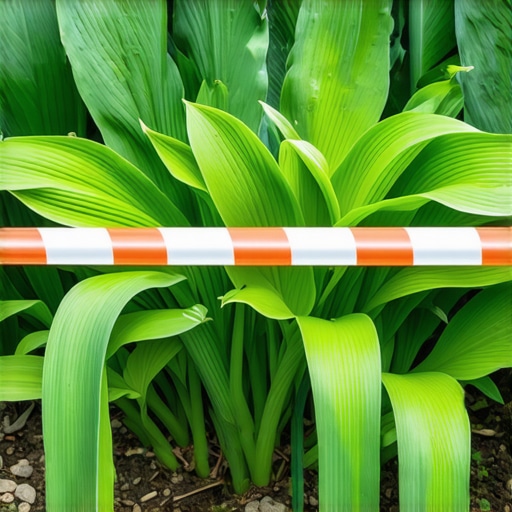
The $20 Trick to Stop Deer from Eating Your Hostas
The $20 Trick to Stop Deer from Eating Your Hostas: A Horticulturist’s Guide
I always drill into my new crew members: if you dont fix the soil grading first, every plant you put in the ground is just expensive compost. I have spent 20 years watching homeowners dump thousands into nursery stock only to see it decimated by local cervid populations because they treated their yard like a painting rather than a biological system. Landscaping is not about making things look pretty for a weekend; it is about engineering an environment that thrives under pressure. When we talk about deer eating your hostas, we are talking about a failure in the spatial engineering of your garden design. You do not need expensive electric fences or chemical sprays that wash away with every half inch of rain. You need to understand the physical and sensory limitations of the animal you are trying to outsmart.
Why Deer Target Your Garden Design Every Spring
Deer target hostas because they are nutrient dense, high moisture succulents that offer peak protein during the fawning season. Your garden design often fails because it creates edge habitats where deer feel safe. To stop them, you must disrupt their sensory paths and browsing comfort zones using structural deterrents that exploit their poor depth perception. Most mow and blow hacks will tell you to just buy a bottle of coyote urine and call it a day. They are wrong. That scent dissipates in 48 hours. If you want a real solution, you have to look at the physics of the encounter.
“A retaining wall doesn’t fail because of the stone; it fails because of the water trapped behind it.” – Hardscape Engineering Axiom
The same logic applies to deer proofing. A garden fails not because the deer are hungry, but because the barrier is porous. In my two decades of hardscaping and planting, I have found that the most effective deterrent costs less than a decent bag of pre emergent fertilizer. It is not a chemical. It is a spatial disruptor.
The $20 Trick: Utilizing Monofilament Spatial Disruption
The $20 trick involves installing high tensile, 20 pound test monofilament fishing line at 12 inch and 24 inch heights around your hosta beds. This invisible barrier creates tactile confusion for deer, who have poor depth perception and will retreat when they encounter an invisible physical resistance they cannot see. Because deer cannot clearly focus on objects within a few feet of their face, the sensation of a cold, thin line hitting their legs or chest without a visible cause triggers a flight response. It is a psychological game. You are not building a prison; you are creating an area that feels unsafe and unpredictable to a prey animal.
How much modified gravel do I need for a patio base?
To calculate modified gravel for a hardscaping project, multiply the square footage by the desired depth in feet (usually 0.5 feet for a 6 inch base), then divide by 27 to get cubic yards. For a standard 10×10 patio, you need approximately 2.5 tons of 2A modified stone compacted in 2 inch lifts to reach a 98 percent Proctor density. Do not skip the compaction. If the base moves, the pavers move. It is that simple.
What is the best fertilizer for hostas in sandy soil?
In sandy loam environments, hostas require a slow release granular fertilizer with a balanced NPK ratio such as 10-10-10 or 14-14-14. Because sandy soil has low cation exchange capacity, nutrients leach out quickly. Adding organic matter like leaf mold or composted manure is essential to increase the soil’s ability to hold onto those minerals. Check your pH levels first. Hostas prefer a slightly acidic profile between 6.0 and 7.0.
| Deterrent Method | Cost Factor | Duration | Effectiveness |
|---|---|---|---|
| Monofilament Line | $15 – $20 | Entire Season | High |
| Chemical Sprays | $30 – $50 | 2 Weeks or Rain Event | Low to Moderate |
| Electronic Ultrasound | $60 – $150 | Permanent | Low (Habituation) |
| Physical Fencing (8ft) | $2000+ | Permanent | Very High |
Stop buying the big box store weed and feed. It is a lazy man’s tool. You are likely dumping high nitrogen salts onto your turf that kill the soil microbiology and force the grass to grow too fast, leading to weak cell walls and increased susceptibility to fungal pathogens like brown patch or dollar spot. Real lawn care involves aeration to 3 inches of core depth and top dressing with compost to feed the soil, not just the blade.
“Effective deer management in residential landscapes requires an integrated approach that combines plant selection, physical barriers, and the understanding of cervid foraging behavior.” – Penn State Agricultural Extension
When you are installing your hostas, check the root flare. I see so many crews burying plants too deep. If the root flare is covered, the bark will rot. The same goes for mulch. Stop making mulch volcanoes. It kills trees. It kills shrubs. It is a sign of an amateur. Keep mulch 3 inches away from the stems. You want the roots to breathe, not suffocate under 6 inches of dyed hardwood chips.
- Buy 20lb test monofilament fishing line.
- Use sturdy 3 foot wooden or green metal stakes.
- Drive stakes 12 inches into the ground at the corners of your hosta beds.
- String the first line 12 inches above the soil surface.
- String the second line 24 inches above the soil surface.
- Ensure the line is taut; it should vibrate like a guitar string when plucked.
- Check the tension after heavy winds or storms.
It will work. The deer will walk up to your hostas, feel the line, and back off. They cannot figure out what is touching them. It breaks their confidence. In a landscape, confidence is everything for a browser. If they feel exposed, they leave. This is why landscaping should always account for sightlines and cover. If you have a thick woodline right against your hosta bed, you are providing a safety net for the deer. Thin out the underbrush. Make them feel seen.


![4 Native Groundcovers for 2026 Clay Soil [No-Mow]](https://lawnmajesty.com/wp-content/uploads/2026/07/4-Native-Groundcovers-for-2026-Clay-Soil-No-Mow.jpeg)