Why You Should Stop Raking Your Leaves This Fall
Why You Should Stop Raking Your Leaves This Fall
Every October, I watch homeowners and ‘mow-and-blow’ crews commit ecological malpractice. They spend hundreds of man-hours and thousands of dollars stripping away the very fuel their property needs to survive the winter. They bag up free nitrogen and pay a waste management company to haul it to a landfill. Then, come April, those same homeowners call me wondering why their turf is thinning and why they need a $500 fertilizer application. The answer is simple: you threw your lawn’s health in a plastic bag and left it on the curb. As a professional who deals with soil chemistry and hardscape engineering daily, I can tell you that the obsession with a ‘clean’ fall yard is a relic of 1950s aesthetics that ignores basic agronomy. Stop raking. Start mulching. Your soil is a living organism, and you are currently starving it.
The Chemical Nightmare: A Cautionary Tale of Dead Soil
Raking leaves removes the primary source of organic matter and nutrient cycling from your ecosystem, forcing a reliance on synthetic fertilizers that can lead to soil salinity and microbial collapse. I remember a case three years ago. A homeowner in a high-end subdivision called me because his three-year-old fescue lawn was essentially turning into a dust bowl. He had spent a fortune on ‘weed and feed’ products from a big-box store. When I pulled a soil core, it was like looking at a desert. There was zero microbial activity. No earthworms. No fungal hyphae. He had meticulously raked every single leaf for five years, then dumped so much synthetic ammonium nitrate on the grass to ‘keep it green’ that he had effectively scorched the soil biology. We had to perform an emergency core aeration and top-dress the entire property with two inches of leaf-mold compost just to bring the pH back into a range where the grass could actually uptake nutrients. It was a $7,000 lesson in why you don’t fight Mother Nature. If he had just mowed those leaves back into the turf, he would have saved his lawn and his money.
The Biological Mechanics of Leaf Decomposition
Leaf litter acts as a natural insulator and fertilizer source, providing essential nitrogen, phosphorus, and potassium back to the soil profile while supporting microbial activity and earthworm populations critical for aeration. When a leaf falls, it isn’t ‘trash.’ It is a biological storage unit. Leaves contain up to 80% of the nutrients a tree absorbs during the growing season. When these leaves decompose on your lawn, they feed the soil food web. The carbon-to-nitrogen (C:N) ratio of most deciduous leaves—like Maple or Oak—is ideal for stimulating fungal growth. In a high-end landscape, we want a fungal-dominant soil for trees and shrubs, and a balanced soil for turf. By removing leaves, you are stripping the carbon that fuels the cation exchange capacity (CEC) of your soil. This measurement dictates how well your soil holds onto nutrients. Low carbon equals low CEC, which means your expensive fertilizer just washes away into the groundwater the first time it rains.
“A forest floor doesn’t need a fertilizer spreader because the cycle of return is unbroken; your lawn shouldn’t be any different.” – Agronomy Field Manual v.4
How do leaves affect soil pH levels?
Many homeowners believe that leaving oak leaves will turn their soil dangerously acidic. This is a myth. While fresh oak leaves have a low pH, the decomposition process catalyzed by soil microbes eventually neutralizes the acidity, resulting in a stable pH level between 6.5 and 7.0, which is the sweet spot for nutrient bioavailability in most turfgrass species.
Mulching vs. Removal: The Data Breakdown
If you leave whole leaves on the lawn, they will mat down, block sunlight, and trap moisture, leading to Microdochium nivale (pink snow mold). This is why the ‘lazy’ approach fails. The professional approach is mulching. You need to reduce the leaf surface area so microbes can attack it from all sides. Use a mulching mower to shred leaves into pieces about the size of a dime. These small particles settle into the thatch layer, where they disappear within weeks. The following table compares the two methods based on a standard 10,000 sq. ft. lot.
| Factor | Raking & Bagging | Mulch Mowing |
|---|---|---|
| Labor Time | 8-12 Hours | 1.5 Hours |
| Nitrogen Added | 0 lbs | 0.5 – 1.0 lbs per 1000 sq ft |
| Soil Organic Matter | Decreases | Increases (0.1% annually) |
| Microbial Health | Stagnant | Highly Active |
| Cost | $150+ (Bags/Hauling) | $0 (Fuel only) |
It will rot. That is the goal. If the particles are small enough, they won’t smother the grass. They will feed it. Don’t skip the final mow of the season just because the grass has stopped growing; if there are leaves on the ground, the mower needs to be out there.
The Engineering of a Healthy Lawn
Mulch mowing leaves directly into the thatch layer increases pore space in the soil structure, reducing compaction and improving hydrostatic drainage during heavy winter rains. When we talk about soil engineering, we are talking about pore space. Roots need oxygen. Leaf organic matter creates ‘fluff’ in the soil. This prevents the soil from becoming a brick of clay. In regions with heavy red clay, like the Southeast, or tight silt, like the Midwest, this organic matter is the only thing keeping your lawn from becoming a swamp. Furthermore, for those with hardscaping, proper leaf management is vital. I have seen $40,000 paver patios ruined because wet leaves were allowed to sit on the surface, leaching tannins that permanently stained the stone and clogging the polymeric sand joints, leading to heave during freeze-thaw cycles. Shredding them and keeping them on the turf—away from the stone—protects your investment.
“The primary cause of retaining wall failure is hydrostatic pressure; the secondary cause is the degradation of the soil’s structural integrity through loss of organic binders.” – ICPI Hardscape Engineering Standards
How much leaf litter is too much for a lawn?
You can successfully mulch up to six inches of leaves into your turfgrass as long as you use a high-lift mulching blade and perform the passes when the leaves are dry, ensuring the resulting debris does not cover more than 20% of the grass blade surface area.
The Fall Soil Protocol Checklist
- Check your blades: Ensure your mower blades are sharpened to a factory edge; dull blades tear the leaves rather than cutting them, leading to clumping.
- Monitor Soil pH: Test your soil in late fall to ensure the added organic matter is integrating properly.
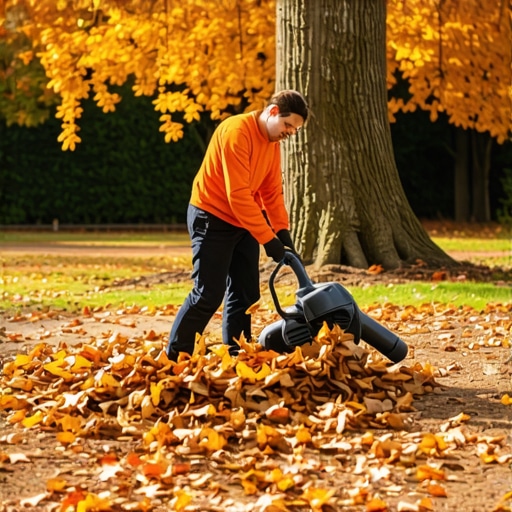
- Clear the Hardscape: Use a blower to move leaves from patios and walkways onto the lawn before mowing.
- Adjust Mower Height: Drop your deck to 2.5 or 3 inches for the final mulching pass to ensure particles reach the soil surface.
- Add Nitrogen if needed: If mulching heavy oak loads, a small application of slow-release nitrogen can help microbes break down the carbon faster.
Stop looking at your neighbors’ pristine, sterile yards with envy. Their soil is starving. Yours is feasting. By the time spring rolls around, those shredded leaves will be gone, converted into the greenest grass on the block. The science is settled. Put the rake away.
![Stop 2026 Mulch Mold: Use This $10 Rake Hack [Fast Fix]](https://lawnmajesty.com/wp-content/uploads/2026/06/Stop-2026-Mulch-Mold-Use-This-10-Rake-Hack-Fast-Fix.jpeg)