
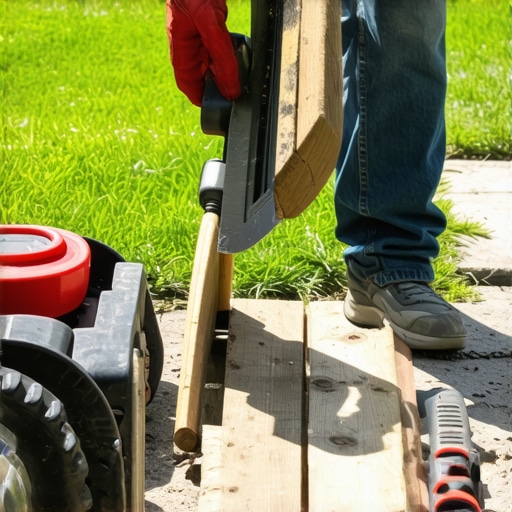
How to Sharpen Your Mower Blades Without Special Tools
Why Dull Blades are Killing Your Turf Grade
A dull mower blade shreds the vascular tissue of the grass leaf instead of slicing it, leading to increased water loss and providing an entry point for pathogens and fungi. This mechanical stress weakens the root system and reduces the lawn’s overall health and ability to withstand heat. Most homeowners ignore the cutting edge until the grass looks like it was chewed by a goat. By then, the damage to the cellular structure of your lawn is done. When you tear a leaf, you create a massive surface area of exposed, raw plant tissue. It is an open wound. It will rot. Proper turf management requires a clean, surgical cut to ensure rapid healing and moisture retention. If you see a white, tan, or grayish haze over your lawn a day after mowing, you are looking at millions of shredded leaf tips. You do not need a $500 professional grinder to fix this. You need a basic understanding of metallurgy and a simple hand file.
The Forensic Autopsy of a Ruined Lawn
I always drill into my new crew members: if you don’t fix the soil grading first, every plant you put in the ground is just expensive compost, but if you don’t maintain your equipment, you are just a high-paid weed whacker. I remember a specific job in late July. A client had spent $8,000 on a high-end fescue blend. Three weeks later, the lawn looked like scorched earth. They blamed the fertilizer. They blamed the heat. I took one look at the leaf tips and saw the truth. The blades on their riding mower hadn’t been touched in three seasons. Instead of cutting, they were beating the grass into submission. The ragged edges allowed Pythium blight to move in and liquidate the entire stand in 48 hours. This is the cost of laziness. A dull blade forces the engine to work harder, uses more fuel, and destroys the very plants you are trying to cultivate. We pulled the deck, sharpened the blades with a standard mill file right there on the tailgate, and the new growth came in clean. The difference is measurable in the plant’s recovery time.
“A dull mower blade does not cut grass; it fractures it, leading to a jagged edge that increases the plant’s susceptibility to environmental stress and disease.” – Penn State Center for Turfgrass Science
The Mechanics of the Cut: Metallurgy Over Machinery
A mower blade does not need to be razor-sharp like a kitchen knife; it needs a clean bevel at approximately 30 degrees to maintain its edge against the high-velocity impact of grass and debris. If you make it too sharp, the edge will roll over and dull within ten minutes. We are looking for the thickness of a dime at the leading edge. High-carbon steel used in most commercial blades is designed to be filed. Using a power grinder often overheats the metal, ruining the temper and making the steel brittle. This is why a hand file is often superior for the longevity of the tool. You have more control. You don’t burn the steel. You don’t remove too much material. You keep the blade’s structural integrity intact.
How much modified gravel do I need for a patio base?
For a standard paver patio, you must calculate 6 inches of compacted 2A modified gravel for the base plus 1 inch of bedding sand, which typically equates to 1 ton of gravel per 30-40 square feet. This ensures the structural load is distributed and prevents the settling that leads to tripping hazards. While this seems unrelated to mower blades, the principle of foundational physics is the same. Without a solid base—or a solid edge—the entire system fails. You cannot build a quality landscape on a weak foundation.
The Step-by-Step Hand-Sharpening Protocol
To sharpen your blades without specialized equipment, follow this technical sequence. First, disconnect the spark plug wire. This is non-negotiable. An accidental engine turnover can result in lost fingers. Tip the mower up with the air filter facing high to prevent oil from flooding the carburetor. Use a 15/16-inch or 5/8-inch wrench to remove the mounting bolt. Secure the blade in a heavy-duty bench vice. If you do not have a vice, use a C-clamp to secure it to a sturdy workbench. [image placeholder]
Use a 10-inch mill bastard file. Follow the existing bevel of the blade. Push the file across the edge in one direction only. Do not saw back and forth. You will feel the file ‘bite’ into the steel. Count your strokes. If you do 15 strokes on one side, do 15 on the other. This maintains the balance. A balanced blade is critical. An unbalanced blade spinning at 3,000 RPM will shred your mower’s spindle bearings and eventually crack the engine block. It will vibrate. It will break things. Use a nail in the wall to check the balance; if one side dips, file more off that end until it hangs level.
“Rotary mowers must be maintained with balanced blades to prevent mechanical vibration that leads to premature bearing failure and uneven turf height.” – Standard Agronomy Manual, 5th Edition
Blade Maintenance Comparison Table
| Feature | Dull/Torn Blade | Hand-Sharpened Blade | Grinder-Sharpened Blade |
|---|---|---|---|
| Cut Quality | Ragged/Brown tips | Surgical/Clean | Surgical/Clean |
| Fungal Risk | High | Low | Low |
| Tool Heat | N/A | None (Safe for Steel) | High (Risks Temper) |
| Cost | Free (but kills grass) | $10 File | $50+ Grinder |
| Blade Life | Short (stress) | Longest | Moderate (removes more metal) |
The Maintenance Checklist for a Professional Cut
- Check blade sharpness every 20-25 hours of mowing time.
- Always remove the spark plug wire before reaching under the deck.
- Clean the underside of the deck to prevent ‘clumping’ which disrupts airflow.
- Check the blade balance using a simple wall nail or a $5 cone balancer.
- Torque the blade bolt to the manufacturer’s spec (usually 50-60 ft-lbs).
- Inspect the blade for cracks; if it is cracked, it is a projectile. Trash it.
How do I know if my mower blade is balanced?
You can check blade balance by placing the center hole on a nail driven into a wall; if the blade remains horizontal, it is balanced, but if one side drops, it is heavy and requires more filing. A balanced blade ensures that the centrifugal force is distributed evenly, preventing the mower from shaking itself apart. This is a common point of failure for DIYers who only sharpen the side they think is dull. Balance is more important than sharpness for the life of the machine.
Final Considerations for Turf Longevity
Sharpening your blade is only half the battle. You must also follow the one-third rule: never remove more than one-third of the grass blade height in a single cutting. If the grass is 6 inches tall, cut it to 4 inches. If you scalp the lawn with a dull blade, you are essentially committing arboricide on a micro-scale. The combination of a sharp edge and proper height management forces the plant to invest energy in root depth rather than just leaf repair. This is how you build a lawn that survives August. Don’t be the person with the $3,000 mower and the $10 blade. Take the 20 minutes to file your edges. Your turf will thank you with deeper roots and better color. Don’t skip this step. It matters.
![Why Your 2026 Fescue Needs Lime [Soil pH Guide]](https://lawnmajesty.com/wp-content/uploads/2026/05/Why-Your-2026-Fescue-Needs-Lime-Soil-pH-Guide.jpeg)