Why Your New Grass Seed is Only Growing in Patches
The Forensic Autopsy of a Failing Lawn
A patchy lawn is not an accident; it is a structural and biological failure that manifests at the soil level. When you see tufts of green surrounded by bare dirt or thinning blades, you are witnessing a breakdown in uniform seedbed preparation and capillary water distribution. It is the visual symptom of underlying issues like soil compaction, nutrient stratification, or poor seed-to-soil contact. It is not bad luck. It is bad physics.
I always drill into my new crew members: if you don’t fix the soil grading and the physical structure first, every plant you put in the ground is just expensive compost. I have seen too many rookies throw high-dollar Festuca arundinacea on top of hard-packed clay and wonder why the yard looks like a mangy dog three weeks later. They think the seed is the magic. It is not. The soil is the engine. If the engine is seized, the fuel does not matter. We spent three days last month on a site in the suburbs just core aerating and tilling in 40 cubic yards of organic compost because the previous contractor thought they could seed directly into construction-grade backfill. They failed. We did not. You have to respect the dirt.
Why is my new grass growing in patches?
Grass seed grows in patches because of uneven soil density, localized moisture deficits, and variable seed-to-soil contact that prevents uniform germination across the site. To achieve a uniform stand, the soil must maintain a consistent pore space for oxygen and water, with a seed depth of exactly 1/8 to 1/4 inch. Any deviation in these physical parameters results in sporadic growth cycles.
“The single most important factor in turfgrass establishment is the contact between the seed and the soil particles. Without this mechanical bond, moisture cannot move from the soil into the seed coat via osmosis.” – Penn State Center for Turfgrass Science
The Physics of Seed-to-Soil Contact
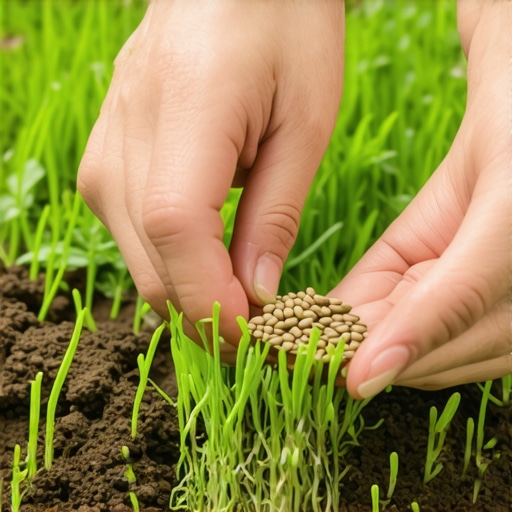
If you just scatter seed on top of the ground, you are feeding birds, not growing a lawn. In my 20 years of doing this, the number one reason for patchiness is a lack of mechanical incorporation. Grass seed needs to be tucked in. Imagine the soil as a sponge. If the seed is just sitting on top of the sponge, it only gets wet on one side. The other side stays dry, and the embryo dies before it can push out a radicle. We use slit seeders for a reason. These machines cut a physical groove into the earth, drop the seed, and then roll it closed. This ensures that 100 percent of the seed surface area is touching moist soil. If you are DIYing this with a broadcast spreader and not raking it in, you are gambling with your germination rate. It is that simple. Don’t skip the rake.
How much topsoil do I need for new grass seed?
For a successful new lawn installation, you require a minimum of 4 to 6 inches of high-quality screened topsoil that has been tilled into the existing subgrade to prevent soil layering. This depth ensures adequate rooting volume and water holding capacity, which prevents the patchy drying out of young seedlings during the heat of the day.
| Factor | Optimal Range | Impact on Growth |
|---|---|---|
| Soil pH | 6.2 to 7.0 | Nutrient availability and microbial activity |
| Compaction (PSI) | Below 200 PSI | Root penetration and oxygen exchange |
| Seed Depth | 0.125 to 0.25 inches | Germination speed and protection from desiccation |
| Watering Frequency | 3 to 4 times daily | Keeping the seed coat constantly hydrated |
Soil Compaction and Oxygen Depletion
People forget that roots need to breathe. If your yard was a staging area for heavy equipment during a garden design or hardscaping project, that soil is likely packed tighter than a concrete sidewalk. In these high-compaction zones, the seeds might germinate, but the tiny roots cannot penetrate the earth. They hit a wall and then they die. This leads to the classic patchy look where grass only grows in the loose soil near the edges or in old flower beds. We measure compaction with a penetrometer. If I can’t push a probe into the ground with 200 PSI of pressure, your grass cannot grow there. You need to break that surface tension. Mechanical aeration is not optional in heavy clay soils. It is the only way to get oxygen back into the root zone.
“Soil compaction reduces pore space, limiting the oxygen available to aerobic microbes and suffocating emerging radicles in the early stages of turf development.” – Agronomy Manual 10th Edition
Why is my new grass turning yellow and dying in spots?
New grass turns yellow and dies in spots primarily due to localized nitrogen burn from uneven fertilizer application or damping off disease caused by fungal pathogens like Pythium. These pathogens thrive in over-saturated, poorly drained areas, attacking the tender stems of new seedlings and causing them to collapse in circular patches.
- Check for Buried Debris: If grass is patchy, there might be old wood or rocks buried 3 inches down.
- Monitor Drainage: Water pooling in low spots will rot the seed before it can sprout.
- Calibrate Your Spreader: Uneven fertilizer distribution creates dark green clumps and yellow streaks.
- Test Soil pH: A pH below 5.5 will lock out phosphorus, which is critical for root development.
- Avoid Early Mowing: Cutting too early tears the young plants out of the ground.
Chemical Stratification and Nutrient Lockout
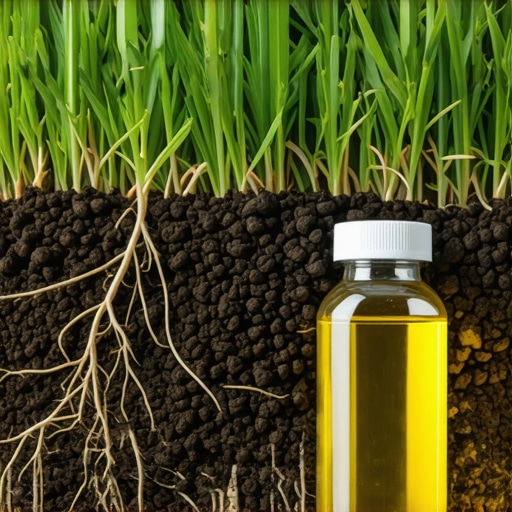
I have seen homeowners dump 50 pounds of high-nitrogen starter fertilizer on a 1000 square foot area because they think more is better. It is not. It is toxic. Excessive nitrogen can cause salts to build up in the top layer of the soil. This creates an osmotic pressure that actually sucks water out of the seed rather than letting it in. This is called physiological drought. You might have the wettest soil in the world, but the seed is dying of thirst because of the chemical imbalance you created. We always run a soil test before we even pick up a shovel. You need to know your Phosphorus and Potassium levels. If those are off, your Nitrogen is useless. It is about the ratio, not the volume. Stop guessing and start measuring.
The Role of Micro-Climates in the Yard
Your yard is not one single environment. The area under the oak tree has a different soil moisture profile and light intensity than the area next to the concrete driveway. Concrete acts as a heat sink. It absorbs solar radiation all day and radiates it back into the soil at night. This dries out the seedbed along the edges of your hardscaping faster than the rest of the lawn. If you water the whole yard for 10 minutes, the edges will still be dry while the middle is soaking wet. This is why your grass grows in patches. You have to manage these micro-climates. Hand-water the edges or adjust your irrigation heads to provide more overlap in high-heat zones. It is about precision application. If you treat the whole yard the same, it will look different everywhere.
Hydrostatic Pressure and Drainage Issues
When we talk about hardscaping, we talk about water movement. If you have a patio or a retaining wall that was not installed with a proper French drain or a modified gravel base, that water has to go somewhere. Often, it dumps right into the adjacent lawn area. This creates a zone of perpetual saturation. Grass needs a balance of air and water. If the soil is 100 percent water, the roots drown. This is another major cause of patchiness. You will see a line of dead or thin grass right along the edge of a poorly drained patio. That is not a seed problem. That is a civil engineering problem. You have to manage the runoff from your hard surfaces if you want the green stuff to grow next to it. Dig a trench. Install a pipe. Get the water out of the root zone.
Post-Seeding Management: The First 30 Days
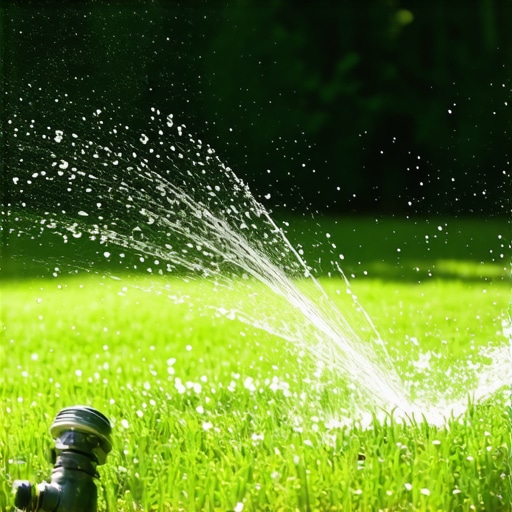
The job is not done when the seed hits the ground. The first 30 days are the most critical. You need to keep that soil surface damp. Not wet. Damp. This means short, frequent watering cycles. We tell our clients to set their timers for 5 to 10 minutes at 6 AM, 11 AM, and 3 PM. Once the grass is 2 inches tall, you can start backing off and moving toward deep, infrequent watering. This forces the roots to grow downward to find moisture. If you keep the surface wet forever, the roots stay shallow and the grass will die the first time the temperature hits 90 degrees. It is a transition. You are training the grass to survive. Don’t be a helicopter parent. Let the soil dry out slightly once the canopy is established. This prevents fungus and promotes a resilient root system. Get it right the first time so you don’t have to do it again next year. Maintenance is cheaper than replacement.