Stop 2026 Paver Weeds: The $20 Vinegar Hack
Why Most Homeowners Fail at Weed Control
Controlling weeds in paver joints requires understanding high-concentration acetic acid as a desiccant and its interaction with polymeric sand and base-layer compaction. To stop weeds permanently, you must address the hydrostatic pressure and sediment buildup that creates a fertile environment between your stones. It is not just about the spray; it is about the engineering of the joint. [image]
The Hardscape Autopsy: Why This $30,000 Patio Sunk
I recently got called out to tear up a $30,000 patio that was sinking and overrun with crabgrass because the previous contractor skipped the most basic step: subgrade stabilization. They used stone dust instead of an ASTM C33 bedding sand. The stone dust held water like a sponge. In our industry, water is the enemy. It saturates the base, heaves the pavers during freeze-thaw cycles, and turns the joints into a perfect nursery for weed seeds. When I pulled up the pavers, the ‘base’ was a muddy slurry. This is why your vinegar hack will fail if your drainage is shot. You can burn the green off the top, but you are just treating the symptom of a structural failure. Real landscaping is about civil engineering. If the grading is wrong, the weeds are the least of your problems.
“A retaining wall doesn’t fail because of the stone; it fails because of the water trapped behind it. The same logic applies to your paver joints—if they hold moisture, they will hold life.” – Hardscape Engineering Axiom
How the $20 Vinegar Hack Actually Works
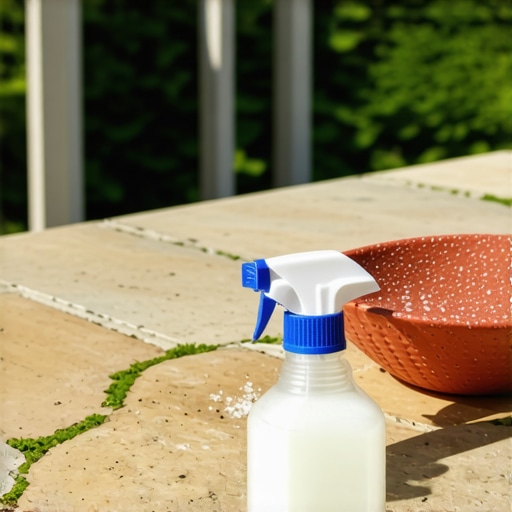
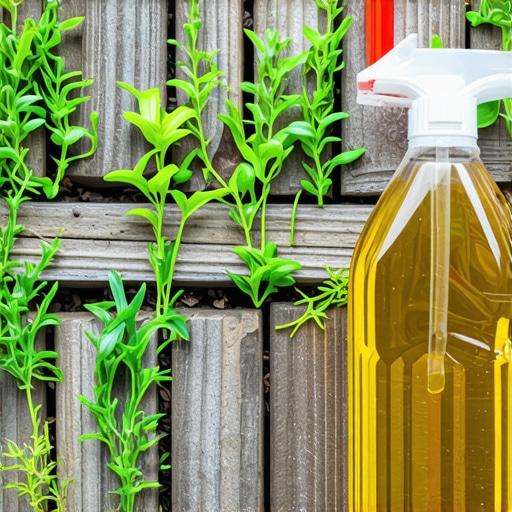
The $20 vinegar hack works by utilizing 30% industrial-grade acetic acid to collapse the cell walls of broadleaf weeds through rapid dehydration. Unlike standard 5% grocery store vinegar, this concentration acts as a non-selective contact herbicide that alters the soil pH at the surface level, making the environment hostile for immediate regrowth. It is a chemical burn, not a systemic kill. Don’t miss the surfactant. Without it, the acid just beads off the waxy cuticle of the leaf. I use a tablespoon of dish soap. It breaks the surface tension. It makes the poison stick. You have to apply it in full sun. High UV index accelerates the desiccation. If it rains within six hours, you just wasted twenty bucks.
How much modified gravel do I need for a patio base?
For a standard pedestrian patio, you need a minimum of 4 inches of compacted 21A or 3/4-inch modified gravel. If you are building a driveway for a truck, you must increase that to 8 to 12 inches. This base must be compacted in 2-inch ‘lifts’ using a plate compactor to reach 98% Proctor density. If the base isn’t dense, the pavers will shift, the polymeric sand will crack, and the weeds will find a home in the fissures. I have seen guys dump six inches of gravel and hit it once with a tamper. It will fail. Every time.
| Vinegar Concentration | Effectiveness | Safety Requirement | Impact on Soil pH |
|---|---|---|---|
| 5% (Grocery Store) | Low (Annuals only) | None | Negligible |
| 10-15% (Cleaning) | Moderate | Gloves recommended | Temporary Drop |
| 30% (Industrial) | High (Persistent Weeds) | Respirator & Eye Pro | Significant Surface Drop |
Why do weeds grow in my pavers if I used polymeric sand?
Weeds grow in pavers because organic matter (dust, skin cells, leaf debris) accumulates in the micro-cracks of the polymeric sand. Contrary to popular belief, weeds rarely grow ‘up’ from the dirt below; they blow in from the top. When the sand loses its polymer bond due to age or improper installation (not enough water during activation), it creates a seed bed. To fix this, you must pressure wash the old sand out to a depth of 1.5 inches and install a high-performance polymeric jointing sand that meets ICPI standards. Stop buying the cheap bags at the big-box stores. They don’t have enough binder.
“To ensure the longevity of a flexible pavement system, the jointing sand must be kept full to the bottom of the chamfer to allow for proper load transfer and to inhibit weed ingress.” – ICPI Tech Manual
The Professional Maintenance Checklist
- Inspect Joint Levels: Ensure sand is 1/8 inch below the paver edge.
- Monitor Drainage: Look for ‘birdbaths’ or standing water after rain.
- Spring Cleaning: Use a leaf blower to remove organic fines from joints weekly.
- Acetic Acid Treatment: Spot-treat emerging weeds before they go to seed.
- Check the Root Flare: If you have trees near the patio, ensure roots aren’t lifting the base.
The Biological Reality of Weed Ingress
The biological reality of weed ingress is that opportunistic species like Digitaria (crabgrass) and Taraxacum (dandelion) can germinate in as little as 1/16th of an inch of accumulated dust. You cannot rely on a chemical hack alone. You must manage the micro-environment. This means ensuring your lawn is mowed at the correct height (3.5 to 4 inches for cool-season grasses) to prevent seeds from blowing off the turf and into your hardscape. If you scalp your lawn, you are sending a cloud of seeds directly into your patio joints. It is a cycle. Your landscaping is an ecosystem, not a set of isolated parts. Neglect the lawn, and you ruin the patio.
Remediation Steps for Failed Joints
If your patio is already a jungle, follow this protocol. First, use a power broom or a high-PSI pressure washer to excavate the top layer of contaminated sand. Be careful not to blow out the 1-inch bedding layer. Let it dry for 24 hours. The joints must be bone-dry. Pour in your new commercial-grade polymeric sand. Use a plate compactor with a protective mat to shake the sand into the full depth of the joint. Sweep off the excess. Mist it lightly—three times, five minutes apart. Do not flood it. If you see white foam, you used too much water. You just washed away the polymers. It will rot. It will crumble. And next year, you will be right back here with your vinegar bottle.