Fix 2026 Backyard Noise with These 3 Shrub Walls
The Engineering of Silence: Why Your Hedge Is an Acoustic Barrier
Reducing backyard noise requires a biological baffle system that utilizes acoustic scattering and absorption. Effective shrub walls use dense, evergreen foliage and staggered planting patterns to break up high-frequency sound waves, providing a 5 to 10-decibel reduction when combined with proper soil berming and mass. If you think a single row of twigs will stop a diesel truck at 60 MPH, you are dreaming. It takes density, depth, and the right biological architecture. I always drill into my new crew members: if you don’t fix the soil grading first, every plant you put in the ground is just expensive compost. You cannot just dig a hole and hope for the best. You have to understand the soil structure, the compaction levels measured in PSI, and how sound interacts with soft tissue versus hard surfaces. We aren’t just planting; we are building a living wall designed to intercept kinetic energy. If you skip the site prep, your 2026 results will be thin, leggy, and loud. [IMAGE_PLACEHOLDER]
How thick should a shrub wall be for noise reduction?
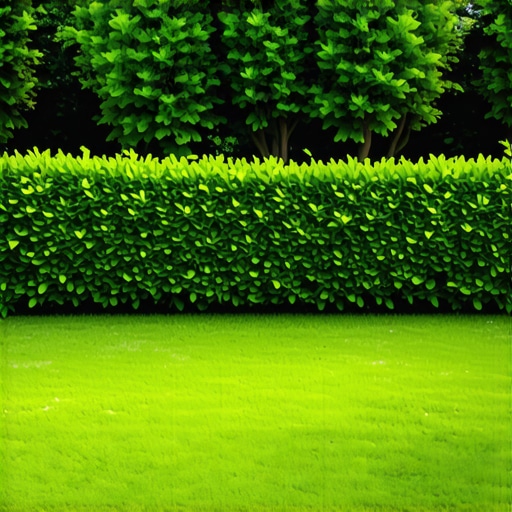
To achieve a measurable reduction in decibels, a shrub wall should have a minimum thickness of 8 to 12 feet, utilizing a staggered double-row planting configuration. This creates a dense lattice of branches and leaves that forces sound waves to refract and lose energy through viscous friction as they pass through the canopy. One leaf does nothing. Ten thousand leaves in a 3D matrix do the work. Don’t be cheap on the spacing. If the leaves don’t touch, the sound finds the gap. Sound behaves like water; it follows the path of least resistance. If there is a hole in your hedge, the noise will pour through it like a leak in a dam.
“A living noise barrier must be at least 10 to 15 feet wide and 20 to 30 feet tall to achieve a significant 10 dBA reduction in traffic noise.” – USDA National Agroforestry Center
1. Thuja occidentalis Green Giant: The High-Speed Sound Baffle
The Green Giant Arborvitae is the workhorse of the industry for a reason. It grows at a rate of 3 to 5 feet per year if you manage the nitrogen levels correctly. But speed is a double-edged sword. Most hacks plant these 2 feet apart, leading to root girdling and fungal outbreaks within five years. For a noise wall, you need a staggered row. Plant them 6 to 8 feet apart on center in two parallel rows. This allows for airflow, which prevents the Passalora needle blight that kills dense stands. You want a 10-10-10 slow-release fertilizer at the drip line, not the trunk. The root flare must be visible. If you bury that flare, the tree will die of hypoxia. I’ve seen $50,000 installs rot because the crew was too lazy to pull back the mulch. Don’t let them build mulch volcanoes. It will rot. Period. The Green Giant provides a dense, fan-like leaf structure that is excellent at scattering high-frequency noise from tires and wind.
What is the best fertilizer for privacy trees?
Use a balanced 10-10-10 or 14-14-14 NPK ratio fertilizer with micronutrients like iron and magnesium to maintain the chlorophyll density required for acoustic absorption. Heavy nitrogen applications in late fall should be avoided to prevent soft, frost-prone growth. You want structural integrity, not just green fluff. If the wood is weak, the first ice storm will snap your noise barrier in half. Focus on root development in year one by using a high-phosphorus starter fertilizer (the middle number) to ensure the root-to-shoot ratio is balanced before the first heat wave of 2026 hits.
2. Carpinus betulus Fastigiata: The Columnar Engineer
The European Hornbeam is the thinking man’s noise barrier. It is a deciduous tree, but it holds its dead leaves through most of the winter (marcescence), providing year-round sound dampening. Its wood is incredibly dense, often called ironwood, which means it reflects lower-frequency vibrations better than softer conifers. You need to check your soil pH here. These trees thrive in a range of 6.0 to 7.5. If your soil is heavy clay with poor drainage, you need to install a French drain or a 4-inch perforated pipe wrapped in silt sock before planting. Hornbeams hate wet feet. If they sit in standing water, the roots go anaerobic and the tree is toast. We measure compaction with a penetrometer. If it is over 300 PSI, you aren’t planting; you’re just burying a tree in a concrete pot. Break up the hardpan. Use a pickaxe if you have to. The columnar habit allows you to create a very tall wall in a narrow footprint, making it ideal for tight suburban lots where you can’t afford a 15-foot wide planting bed.
| Species | Growth Rate | Max Height | Ideal Soil pH | Acoustic Type |
|---|---|---|---|---|
| Green Giant | 3-5 ft/yr | 40-60 ft | 5.5-7.0 | High-Freq Scattering |
| European Hornbeam | 1-2 ft/yr | 30-40 ft | 6.0-7.5 | Low-Freq Reflection |
| Nellie R. Stevens Holly | 2-3 ft/yr | 15-25 ft | 5.0-6.5 | Dense Absorption |
3. Ilex x Nellie R. Stevens: The Dense Defensive
If you want a wall that is also a physical barrier, this Holly is your solution. It has a waxy, thick cuticle on the leaf which is fantastic for deflecting sound waves. Unlike the Arborvitae, which can get thin at the bottom, the Nellie R. Stevens keeps its lower branches if it gets enough sun. This is critical because road noise travels along the ground. If your hedge is thin at the bottom 3 feet, you haven’t solved anything. You’ve just built a roof for the noise to travel under. Plant these in a zig-zag pattern. This forces the sound wave to hit multiple surfaces at different angles, a process called diffraction. Check your USDA Hardiness Zone. These are good up to Zone 6, but in Zone 5, they will get winter burn. You’ll need to apply an anti-desiccant spray in late November to protect the leaves from drying out in the winter wind. No spray, no leaves. No leaves, no noise protection.
“Soil density and moisture content significantly influence the ground-plane attenuation of sound waves in residential landscapes.” – Acoustic Engineering Handbook
How do I stop noise from coming over a fence?
A standard 6-foot fence is useless for noise because of sound flanking. Sound waves curve over the top of the fence like water over a rock. To stop it, you need height. A shrub wall that reaches 12 to 15 feet creates a larger shadow zone behind the barrier. Combine your fence with a raised earth berm. A 3-foot berm topped with a 6-foot shrub wall gives you 9 feet of immediate vertical height. This forces the sound to travel a longer path, losing energy along the way. Use a heavy soil mix for the berm, not just cheap fill dirt. You need mass to stop noise.
The Pre-Install Checklist for 2026 Readiness
- Utility Mark Out: Call 811. Do not assume you know where the gas line is. A shovel through a main line ends your project and your bank account.
- Soil Test: Send a sample to your local extension office. You need to know your Cation Exchange Capacity (CEC) and pH.
- Drainage Test: Dig a 12-inch hole, fill it with water. If it is still there in 4 hours, you have a drainage problem that will kill your shrubs.
- Irrigation Plan: Install a 1/2-inch drip line with 0.9 GPH emitters at each plant. Overhead watering is a waste and encourages fungal growth.
- Root Flare Inspection: Locate the first structural root. It must be at the soil surface. Remove excess soil from the top of the root ball before planting.
The first year is the most critical. You are not growing top growth; you are growing roots. If you see 3 feet of growth in year one, the plant is stressed and searching. You want steady, solid establishment. In 2026, when those root systems have integrated with the local soil microbiology, you will finally hear the difference. The roar of the neighborhood will be replaced by a dull hum. But you have to do the work now. Dig the hole right. Amend the soil based on facts, not guesswork. Buy nursery-grade stock, not the root-bound disasters from the big-box clearance rack. Quality costs more because it actually works. Your ears will thank you in two years.