Why Your Retaining Wall Needs These Hidden Weep Holes
The Hardscape Autopsy: Why a $30,000 Wall Just Collapsed
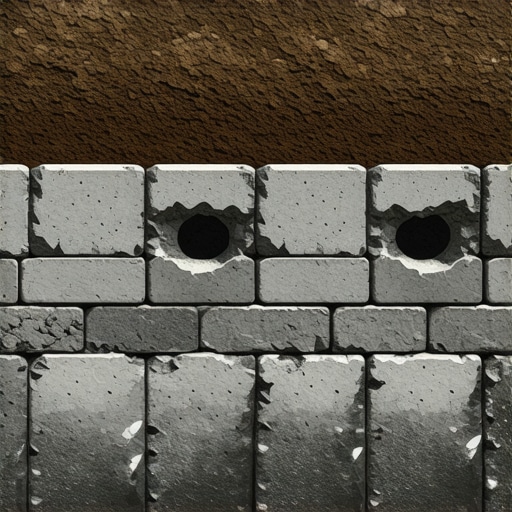
I recently got called out to tear up a $30,000 patio and retaining wall system that was sinking and bowing because the previous contractor failed to account for hydrostatic pressure. The homeowner showed me the original invoice; it was a premium job on paper, using high-end multi-piece pavers and tumbled granite wall blocks. But as we excavated, the crime scene became clear. There wasn’t a single weep hole or foot of perforated drainage pipe in the entire 60-foot run. The soil behind the wall was a slurry of anaerobic mud. The wall didn’t fail because the blocks were weak; it failed because it was trying to hold back the weight of a swimming pool’s worth of water trapped in the earth. [IMAGE_PLACEHOLDER]
Why Hydrostatic Pressure is the Number One Cause of Wall Failure
Hydrostatic pressure refers to the immense force exerted by water at rest within the soil column behind a structure. When backfill material becomes saturated, the weight of the water adds to the lateral earth pressure, often doubling or tripling the load on the retaining wall units, leading to structural rotation, bulging, or total collapse. Every time it rains, that soil absorbs weight. Without a path for that water to escape, the wall becomes a dam. Dams are designed to hold water; retaining walls are designed to hold soil. There is a massive difference in the engineering requirements between the two. If your contractor didn’t install weep holes, they didn’t build a wall—they built a ticking time bomb.
“A retaining wall doesn’t fail because of the stone; it fails because of the water trapped behind it.” – Hardscape Engineering Axiom
How far apart should retaining wall weep holes be?
For standard residential retaining walls under four feet, weep holes should be spaced every 4 to 6 feet along the base of the wall. This ensures that the drainage zone (the area filled with clean stone) can effectively channel water out before it accumulates enough hydrostatic head to exert significant pressure on the segmental retaining wall (SRW) blocks.
The Anatomy of a Professional Drainage System
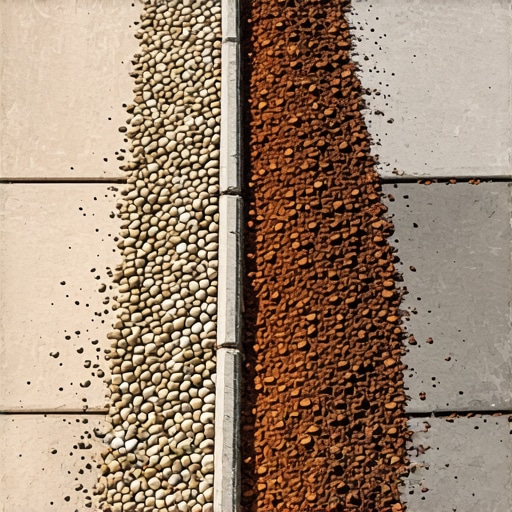
A professional drainage system consists of more than just a hole in a block; it requires a coordinated assembly of geotextiles, clean stone, and perforated piping. We use ASTM D448 No. 57 stone for the drainage chimney because it provides a 40% void space, allowing water to drop rapidly to the weep hole level. We never use “dirt” or “bank run” gravel for backfill. We wrap the entire drainage column in a non-woven geotextile fabric. This acts as a filter, preventing fine soil particles from clogging the stone and the weep holes. If those holes clog, the system is dead. We use SDR-35 PVC pipe for the actual outlets because it withstands the compaction force of our plate tampers far better than the cheap, thin-walled corrugated pipe found at big-box stores.
| Component | Material Specification | Purpose |
|---|---|---|
| Backfill Stone | #57 Clean Angular Crushed Stone | Rapid water infiltration and vertical movement |
| Filter Fabric | 4oz Non-Woven Geotextile | Prevents soil migration into the drainage layer |
| Drain Pipe | 4-inch SDR-35 Perforated PVC | Horizontal collection and discharge of water |
| Weep Hole Cover | Stainless Steel Mesh or Aggregate | Keeps rodents out while allowing flow |
The Physics of Soil Saturation and the “Angle of Repose”
Every soil type has an angle of repose—the steepest angle at which it can be piled without sliding. When you introduce water, you change the internal friction of that soil. Saturated soil loses its structural integrity and begins to behave like a liquid. This is why clay-heavy soils are the enemy of hardscaping. Clay holds water like a sponge, expanding as it hydrates. This expansive pressure, combined with freeze-thaw cycles in northern climates, will heave a wall out of its leveled base in just a few seasons. Weep holes are the pressure relief valves that keep the soil’s weight within the engineering tolerances of the wall design.
“Effective drainage is the primary factor in the longevity of any earth-retaining structure, as water pressure is the most common cause of reinforcement failure.” – National Concrete Masonry Association (NCMA)
Can you add drainage to a retaining wall after it’s built?
Yes, you can retroactively install weep holes by core-drilling through the face of the wall at the lowest possible point, but it is a complex remediation process. After drilling, you must attempt to clear a cavity behind the hole and fill it with washed stone to create a connection to the saturated backfill. While it can relieve some pressure, it is never as effective as a drainage system integrated during the initial excavation and build phase.
The Ground-Up Build: A Step-by-Step Drainage Checklist
To ensure your garden design doesn’t become a muddy mess, follow this hardscape installation protocol. 80% of the work is buried where no one will ever see it. That’s the part that matters. Don’t skip these steps.
- Excavate the Toe: Ensure the base trench is deep enough for 6 inches of compacted modified gravel plus at least one full block buried (the “embedment”).
- Install the Collector: Lay 4-inch perforated pipe behind the first course of blocks, sloped at a 1% minimum grade toward the discharge point.
- Manage the Backfill: Use 12 inches of clean stone (no fines) directly behind the blocks, extending from the pipe to within 6 inches of the surface.
- The Fabric Wrap: Separate the clean stone from the native soil using non-woven fabric to prevent siltation.
- Surface Diversion: Cap the top of the wall with impermeable clay or a poly liner to prevent surface runoff from entering the drainage chimney.
Maintenance: Protecting Your Investment
Once the wall is up, you aren’t done. You need to inspect your weep holes twice a year—once in the spring after the thaw and once in the late fall. Look for efflorescence (white salty staining) on the face of the wall; this is a sign that water is being forced through the blocks because the drainage layer is failing. Clear any debris, mulch, or nests from the weep hole openings. If you see water trickling out during a heavy rain, celebrate. That means the system is working. If the wall is bone dry but the ground is soggy, you have a problem. Your landscaping should be an asset, not a liability. Build it right, or don’t build it at all.

![Build a $200 Modern Trellis for 2026 Privacy [DIY]](https://lawnmajesty.com/wp-content/uploads/2026/06/Build-a-200-Modern-Trellis-for-2026-Privacy-DIY.jpeg)