4 Reasons to Use Fieldstone Instead of Brick for Your Wall
The Engineering Logic of Fieldstone Selection
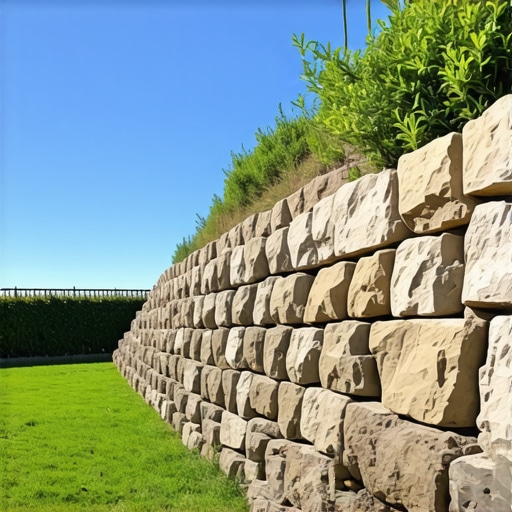
Choosing fieldstone over brick for a structural retaining wall is a decision rooted in geological durability and hydrostatic pressure management. While brick offers a clean, geometric look, fieldstone provides superior compressive strength and handles the freeze-thaw cycles of northern climates with significantly less risk of spalling or structural shear. Every project starts with the soil profile, not the stone catalog. I recently got called out to tear up a $30,000 patio and wall system that was sinking because the previous contractor used a standard clay brick without accounting for the heavy hydrostatic pressure and the poor drainage of the local subsoil. The mortar joints had snapped like dry twigs under the weight of saturated backfill. This is a common failure when aesthetics are prioritized over civil engineering.
“A retaining wall doesn’t fail because of the stone; it fails because of the water trapped behind it.” – Hardscape Engineering Axiom
Reason 1: Natural Resistance to Freeze-Thaw Cycles
Fieldstone is a dense, metamorphic or igneous rock that possesses a much lower porosity rate than kiln-fired clay bricks, making it nearly immune to the internal expansion of freezing water. Brick is essentially a sponge. In regions with heavy winters, moisture enters the brick pores, freezes, and causes the face of the brick to pop off, a process known as spalling. Fieldstone laughs at this. You won’t see a granite fieldstone flake apart after a decade of winters. It stays solid.
Reason 2: Superior Structural Mass and Interlocking Density
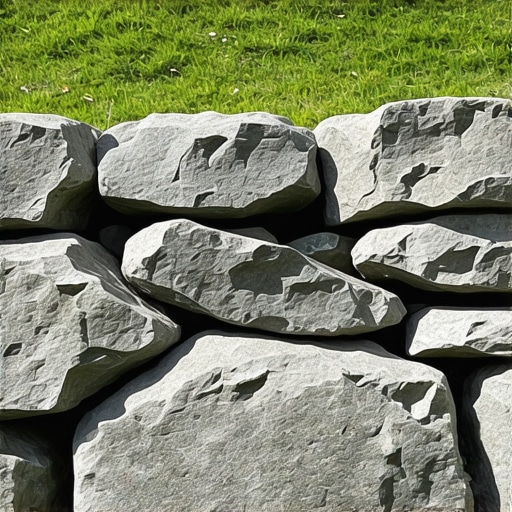
The irregular geometry of fieldstone allows for a multi-dimensional interlocking system that a standard rectangular brick cannot match without excessive reliance on mortar. When we build with fieldstone, we are using the natural weight and friction of the stone to counteract the lateral earth pressure from the slope. A fieldstone wall is often twice as thick as a brick veneer wall. This mass is your best defense against soil creep. Brick walls are often thin and rely on a concrete masonry unit (CMU) backup, which introduces a secondary failure point at the bond beam.
Reason 3: Enhanced Drainage and Breathability
Fieldstone walls, particularly when built as dry-stack systems, allow for natural weep holes throughout the entire structure, preventing the buildup of hydrostatic pressure. Water is the primary killer of hardscaping. If water cannot escape from behind the wall, it will push the wall over or crack the mortar. Brick walls require meticulously placed plastic weep tubes that frequently clog with sediment or get blocked by mulch. Fieldstone provides a porous face that lets the earth breathe.
Reason 4: Longevity and Maintenance Costs
The lifecycle cost of fieldstone is significantly lower than brick because it does not require repointing every 15 to 20 years to maintain its structural integrity. Mortar is the weak link in any masonry project. By using large-format fieldstone, you minimize the surface area of the joints. Even if a fieldstone wall shifts slightly over twenty years due to extreme weather, the natural look masks the movement, whereas a single crack in a brick wall’s mortar line is an eyesore and a sign of imminent failure.
How much modified gravel do I need for a patio base?
To calculate the base material, you must multiply the square footage by the compacted depth (usually 6 inches for walkways, 12 inches for walls) and divide by 27 to get cubic yards. For a 100-square-foot area at a 6-inch depth, you need roughly 2.5 cubic yards of CR6 or 21A modified gravel. Don’t eyeball this. Compaction is non-negotiable.
Is fieldstone cheaper than brick for a retaining wall?
While raw fieldstone may have a higher transport cost due to weight, the total installation cost is often comparable to high-end brick because you save on the expensive masonry backup and decorative capping required for brick. Fieldstone is the structural wall and the finish face all in one. You pay more for the craftsman’s time, but you pay less for failing materials.
| Feature | Natural Fieldstone | Kiln-Fired Brick |
|---|---|---|
| Compressive Strength | 10,000 – 20,000 PSI | 3,000 – 8,000 PSI |
| Moisture Absorption | Less than 1% | 5% – 15% |
| Lifespan | 100+ Years | 40 – 60 Years (with maintenance) |
| Failure Mode | Gradual Settling | Sudden Shearing/Spalling |
The Hardscape Installation Checklist
- Mark Utilities: Always call 811 before the first shovel hit.
- Excavate the Toe: The base of the wall must be buried (the ‘toe’) to prevent kick-out.
- Non-Woven Geotextile: Line the trench to prevent soil fines from clogging your gravel.
- Geogrid Reinforcement: Use for any wall exceeding 3 feet in height to tie the wall into the slope.
- Compaction: Use a plate compactor in 2-inch lifts. The tamper should literally bounce off the ground.
“The stability of a gravity wall is derived from the unit weight of the stone and the depth of the leveling pad below the frost line.” – ICPI Hardscape Standards
Do not be fooled by the fast-and-cheap bids. A wall built with fieldstone is a legacy feature. It requires a deep understanding of soil mechanics and base compaction. If your contractor doesn’t own a laser level or a plate compactor, fire them. Your wall will fail. Fieldstone is the professional’s choice for a reason. It lasts.