
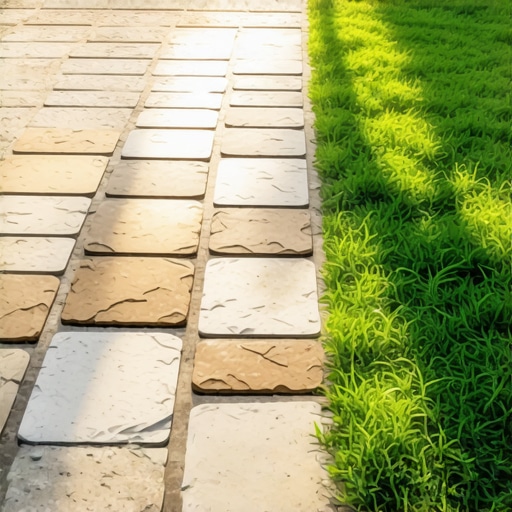
Why Your Flagstone Patio is Hotter Than Your Lawn
Understanding Thermal Mass in Flagstone Hardscaping
Flagstone patios reach extreme temperatures because natural stone possesses high thermal mass, allowing it to absorb solar radiation efficiently. Unlike organic turf, these hardscape materials lack evaporative cooling mechanisms, resulting in surface temperatures that often exceed 140 degrees Fahrenheit during peak summer months.
I recently got called out to tear up a $30,000 patio that was sinking because the previous contractor failed to account for both thermal expansion and subgrade drainage. The homeowner was complaining that the area felt like a furnace. Upon excavation, I found a four-inch thick slab of dark Pennsylvania Bluestone sitting directly on top of a three-inch layer of uncompacted stone dust. Not only was the base holding water, causing the stone to heave, but the density of the bluestone was acting as a massive heat battery. It would stay hot well until midnight. This is a common failure in high-end projects where aesthetics are prioritized over thermodynamics and civil engineering. Stone is dense. It holds energy. If you don’t manage that energy, you build an oven.
To understand the heat difference, we must look at the specific heat capacity of materials. Specific heat is the amount of heat energy required to raise the temperature of a substance by one degree. Stone has a much lower specific heat than the water-rich cells of a living lawn. This means it heats up rapidly under direct sunlight. While your lawn is busy conducting biological work, your patio is simply absorbing photons and converting them into long-wave infrared radiation. You can feel this radiation hitting your face when you stand near the surface. It is relentless.
“A retaining wall doesn’t fail because of the stone; it fails because of the water trapped behind it.” – Hardscape Engineering Axiom
How do I keep my stone patio cool?
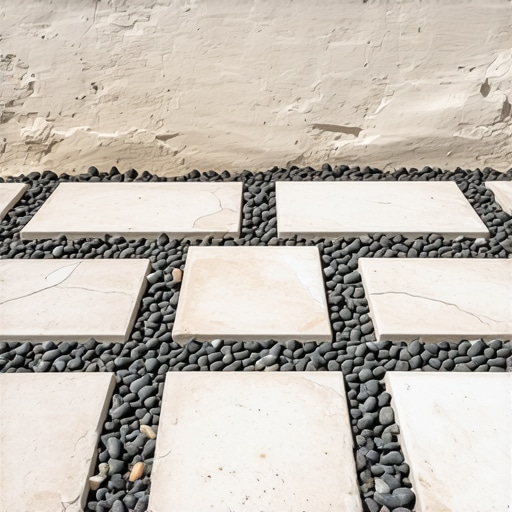
To reduce the surface temperature of your outdoor living space, you should choose stones with a higher albedo rating, such as light-colored travertine or sandstones, which reflect more solar energy back into the atmosphere rather than absorbing it into the material’s core. Additionally, increasing the permeability of your joints can help. Using a permeable open-graded aggregate base instead of a solid concrete slab allows the earth beneath to breathe. This promotes a small amount of cooling from the soil below. Most hacks just pour a slab and thin-set the stone. Don’t do that. It will fail. It will also burn your feet.
The Cooling Power of Evapotranspiration in Lawn Care
Turf grass acts as a natural air conditioner through evapotranspiration, where water moves through the plant and evaporates from leaves, consuming heat energy and lowering the surface temperature by 20 to 30 degrees compared to hardscape surfaces like stone or asphalt.
A healthy lawn is a living, breathing hydraulic system. The blades of grass use solar energy to pull water from the soil through the xylem. As this water exits the stomata as vapor, it undergoes a phase change. This phase change requires energy, which is pulled from the surrounding air. This is why a lawn feels cool even in July. If your lawn is dormant or brown, this cooling effect stops. Soil health is the engine here. You need deep roots. Short, scalped grass cannot transpire effectively. I see homeowners scalping their lawns to 1 inch. It is suicide for the turf. Keep it at 3.5 inches. Let it breathe.
“Turfgrass areas can be 10 to 14 degrees cooler than shaded soil and 30 degrees cooler than urban asphalt or concrete surfaces.” – Penn State Center for Turfgrass Science
When you compare the engineering of a lawn to a patio, you are comparing a dynamic cooling system to a static thermal mass. The lawn is actively fighting the sun. The patio is surrendering to it. In my 20 years of field work, I have measured soil temperatures under thick turf that were a full 40 degrees lower than the flagstone two feet away. This is not magic; it is biology. If your soil pH is off, or if you have a massive thatch layer, your grass can’t drink. If it can’t drink, it can’t cool. Use a core aerator. Break up the compaction.
Is flagstone hotter than concrete?
Generally, natural flagstone is hotter than standard grey concrete because its darker color and higher density allow it to absorb and retain more thermal energy, whereas concrete reflects more light and typically has a lower density depending on the aggregate mix used. However, stamped or dyed concrete can reach similar or higher temperatures if dark pigments are applied. Materials matter. Color matters more. Science doesn’t lie.
| Material Type | Albedo (Reflectivity) | Surface Temp (90°F Day) | Heat Retention Level |
|---|---|---|---|
| Kentucky Bluegrass | 0.25 – 0.30 | 85°F – 92°F | Minimal |
| Light Travertine | 0.40 – 0.50 | 105°F – 112°F | Moderate |
| Tan Sandstone | 0.30 – 0.40 | 115°F – 125°F | High |
| Dark Slate/Flagstone | 0.10 – 0.20 | 140°F – 155°F | Extreme |
| Standard Concrete | 0.30 – 0.35 | 120°F – 130°F | High |
Engineering Solutions for Thermal Management in Garden Design
Thermal management in landscape design requires strategic material selection and the use of shading elements to break the solar cycle, preventing the buildup of heat in high-density stones like flagstone and bluestone during peak exposure hours.
If you must use dark flagstone, you need a plan. First, look at your orientation. A south-facing patio with no shade is a disaster waiting to happen. I tell my clients to invest in a pergola or large-caliber deciduous trees like Red Oaks or Maples. These provide living shade. In the winter, the leaves drop, and the stone can actually help warm the house. In the summer, the canopy blocks the UV. It is a simple fix that most contractors ignore because they want to sell more stone and less dirt work. Also, consider the jointing material. Using a light-colored polymeric sand can reflect a small percentage of heat. It is a marginal gain, but in engineering, marginal gains add up.
- Select Light Materials: Choose stone with high quartz content or light tan hues.
- Increase Soil Moisture: Hydrated soil under a patio can help sink heat better than bone-dry clay.
- Maximize Airflow: Don’t wall in your patio. Use open railings or plantings to allow breezes to move the hot air.
- Install Drip Irrigation: Keeping perimeter plants hydrated adds to the localized cooling effect.
- Use Permeable Bases: Avoid the concrete sub-slab. Use a 57-stone or 8-stone open-graded base.
Stop buying cheap mulch from the big-box stores. It is often shredded pallets dyed with chemicals. It doesn’t insulate the soil; it chokes it. Use a high-quality organic composted mulch. It holds moisture. Moisture equals cooling. It is that simple. If you are building a retaining wall near your patio, ensure the drainage stone goes all the way to the top. This allows heat to escape the soil behind the wall. Most guys skip this. They get lazy. Don’t be lazy. Dirt is heavy. Heat is energy. Manage both.
![Repairing Cracking Concrete Walkways [Fast Fix]](https://lawnmajesty.com/wp-content/uploads/2026/09/Repairing-Cracking-Concrete-Walkways-Fast-Fix.jpeg)