The Ultimate Guide to Pruning Fruit Trees for Better Yield
The Foundation of Fruit Production: Why Pruning is Mandatory
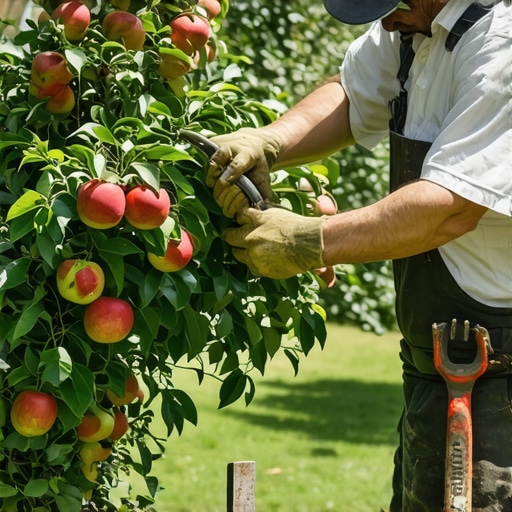
Proper fruit tree pruning is a rigorous engineering task that dictates the crop yield, fruit size, and structural integrity of the tree for its entire lifespan. Most homeowners treat pruning as a cosmetic chore, but in professional landscaping and garden design, we view it as a surgical intervention to manage the tree’s energy. I always drill into my new crew members: if you don’t fix the soil grading first and understand the branch collar next, every plant you put in the ground is just expensive compost. You cannot ignore the biology of the plant and expect it to perform. I have seen countless orchards ruined because a ‘mow-and-blow’ guy took a hedge trimmer to a peach tree. That is not pruning; that is plant 1st-degree murder. To get professional results, you must understand the vascular system of the tree and how it responds to every single cut you make with your shears. Pruning is not about removing wood; it is about directing light and nitrogen to the buds that matter. If you leave a cluttered canopy, you are inviting fungal pathogens and ensuring your fruit remains small, hard, and bitter.
“Pruning is a dwarfing process that redirects the tree’s energy into specific fruit-producing structures rather than unchecked vegetative growth.” – Penn State Agricultural Extension
The Mechanics of Tree Response and Apical Dominance
Apical dominance is the physiological process where the terminal bud at the end of a branch produces auxin, a hormone that suppresses the growth of lateral buds below it. When you make a heading cut, you remove that source of auxin, which triggers the tree to explode with new growth from the dormant buds further down the stem. This is the fundamental ‘why’ behind every cut. In lawn care and general landscaping, we often fight against the tree’s natural desire to grow straight up toward the sun. For fruit production, we need a balanced structure that allows sunlight to penetrate the center of the tree. Sunlight is the fuel for sugar production. If the interior of your apple or cherry tree is dark, the wood in that section will become unproductive and eventually die. We aim for a ‘scaffold’ system where branches are spaced 6 to 12 inches apart vertically and distributed evenly around the trunk. This prevents root girdling stress and ensures the tree can support the weight of a heavy harvest without snapping the main leader.
When is the best time to prune apple trees for maximum yield?
The optimal pruning window for apple trees is during late dormancy, typically between February and early March, before the sap begins to flow and buds start to swell. Pruning during this window minimizes the risk of fire blight infection and allows the tree to immediately begin the healing process (CODIT) as it enters the spring growth flush. Summer pruning is only for thinning and controlling vigor, not for structural changes.
The Professional Toolset: Investing in Horticultural Precision
Stop buying your tools at the same place you buy your laundry detergent. If you want to manage hardscaping and high-end gardens, you need professional-grade bypass pruners, a folding saw with Japanese-style pull-cut teeth, and long-reach loppers. Anvil pruners are the enemy; they crush the cambium layer of the wood instead of slicing it, creating a jagged wound that cannot seal properly. A clean cut allows the tree to form a ‘callus’ over the wound. A crushed cut invites Erwinia amylovora and other necrotic diseases. I require my guys to dip their blades in a 70 percent isopropyl alcohol solution between every tree. It sounds tedious until you realize how fast you can spread systemic viruses across an entire property. Your tools should be sharp enough to shave with. A dull blade requires more physical force, which leads to sloppy cuts and ‘bark stripping’ where the weight of the falling branch peels the skin right off the trunk. That is an entry point for borers and rot. You should also have a sturdy tripod ladder; never lean a standard A-frame against a fruit tree. It is dangerous for you and devastating for the bark.
| Fruit Category | Pruning System | Primary Goal | Yield Impact |
|---|---|---|---|
| Pome (Apple/Pear) | Central Leader | Vertical strength | High consistency |
| Stone (Peach/Plum) | Open Center | Light penetration | Large fruit size |
| Cherry | Modified Leader | Structure/Height | Bird protection |
The Execution: The Three-Cut Method and Branch Collars
The branch collar is the swollen area of tissue where a branch meets the trunk. This area contains the specialized cells responsible for ‘walling off’ the wound. If you cut too close (a flush cut), you destroy the collar and the tree cannot heal. If you leave a ‘stub,’ the wood will rot back into the heartwood. You must cut just outside the branch bark ridge. For any branch larger than one inch in diameter, you must use the three-cut method. First, make an undercut about six inches out from the trunk. Second, make a top cut further out to drop the weight of the branch. Third, make the final finishing cut at the collar. This prevents the heavy branch from tearing the bark down the side of the tree as it falls. It is a simple piece of civil engineering for plants. If you ignore this, you are creating a permanent injury that will eventually lead to the tree’s failure. Hardscaping professionals understand the importance of structural integrity in walls; apply that same logic to the wood of your trees.
“A retaining wall doesn’t fail because of the stone; it fails because of the water trapped behind it, much like a tree fails from the rot trapped in an unhealed cut.” – Hardscape Engineering Axiom
How much can I prune a fruit tree without killing it?
A healthy fruit tree can typically handle the removal of 20 to 25 percent of its total canopy in a single dormant season. Removing more than 30 percent triggers a stress response, causing the tree to produce ‘water sprouts’—thin, vertical, non-fruiting suckers that drain energy from the root system. If a tree is severely overgrown, remediation should be staged over three years to avoid shocking the root-to-shoot ratio.
Species-Specific Logic: Apples vs. Peaches
You cannot treat a peach tree like an apple tree. Apples and pears produce fruit on long-lived fruiting spurs. If you cut off all the gnarled, short little branches, you have just cut off next year’s crop. Peaches, however, produce fruit on one-year-old wood. If you don’t prune a peach tree aggressively every year, the fruiting wood moves further and further away from the center, eventually causing the branches to break under the leverage of the fruit. This is where garden design meets utility. You want a peach tree to look like an open bowl (Open Center) to let the UV rays hit every branch. For lawn care enthusiasts, remember that the nitrogen you put on your grass also feeds the tree. High-nitrogen runoff can cause excessive leaf growth and zero fruit. You need a balanced 10-10-10 or a specific fruit-tree fertilizer that emphasizes potassium and phosphorus for flower development. Watch your soil pH; most fruit trees want a slightly acidic range of 6.0 to 6.5. If the soil is too alkaline, the tree cannot uptake iron, leading to chlorosis and poor yields.
- Sterilize: Disinfect all shears with alcohol or 10% bleach solution.
- Identify: Locate the 4 Ds: Dead, Damaged, Diseased, or Deranged (crossing) branches.
- Thin: Remove branches growing toward the center of the canopy.
- Check: Ensure the branch collar is intact after every cut.
- Clear: Remove all ‘suckers’ growing from the rootstock below the graft union.
The Myth of Wound Dressing and Year-One Care
I get asked all the time about ‘tree paint’ or wound dressing. Don’t use it. It is the ‘snake oil’ of the landscaping world. Research has proven that painting a cut traps moisture and pathogens against the raw wood, accelerating rot rather than preventing it. The tree has its own chemical defense system. Let it breathe. After a heavy pruning session, your job shifts to hydration and soil microbiology. The tree has just lost a significant portion of its photosynthetic surface area. You must ensure it has 1 inch of water per week, delivered slowly at the drip line, not against the trunk. This prevents hydrostatic pressure issues in the root zone and keeps the fine feeder roots active. If you are in a region with heavy clay, like the Southeast, ensure you aren’t creating a ‘bathtub effect’ with your mulch. Never pile mulch against the bark (the dreaded mulch volcano). It will rot the trunk and kill the tree faster than any disease. Keep mulch 3 inches away from the wood. This is the difference between a pro install and a hack job. In the first year after a major structural prune, expect some vigorous growth. Be ready to ‘pinch’ back the tips in June to encourage branching. Pruning is not a once-a-year event; it is a relationship with the plant. It will rot if you neglect it. Don’t skip the follow-up.
![Why Your 2026 Drip System is Wasting Water [Fix]](https://lawnmajesty.com/wp-content/uploads/2026/06/Why-Your-2026-Drip-System-is-Wasting-Water-Fix.jpeg)