
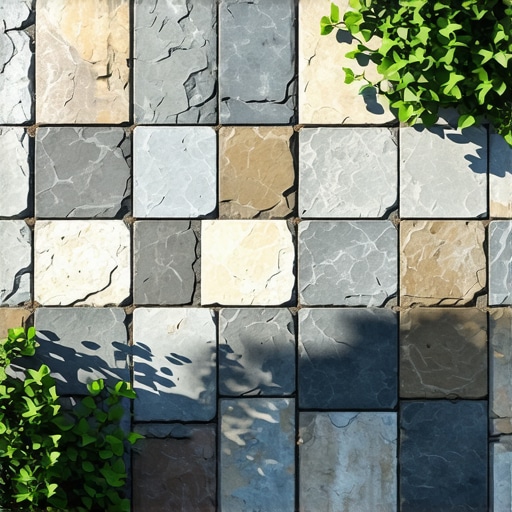
How to Mix Natural Stones and Pavers for a Custom Look
Designing the Mixed-Media Hardscape Foundation
Mixing natural stones and pavers requires a deep understanding of structural load-bearing capacities and sub-base preparation to ensure the final surface remains level and prevents trip hazards. By integrating the irregular geometry of natural flagstone with the dimensional consistency of concrete pavers, you create a custom aesthetic that balances organic texture with engineered durability. I recently got called out to tear up a $30,000 patio that was sinking because the previous contractor failed to account for the varying thicknesses of the materials. He laid 1-inch flagstone and 2-3/8 inch pavers on the same bedding layer without adjusting the sub-base excavation depth. Within two winters, the freeze-thaw cycles pushed the lighter stones up while the pavers settled into the soft spots. It was a disaster. To avoid this, you must excavate to different depths based on the material thickness. 80 percent of the work happens before you even see a stone. Don’t skip the math.
“A retaining wall or paved surface doesn’t fail because of the stone; it fails because of the water trapped behind or beneath it.” – Hardscape Engineering Axiom
The Engineering of Sub-Base Preparation
When you combine materials like Pennsylvania Bluestone and Techo-Bloc pavers, you are dealing with two different densities and porosity levels. Your base must be a monolithic structure of compacted #57 crushed stone or DGA (Dense Graded Aggregate). I tell my crew that the plate compactor should literally bounce off the surface when the base is ready. If it still feels soft or yields under foot, you aren’t done. For a pedestrian patio, you need a minimum of 6 inches of compacted aggregate. For driveways, you need 10 to 12 inches. We use a geotextile fabric between the subgrade soil and the aggregate base. This prevents the stone from migrating into the clay or silt over time. Without that fabric, your custom look will look like a topographical map of the moon in five years. It will rot from the bottom up.
How much modified gravel do I need for a patio base?
To calculate the required modified gravel, multiply your total square footage by the compaction depth (typically 6 inches) and divide by 27 to find the cubic yardage, then add a 20 percent compaction factor to account for the volume lost during mechanical tamping. Most homeowners underestimate this. If you order exactly the volume of the hole, you’ll run short. Concrete pavers are manufactured to tight tolerances, usually within 1-2 millimeters. Natural stone is a different beast. Flagstone can vary from 3/4 inch to 2.5 inches in the same pallet. This means your bedding sand layer is your only tool for leveling. You cannot just screed a flat 1-inch layer of sand and hope for the best. You have to ‘hand-set’ the natural stone pieces, manually adjusting the sand depth for every single stone while maintaining a consistent 2 percent slope for drainage.
| Material Type | Typical Thickness | Base Requirement | Jointing Material |
|---|---|---|---|
| Concrete Pavers | 60mm – 80mm | 6″ DGA / 1″ Sand | Polymeric Sand |
| Natural Flagstone | 1″ – 2.5″ (Variable) | 6-8″ DGA / Variable Sand | Stone Dust or Polymeric |
| River Rock Accents | 2″ – 4″ | 4″ DGA / Geotextile | Gravel or Mortar |
Managing Hydrostatic Pressure and Drainage
Water is the enemy of every hardscape. When mixing stones, you create complex joint patterns that can trap moisture if not managed. Hydrostatic pressure builds up under the stones during heavy rain, and if it has nowhere to go, it will heave your pavers. We install French drains or 4-inch perforated pipes wrapped in silt socks at the lowest point of the base. This ensures the sub-base stays dry. Most ‘mow-and-blow’ hacks ignore this. They just dump sand and start laying. Don’t do that. You need to ensure the water moves through the system at a rate of at least 0.5 inches per hour, depending on your local soil’s percolation rate. In heavy clay, you might even need a ‘clean stone’ base (no fines) to allow for faster drainage.
“Proper drainage is the single most important factor in the longevity of any segmental pavement system.” – ICPI (Interlocking Concrete Pavement Institute) Standard
What is the best way to cut natural stone to fit pavers?
The most efficient method to cut natural stone for a custom inlay is using a diamond-blade wet saw or a gas-powered cutoff saw to ensure clean, crisp edges that match the manufactured lines of the pavers. Do not try to snap them with a hammer and chisel if you want a modern look. You want the gap between the paver and the stone to be consistent—exactly 1/8 of an inch for pavers or 1/2 to 1 inch for flagstone joints. This consistency is what separates a professional job from a DIY mess. We use polymeric sand specifically designed for wide joints when mixing materials. It stays flexible and resists weed growth, but it must be installed on a bone-dry surface. If you get it wet before you sweep it in, you’ll stain the face of your expensive natural stone forever. It’s a permanent mistake.
The Final Installation Checklist
- Verify 811 utility markings before excavation.
- Compact subgrade soil to 95 percent Proctor density.
- Install edge restraints (plastic or aluminum) to prevent lateral shifting.
- Check the 2 percent pitch every 4 feet with a transit level.
- Sweep polymeric sand in three passes, vibrating the surface between each.
- Mist the joints according to manufacturer specs—do not flood them.
Once the project is finished, the first year is the ‘settling in’ period. You might see some minor sand loss in the joints after a heavy winter. This is normal. Just top it off. What isn’t normal is a stone moving when you step on it. If a stone wobbles, the base failed. It’s that simple. By mixing the structural reliability of pavers with the timeless look of natural stone, you get the best of both worlds—provided you respect the engineering required to keep them together. Fix the soil grading first, or every plant and stone you put in the ground is just expensive compost. Don’t be the homeowner who has to call me to tear it all out in three years. Do it right the first time.

![Why Your Retaining Wall Is Bulging [2026 Drainage Fix]](https://lawnmajesty.com/wp-content/uploads/2026/09/Why-Your-Retaining-Wall-Is-Bulging-2026-Drainage-Fix.jpeg)