The Best Way to Handle Steep Slopes in Your Backyard
Managing a vertical drop in your backyard isn’t about aesthetics; it is about physics. When you deal with a steep slope, you are fighting a constant battle against gravity, hydrostatic pressure, and the erosion of your topsoil. Most homeowners see a hill and think about flowers. I see a hill and think about the sheer force of water and the angle of repose. If you don’t respect the engineering, the earth will eventually reclaim your investment. 80% of a successful slope project happens underground before the first plant is even delivered from the nursery.
The Hardscape Autopsy: Why Most Slope Solutions Fail
I recently got called out to tear up a $30,000 patio that was sinking because the previous contractor didn’t understand soil physics. The homeowner had a 35-degree incline ending at a new paver install. The previous guy just stacked blocks and threw some dirt behind them. Within two years, the weight of the water-saturated soil—which can weigh over 100 pounds per cubic foot—pushed the wall forward. The pavers buckled. The base layer, which should have been a solid foundation of compacted modified gravel, had turned into a muddy soup. This is what happens when you ignore drainage and compaction. Don’t skip the prep work. It will fail.
Understanding the Engineering of Slope Stability
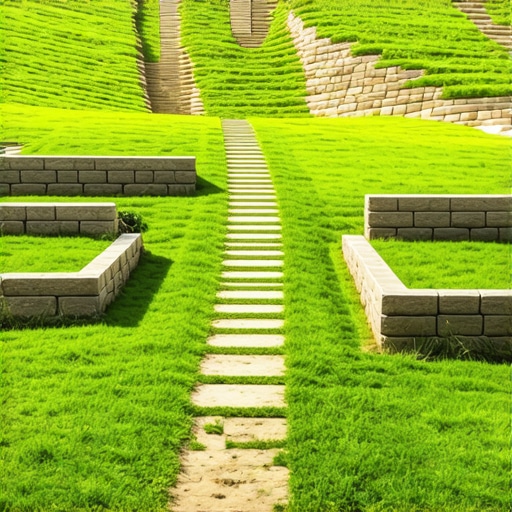
The best way to handle steep slopes involves terracing and retaining walls to manage hydrostatic pressure and soil erosion. Effective hardscaping requires a compacted gravel base, perforated drainage pipes, and geogrid reinforcement to stabilize the angle of repose and prevent structural failure. Slope management is 10% planting and 90% water management. Stop thinking about the surface and start thinking about the subsurface.
“A retaining wall doesn’t fail because of the stone; it fails because of the water trapped behind it.” – Hardscape Engineering Axiom
How do you stop dirt from washing away on a slope?
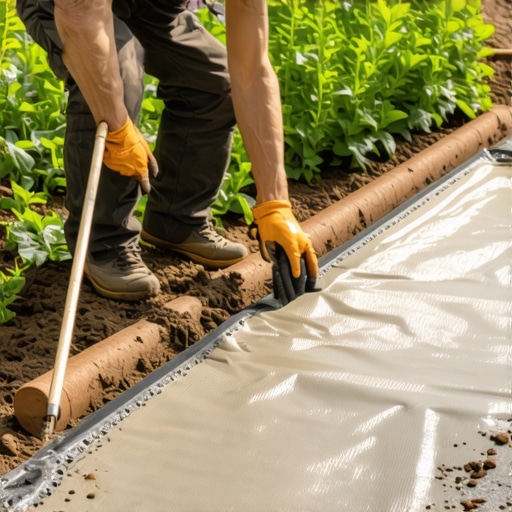
To stop soil migration, you must break the velocity of runoff and anchor the root zone. On steep grades, surface tension is your enemy. Using a combination of heavy-duty erosion control blankets and deep-rooted native species is the only way to hold the grade. Do not use standard landscape fabric under mulch on a slope. It acts as a slip-sheet. The first heavy rain will cause your mulch to slide right off the fabric like a sled. Instead, use a biodegradable jute mesh that allows roots to penetrate and locks the mulch into the soil fibers.
Comparison of Slope Stabilization Materials
Choosing the right material depends on the height of the grade and your budget. Here is how the primary options stack up in a professional setting:
| Material | Max Height (Unreinforced) | Drainage Efficiency | Longevity |
|---|---|---|---|
| Pressure-Treated Timbers | 3 Feet | Moderate | 10-15 Years |
| Modular Block (SRW) | 4 Feet | High | 50+ Years |
| Natural Fieldstone (Dry Stack) | 2 Feet | Excellent | Indefinite |
| Boulder Walls | 6+ Feet | Excellent | Indefinite |
How much modified gravel do I need for a patio base?
For any hardscape at the base of a slope, you need a minimum of 6 to 8 inches of compacted 2A modified gravel (also known as 3/4-minus). This base must extend 6 inches beyond the footprint of your pavers. You calculate this by multiplying the square footage by the depth in feet, then dividing by 27 to get cubic yards. If you are on a slope, you likely need a deeper footer to account for the increased surcharge of the hill. Don’t eyeball it. Measure it.
The Ground-Up Build: A Step-by-Step Slope Strategy
When I start a slope project, I follow a rigid protocol. If the ground isn’t prepped, the plants are just expensive compost. First, we identify the utility lines via 811. Then, we look at the soil. Heavy clay holds water and expands; sandy loam drains but erodes. Both require different approaches to drainage. We use a plate compactor on the subgrade until it reaches 95% Standard Proctor Density. The tamper should literally bounce off the ground. If it feels soft, keep going.
- Measure the Rise and Run: Determine if you need a single wall or a tiered system. Anything over a 3-foot rise usually requires multiple tiers to avoid the need for a structural engineer.
- Excavate the Trench: Your wall footer must be below the frost line or at least 6-12 inches deep for smaller walls.
- Install the Drainage Pipe: A 4-inch perforated pipe wrapped in a filter sock is non-negotiable. It must daylight at the ends of the wall to vent water.
- Backfill with Clean Stone: Use 3/4-inch clean angular stone (not rounded river rock) behind the wall. Angular stone locks together and provides 25% void space for water to move.
- Planting the Top: Use plants with fibrous root systems to knit the remaining soil together.
“On slopes exceeding 33 percent, turfgrass establishment is difficult and maintenance is hazardous.” – Penn State Extension
Horticultural Zooming: Root Systems and Soil Bio-Engineering
Lawn care on a hill is a fool’s errand. You can’t mow it safely, and fertilizer just runs off into the storm drain. You need soil bio-engineering. While the internet tells you to plant whatever looks nice, you need to select plants based on their root architecture. Taprooted plants (like some oaks or perennials) provide deep anchoring, while fibrous-rooted plants (like native grasses or creeping junipers) create a surface mat that prevents topsoil loss. Use a “step-planting” technique where you cut small terraces into the hill for each individual plant. This creates a mini-basin to catch water, forcing it down to the roots rather than letting it sheet off the surface.
The Information Gain: The Perils of Over-Mulching
Here is a piece of advice most contractors won’t give you: stop using 4 inches of mulch on slopes. Thick mulch layers prevent oxygen exchange and actually repel water once they dry out, a condition called hydrophobicity. On a slope, this means the water runs over the mulch and takes it with it. Use 2 inches maximum. Better yet, use a living mulch like Sedum or Vinca minor. These plants create a biological carpet that is far more effective at slope stabilization than any wood chip. Your goal is 100% green cover. Exposed dirt is dying dirt.