5 2026 Low-Maintenance Plants for Sandy Soil
5 2026 Low-Maintenance Plants for Sandy Soil: Professional Landscape Engineering Guide
I always drill into my new crew members: if you don’t fix the soil grading first, every plant you put in the ground is just expensive compost. Most homeowners see sandy soil and think it is easy to dig. It is easy to dig, sure, but it is a chemical desert for most plant life. I have spent two decades fixing yards where some hack planted a thirsty hydrangea in 85 percent silica sand. Within six months, the plant looks like scorched leather. We do not do that here. In professional landscaping, we design for the site we have, not the site we wish we had. Sandy soil has a high infiltration rate and almost zero Cation Exchange Capacity (CEC). This means it cannot hold onto nutrients. If you do not select plants engineered by nature to handle these conditions, you are just throwing money into a sieve.
The Physics of Sandy Soil Management
To manage sandy soil effectively for landscaping, professionals must address its low Cation Exchange Capacity (CEC) and high infiltration rates by incorporating specific organic amendments that increase water retention without compromising the structural integrity of the site’s garden design.
“Soil texture determines the rate at which water moves through the profile: sand allows for rapid infiltration but lacks the surface area to retain essential plant nutrients.” – Soil Science Society of America Handbook
When we approach a new project with sandy substrates, we first measure the percolation rate. We dig a 12 inch hole, fill it with water, and watch the clock. If it drains in under ten minutes, we are dealing with high-porosity sand. This affects more than just the plants; it affects your hardscaping too. Without a proper geotextile fabric, your expensive pavers will eventually migrate into the sub-grade. We use a non-woven fabric to ensure separation. It is about engineering, not just aesthetics. We look at the 2026 plant trends and filter them through the lens of survival. You want low maintenance? You need plants that can find their own water 48 inches below the surface.
Top 5 Resilient Plants for 2026 Coastal and Sandy Landscapes
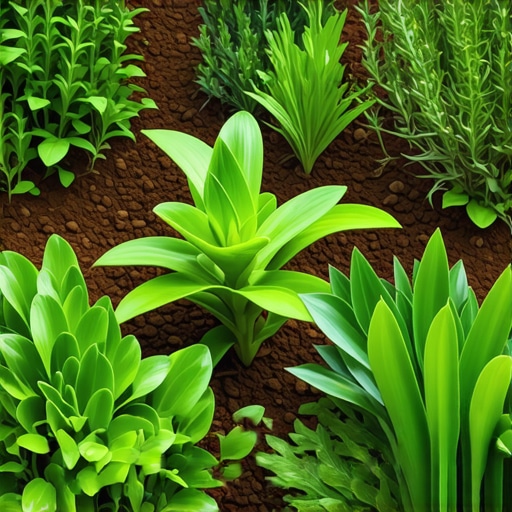
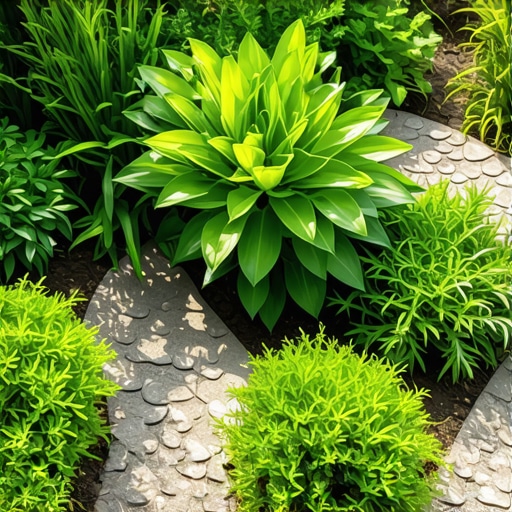
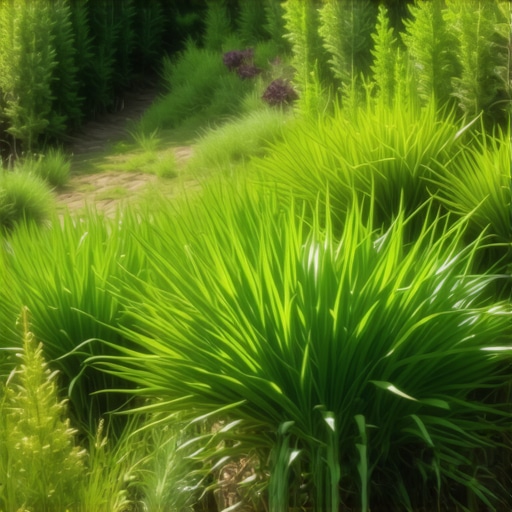
The best low-maintenance plants for sandy soil in 2026 include Baptisia, Artemisia, and Asclepias, which utilize deep taproots or specialized leaf structures to survive in high-drainage, low-nutrient environments typical of hardscaping margins.
[image-placeholder-1]
1. Baptisia australis (False Indigo)
This is a tank of a plant. It develops a deep, woody taproot that anchors it against coastal winds and allows it to pull moisture from deep within the sandy profile. Once established, you do not move it. If you try to transplant it, you will kill it. It fixes its own nitrogen, meaning you do not need to dump 10-10-10 fertilizer on it twice a year. It stands about 3 to 4 feet tall. It is the backbone of a low-water garden design.
2. Artemisia ‘Silver Mound’
This plant is all about leaf morphology. The silver, fine-textured foliage is not just for looks. The tiny hairs on the leaves reduce transpiration, keeping the plant cool when the sun is reflecting off the sand at 110 degrees Fahrenheit. It keeps a tight, mounded shape. No pruning required. Just do not overwater it. If the roots sit in water for more than a few hours, the center will rot out. It needs that fast drainage.
3. Asclepias tuberosa (Butterfly Weed)
Forget the dainty flowers you see in big box stores. This is a rugged perennial that thrives in literal grit. It loves a pH between 6.0 and 7.0. Like the Baptisia, it has a taproot that acts as a straw to the water table. It is essential for local ecology but tough enough to survive on a sandy slope where nothing else grows. We use this to stabilize areas near lawn care boundaries where the soil is too poor for turf grass.
4. Eryngium yuccifolium (Rattlesnake Master)
This plant looks like something out of a desert, and it behaves like one too. Its leathery, yucca-like leaves have a thick waxy cuticle that prevents moisture loss. It handles the high heat of sandy sites without wilting. In a garden design, it provides a structural verticality that holds up through the winter months. It is virtually pest-free because most insects cannot get through its tough exterior.
5. Carex pensylvanica (Pennsylvania Sedge)
When people want the look of a lawn but have nothing but sand and shade, this is what I install. It is a sedge, not a grass. It grows in tufts and only reaches about 8 inches. You do not mow it. You do not fertilize it heavily. It creeps slowly via rhizomes to create a soft carpet. It is the ultimate low-maintenance solution for those awkward sandy patches under oak trees where the lawn care crew always struggles.
Engineering the Sub-Base: Hardscaping on Sand
Successful hardscaping on sandy substrates requires a non-woven geotextile fabric to separate the sub-grade from the modified gravel base, preventing the sand from migrating upward and causing the pavers to settle or heave.
| Material Type | Compaction Rate | Drainage Speed | Application |
|---|---|---|---|
| Course Sand | Low | Very High | Leveling Layer |
| Modified Gravel (2A) | High | Medium | Structural Base |
| Sandy Loam | Medium | Medium | Planting Beds |
| Polymeric Sand | N/A | Low | Joint Stabilization |
Do not let anyone tell you that sand is a good base for a patio. Sand moves. It is fluid. We excavate down at least 8 to 12 inches, lay our fabric, and then bring in 2A modified stone. We compact in 2 inch lifts using a plate compactor with at least 4,000 pounds of centrifugal force. You want to see the tamper bounce. That is how you know you have hit 98 percent Proctor density. If you skip this, your 2026 garden design will look like a topographical map of the Moon by 2027.
How much modified gravel do I need for a patio base?
To calculate the amount of modified gravel needed, multiply the square footage by the desired depth in feet (usually 0.5 feet for 6 inches), then divide by 27 to get cubic yards; add a 20 percent compaction factor to ensure you have enough material to reach the required PSI levels.
What is the best fertilizer for sandy soil?
In sandy soil, the best fertilizer is a slow-release, organic-based product with a high percentage of Water Insoluble Nitrogen (WIN) to prevent leaching into the groundwater, combined with humic acid to help build the soil’s Cation Exchange Capacity over time.
“A retaining wall doesn’t fail because of the stone; it fails because of the water trapped behind it, especially in sandy soils where hydrostatic pressure can build rapidly during heavy rain events.” – Hardscape Engineering Axiom
- Step 1: Test soil pH and percolation rates before plant selection.
- Step 2: Install 4 inches of leaf compost or aged manure to boost organic matter.
- Step 3: Use a non-woven geotextile fabric for all hardscaping boundaries.
- Step 4: Select plants with taproots or xeric leaf adaptations.
- Step 5: Set irrigation to deep, infrequent cycles to encourage root depth.
The maintenance schedule for these sites is specific. In the first year, you water. In the second year, you weed. By the third year, you sit back. Sandy soil is not a curse if you understand the physics of it. It is just a different set of rules. Stop fighting the sand and start engineering for it. Your plants will live, your patio will stay level, and you will stop wasting money on quick fixes that never last. It is about the long game.