5 2026 Native Shrubs for Zero-Water Landscaping
Designing for Drought: The Engineering of Arid Landscapes
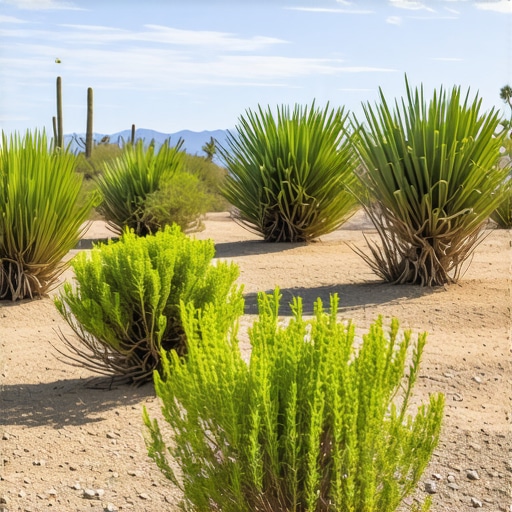
Zero-water landscaping involves the strategic integration of native plant species, engineered soil substrates, and hardscape drainage systems to eliminate the need for supplemental irrigation after establishment. This methodology prioritizes hydrostatic pressure management and soil microbiology to ensure long-term plant survival in extreme environments. I always drill into my new crew members: if you don’t fix the soil grading first, every plant you put in the ground is just expensive compost. I have watched $50,000 installs fail within six months because a foreman ignored the 2% minimum grade required to move surface water away from root flares. When you are building a zero-water system, you aren’t just planting; you are managing a biological hydraulic circuit. If the soil is compacted to a 95% Proctor density, your shrubs won’t grow. They will suffocate. You need pore space for gas exchange. Without it, the anaerobic bacteria take over, and your high-dollar native shrubs rot from the bottom up.
“Native plants have evolved complex root architectures that allow them to access deep-seated moisture during periods of prolonged desiccation, provided the soil structure is not compromised by mechanical compaction.” – Agricultural Extension Agronomy Manual
How deep do I dig for native shrubs?
For native shrubs in zero-water designs, the planting hole must be exactly twice the width of the root ball but no deeper than the root ball itself to prevent settling and trunk rot. Achieving a loose soil perimeter allows young roots to penetrate the surrounding soil matrix without encountering the ‘pot-bound’ effect common in heavy clay soils. [image]
1. The Arctostaphylos (Manzanita) Complex
The Manzanita is the backbone of the 2026 arid design palette. These shrubs are built for 7.0 pH to 5.5 pH environments. They utilize a specialized symbiotic relationship with mycorrhizal fungi to extract phosphorus from poor soils. If you plant these in a high-nitrogen lawn environment, they will die. The salt index in commercial fertilizers will desiccate their fine root hairs. We look for the ‘Howard McMinn’ cultivar for its structural density. It requires a 100% drainage rate. If you have heavy clay, you must incorporate a 4-inch layer of 57-stone gravel 18 inches below the planting site to create a capillary break.
2. Chilopsis linearis (Desert Willow)
While often classed as a small tree, the shrub form of the Desert Willow is an engineering marvel. It features a dual-root system: lateral roots for rapid uptake during flash rain events and a deep taproot that can descend 40 feet to hit the water table. In a zero-water landscape, this is your vertical interest. Do not prune the lower branches too early. The foliage protects the thin bark from sunscald. We recommend a 3-inch layer of crushed granite mulch around the base, kept 6 inches away from the root flare to prevent moisture trapping against the cambium layer.
3. Leucophyllum frutescens (Texas Sage)
Texas Sage is often called the ‘Barometer Bush’ because it responds to shifts in humidity and barometric pressure. From a hardscaping perspective, this shrub is perfect for transition zones near concrete patios. It handles the high alkalinity of leaching concrete better than almost any other species. It thrives in a pH of 8.0 or higher. If your soil is acidic, you need to amend the backfill with dolomitic lime at a rate of 5 pounds per 100 square feet. It is a slow grower. Don’t rush it with water. Over-watering causes ‘leggy’ growth that collapses under its own weight.
4. Fallugia paradoxa (Apache Plume)
This is the workhorse for erosion control on 30-degree slopes. The Apache Plume has a filamentous root system that binds soil particles together, preventing rill erosion during monsoon-style downpours. It is hardy down to USDA Zone 4, making it versatile for high-altitude zero-water projects. The pink, feathery seed heads provide a 10% increase in wind-break efficiency when planted in staggered rows. It requires zero pruning. Every time you shear a native shrub, you deplete its stored carbohydrate reserves.
5. Berberis nevinii (Nevin’s Barberry)
An endangered powerhouse that is making a comeback in 2026 residential specs. This shrub is bird-habitat gold but is as tough as rebar. It can withstand temperatures of 110 degrees Fahrenheit and negative 10 degrees without supplemental water. It creates a natural security barrier due to its spiny foliage. We use it to manage foot traffic near property lines. It prefers a sandy loam but can tolerate heavy adobe clay if the site is graded to a 3% slope. Stop using organic bark mulch here; use 1-inch to 3-inch river rock to facilitate rapid drainage.
“A retaining wall doesn’t fail because of the stone; it fails because of the water trapped behind it, and the same hydrostatic principles apply to plant pits in poorly drained soils.” – Hardscape Engineering Axiom
Comparison of 2026 Native Shrub Specifications
| Shrub Species | USDA Hardiness Zone | Primary Soil Requirement | Mature Height (ft) |
|---|---|---|---|
| Manzanita | 7-10 | Acidic / Well-Drained | 6-10 |
| Desert Willow | 7-9 | Sandy Loam | 15-20 |
| Texas Sage | 8-11 | Alkaline / Limestone | 5-6 |
| Apache Plume | 4-9 | Gravelly / Poor | 3-5 |
| Nevin’s Barberry | 8-10 | Clay / Dry | 6-10 |
Installation Protocol for Arid Success
- Core Aeration: Before planting, aerate the entire site to a depth of 6 inches to break surface tension.
- Root Flare Exposure: Ensure the topmost root is visible at the soil surface. Do not bury it.
- The Puddle Test: Fill the planting hole with water. If it remains after 2 hours, install a French drain.
- Irrigation Hard-Stop: Set a timer to decrease water by 25% every 6 months for 2 years.
- No-Fertilizer Zone: Avoid N-P-K additives; let the soil biology develop naturally.
Can I use mulch in zero-water landscaping?
Inorganic mulch such as decomposed granite or river rock is preferred in zero-water landscaping to prevent nitrogen tie-up and to reflect heat away from the soil. Organic wood mulch can hold too much moisture against the root flare of desert-adapted shrubs, leading to Phytophthora root rot and plant failure.
Year one is the critical window. You will see some leaf drop. Don’t panic. The shrub is shedding surface area to focus energy on root elongation. By year three, these plants should be fully ‘off the bottle.’ If you continue to water them, you are doing them a disservice. You are making them lazy and vulnerable to the first power outage that kills your irrigation clock. Build it right. Grade it right. Then leave it alone.
![Stop Winter Salt Damage on 2026 Roadside Hedges [Fix]](https://lawnmajesty.com/wp-content/uploads/2026/05/Stop-Winter-Salt-Damage-on-2026-Roadside-Hedges-Fix.jpeg)