Repair 2026 Loose Paver Edging for Under $20
The Forensic Autopsy of a Failing Edge
To repair loose paver edging for under $20, you must re-establish lateral restraint by clearing debris from the joints, resetting edge spikes into the compacted sub-base, and applying ASTM-standard polymeric sand to lock the units through aggregate interlock. This prevents further base erosion and shifting during freeze-thaw cycles.
I recently got called out to tear up a $30,000 patio that was sinking because the previous contractor thought he could save sixty bucks by skipping the edge restraints and using plastic spikes in soft, uncompacted clay. Within two seasons, the lateral pressure of the 3/4-inch modified gravel base pushed the perimeter pavers three inches into the lawn. The homeowner was literally losing their patio into the grass. When I pulled up the first stone, the problem was obvious: zero compaction and a complete lack of aggregate interlock. The sand bedding had liquefied under heavy rain and washed out because there was no hard boundary to hold it. It was a structural corpse. You don’t want your walkway to end up in an autopsy report. If your pavers are clicking or sliding, you have a failure of lateral resistance. It is physics, not magic. If you catch it early, you can fix it for the price of a bag of high-performance sand and a few 10-inch spikes.
“A retaining wall doesn’t fail because of the stone; it fails because of the water trapped behind it.” – Hardscape Engineering Axiom
Why Paver Edging Fails in 2026
Paver edging fails when hydrostatic pressure and lateral loading exceed the friction of the bedding sand. Most DIYers and low-bid hacks fail to realize that pavers are a flexible pavement system; they rely on the sand in the joints to transfer loads horizontally across the entire surface. When the edge moves, that tension is lost. The primary enemy is the freeze-thaw cycle. In regions with heavy clay, water stays trapped in the sub-grade. When that water freezes, it expands by 9%, heaving the pavers. When it thaws, the soil turns into a slurry, and the pavers settle unevenly. If your edging isn’t pinned into the compacted sub-base—not just the sand—it will migrate. Don’t skip the spikes.
How much modified gravel do I need for a patio base?
For a standard pedestrian walkway or patio, you require a minimum of 4 to 6 inches of compacted 21A or 3/4-inch modified gravel, which equates to roughly 1 ton of aggregate per 50 square feet at a 4-inch depth. This base must be compacted to 95% Proctor density to prevent the settling that leads to loose edging. Without this structural foundation, your edge restraints are essentially floating on mud. If you are repairing an existing edge, you must verify that you are driving your spikes into this compacted layer, not just the topsoil or the loose bedding sand.
| Material Type | Cost (Approx.) | Durability | Best Use Case |
|---|---|---|---|
| Polymeric Sand (50lb) | $18.00 | High | Joint stabilization and edge locking |
| 10-inch Steel Spikes (10-pack) | $12.00 | Medium | Securing plastic or aluminum edging |
| Concrete Pre-mix (80lb) | $6.50 | High | Creating a ‘concrete toe’ for permanent edges |
| Snap-Edge Plastic Restraint | $15.00/pc | High | New installs or total edge replacement |
The $20 Remediation Process: Step-by-Step
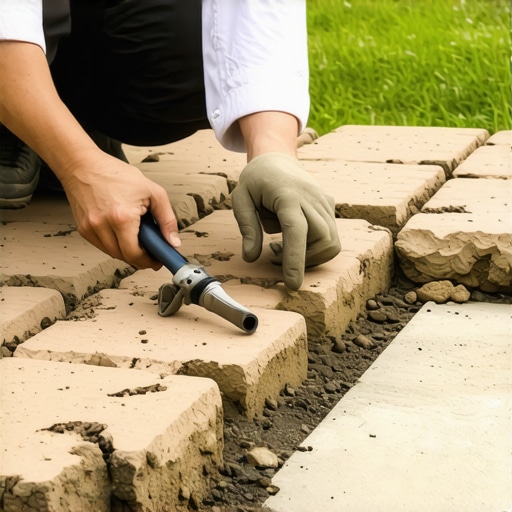
- Excavate the Failure Zone: Use a trowel to remove all organic material, grass, and loose sand from the gap between the paver and the edging. You must see the gravel base.
- Reset the Restraint: If the plastic edging has lifted, drive new 10-inch spikes at a 45-degree angle toward the patio to pull the restraint tight against the stone.
- Clean the Joints: Use a stiff brush or air compressor to blow out the last 1 inch of sand between the loose pavers. It must be bone dry.
- Apply Polymeric Sand: Pour the sand (which contains binders like Portland cement or specialized polymers) into the joints. Sweep it in until 1/8 inch below the paver chamfer.
- The Tamp: Use a rubber mallet to tap the pavers. This vibrates the sand down, removing air pockets. Refill if necessary.
- Hydration: Mist the sand with water. Do not flood it. The water triggers the chemical bond that turns the sand into a flexible, rubberized mortar.
How do I stop grass from growing between my pavers?
To stop weed and grass infiltration, you must eliminate the organic medium that seeds require for germination by using polymeric jointing sand that hardens to a semi-rigid state. Traditional play sand or masonry sand stays loose, allowing wind-blown seeds to take root in the moisture-retentive gaps. By installing a high-polymer content sand, you create a barrier that is too dense for roots to penetrate, while still allowing for the micro-movements of the earth without cracking like traditional mortar. It must be replaced every 3-5 years as the polymers degrade from UV exposure.
“The longevity of any hardscape is inversely proportional to the amount of water retained in its sub-base.” – ICPI Tech Spec No. 2
The technical reality of hardscaping is that you are fighting gravity and water. If your yard has poor soil grading, water will pool against your paver edge. This saturates the fines in your gravel base, causing them to migrate. Once the fines are gone, the large aggregate loses its structural integrity, and the whole system collapses. If you have standing water, no $20 fix will last. You need to address the hydrostatic pressure by installing a French drain or re-grading the soil to a 2% slope away from the hardscape. In 2026, we are seeing more extreme rain events; your drainage must be able to handle 2 inches of water per hour. If it can’t, your pavers are just a temporary dam. Check your levels. Fix the dirt first. The stone is just the skin; the soil is the skeleton. Don’t let it rot. Keep the joints full, keep the water moving, and keep the grass out. That is how you win the war against the elements.

![Build a $200 2026 Gravel Path with Brick Edging [Quick Fix]](https://lawnmajesty.com/wp-content/uploads/2026/07/Build-a-200-2026-Gravel-Path-with-Brick-Edging-Quick-Fix.jpeg)