
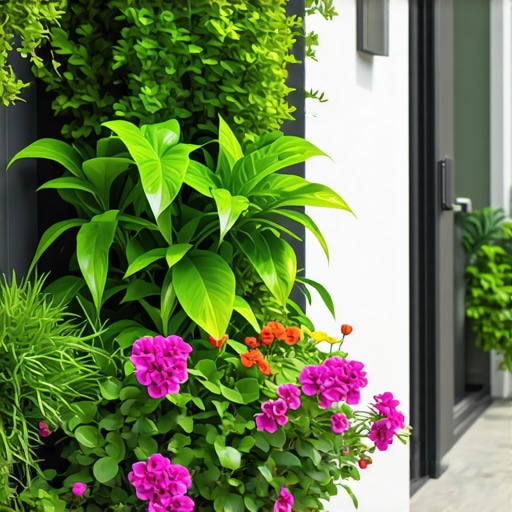
Build a $100 Vertical Garden for 2026 Porches
The Structural Reality of Vertical Horticulture
To build a vertical garden for under $100, you must prioritize structural fasteners and reclaimed cedar or pressure-treated pine over aesthetic kits. A successful build relies on mechanical attachment to porch studs and a gravity-fed irrigation system that prevents rot while maintaining soil moisture. I always drill into my new crew members: if you dont fix the weight-bearing physics first, every plant you put in the ground is just expensive compost. Most DIY enthusiasts see a pretty wall of green; I see three hundred pounds of wet soil trying to shear off a 2×4. I once watched a client try to hang a fully saturated felt-pocket system on a vinyl porch railing. The resulting structural failure didn’t just kill the ferns; it ripped the railing clean off the house. We build for 2026, which means building for longevity and thermal resilience. The physics of vertical gardening involves managing the perched water table within a confined vertical space. Unlike a traditional lawn, where gravity pulls water through the soil profile into the subsoil, a vertical system creates a moisture gradient that often leaves the top parched and the bottom anaerobic. You are essentially building a civil engineering project on a microscopic scale.
“A retaining wall doesn’t fail because of the stone; it fails because of the water trapped behind it.” – Hardscape Engineering Axiom
How much weight can a porch rail hold?
The load-bearing capacity of a standard porch railing is typically designed for lateral force, not vertical weight. When installing a vertical garden system, you must calculate the saturated weight of soil, which can exceed 100 pounds per cubic foot. Never anchor into the railing itself; anchor into the structural house studs or floor joists using 3-inch stainless steel lag bolts. The shear strength of your fasteners is your primary insurance policy against property damage. [image_placeholder_1]
The $100 Material Procurement Strategy
Achieving a professional-grade landscape result on a $100 budget requires skipping the big-box garden aisles and sourcing raw materials. Use cedar fence pickets for the frame; they are naturally rot-resistant and cost a fraction of dimensional lumber. For the containers, use 4-inch PVC piping cut in half or reclaimed gutters. Avoid the pre-made plastic pots that degrade under UV exposure within two seasons. Your budget breakdown should prioritize the health of the plant over the look of the wood. Spend $40 on high-quality structural fasteners and cedar, $30 on a custom soil mix, $20 on a basic drip line, and the remaining $10 on seed-started perennials. Most people fail because they spend $90 on the frame and buy $10 dirt. Dirt is where the money goes. Specifically, you need a high-porosity mix to prevent root rot. Standard garden soil is too heavy and will compact, suffocating the roots within six months.
| Material Item | Unit Cost | Engineering Purpose | Longevity Expectancy |
|---|---|---|---|
| Cedar Pickets (5) | $25.00 | Rot-resistant framing | 7-10 Years |
| 3-inch Lag Bolts | $15.00 | Structural anchoring | 25 Years |
| Custom Soil Mix | $30.00 | Aeration and Cation Exchange | 3 Seasons |
| PVC/Gutter Trays | $15.00 | Moisture containment | 15 Years |
| Drip Emitters | $15.00 | Hydro-management | 5 Years |
What is the best soil for vertical gardens?
The best soil for vertical gardening is a soilless substrate composed of 60% peat or coco coir, 30% perlite, and 10% vermiculite. This mixture provides the high cation exchange capacity (CEC) necessary for nutrient uptake while maintaining a bulk density low enough for vertical structures. Avoid native clay or topsoil. Native soils are too dense for small containers and will lead to hydrostatic pressure buildup against your porch wall. You want a mix that feels light even when wet. I recommend adding a slow-release nitrogen fertilizer at a rate of 1 tablespoon per gallon of substrate. This compensates for the leaching that occurs in high-drainage vertical systems. Plants in these environments are essentially in a state of high-intensity metabolism. They need oxygen at the root zone more than they need water. If the soil smells like rotten eggs, you have failed the engineering phase. That smell is methane, a byproduct of anaerobic bacteria thriving in compacted, waterlogged soil.
“Root zone oxygenation is the primary limiting factor in containerized plant growth regardless of nitrogen availability.” – USDA Horticultural Research Bulletin
- Confirm structural integrity of the wall or railing using a stud finder.
- Pre-drill all holes in cedar pickets to prevent splitting.
- Install a moisture barrier (6-mil plastic) between the wall and the garden.
- Level each tray with a 1/8-inch slope for drainage exit.
- Flush the system with water before adding plants to check for leaks.
Optimizing Irrigation and Drainage
Water management is the difference between a garden and a mold factory. You must implement a gravity-fed drainage system where the overflow from the top tier feeds the tier below. However, this water often carries salts and pathogens, so the preferred professional method is an independent drip line for each level. Connect a simple battery-powered timer to your outdoor spigot. Set it to run for three minutes at 5:00 AM. This allows the foliage to dry before the sun hits it, preventing fungal spores from germinating. While the internet tells you to water every day, vertical systems actually need deep, infrequent pulses to force roots to navigate the entire container volume. If you water for 30 seconds every hour, the roots will stay at the surface and the plant will eventually tip over or fry in the 2026 heatwaves. For the 2026 climate, we are seeing higher peak temperatures; consider adding a layer of pine bark mulch to the top of each vertical tray to reduce evaporation. It will save your plants when the thermometer hits triple digits. Don’t skip the drainage holes. Drill 1/2-inch holes every 6 inches along the bottom of your containers. Cover these with landscape fabric to prevent soil washout. If you see water pooling, your perlite ratio is too low. Fix it immediately. It will rot if you don’t.





![Build a $40 Raised Garden Bed [Cedar 2026]](https://lawnmajesty.com/wp-content/uploads/2026/06/Build-a-40-Raised-Garden-Bed-Cedar-2026.jpeg)